
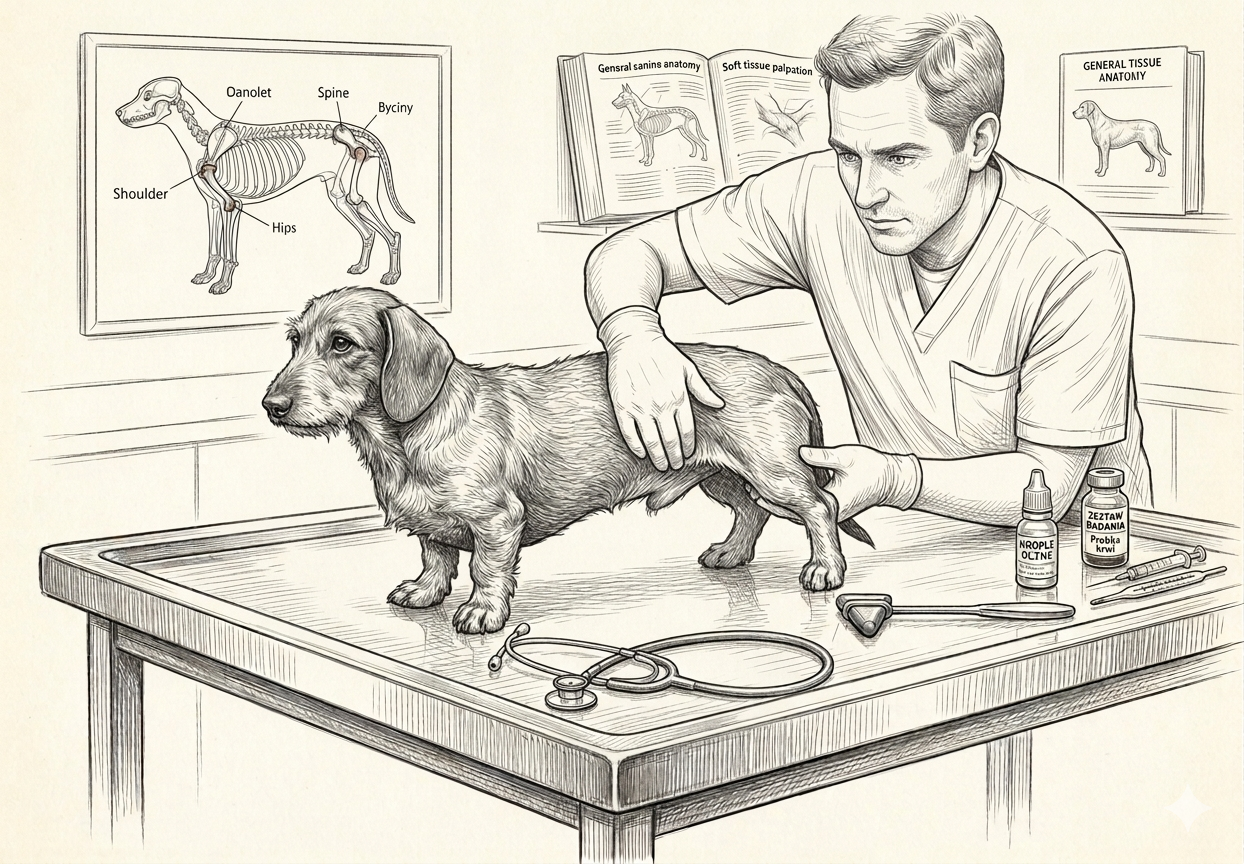
Preventive Health Care for Dachshunds
Regular checkups, vaccinations, weight management, and daily observation are the foundations of a healthy Dachshund. Learn how to protect your dog’s health and spot potential issues before they become serious problems.
Why Preventive Care Is a Necessity for Dachshunds - Not an Option
Dachshunds get sick quietly.
The first signs of disc disease, allergies, or internal illness often appear only once the problem is already advanced. That’s why preventive care – regular check-ups, healthy weight, and daily observation – is more than just a nice-to-have for a dachshund. It’s the foundation of good ownership.
This guide will help you understand what to monitor, how often, and what to watch for – before a problem ever shows up.
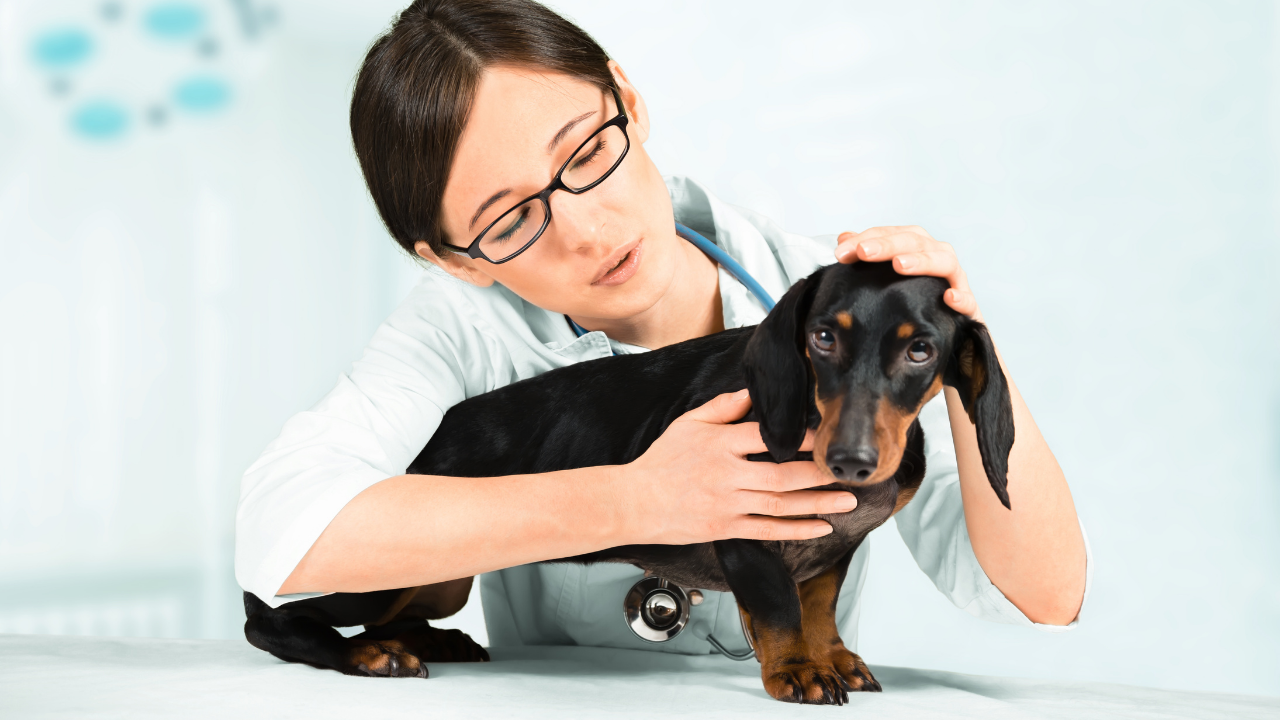
What's inside?
- when to run which tests – and how often
- vaccination schedule for dachshunds
- how to assess your dog’s weight at home
- daily observation checklist
- warning signs you shouldn’t ignore
- when a routine visit is fine – and when to go immediately
Good place to start:
- 👉 IVDD in Dachshunds: Symptoms, Treatment and Prevention
- 👉 Deworming a Dachshund – How Often and What to Use? An Owner’s Guide
- 👉 Obesity in Dachshunds
Routine check-ups - how often and what to test?
Don’t wait for something to go wrong. Many serious conditions – including IVDD, kidney disease, and thyroid problems – show no clear symptoms for a long time. Preventive testing is the only way to catch them early.
Recommended annually (adult dachshund):
- complete blood count and biochemistry panel
- urinalysis and urine sediment
- abdominal ultrasound
- spine and musculoskeletal assessment
- teeth and gum check
- weight measurement
For dachshunds over 7 years old - every 6 months:
- extended biochemistry panel (kidney and liver function, thyroid)
- blood pressure
- ECG (if recommended by your vet)
- eye examination
Vaccinations - what and when?
Important: If your dachshund has a weakened immune system, a chronic condition, or is currently undergoing treatment, always consult your vet before vaccinating. Vaccinating a sick dog can be risky.
Puppy (core schedule):
- 6-8 weeks: first combination vaccine (distemper, parvovirus, adenovirus)
- 10-12 weeks: booster dose + rabies
- 14-16 weeks: final combination vaccine
Adult dachshund:
- rabies: required by law in most US states – annually or every 3 years depending on your state
- combination vaccine (DHPP): annually, or every 3 years after age 2 based on your vet’s recommendation or titer testing
- seasonally: Bordetella (kennel cough) – especially important if your dog visits boarding facilities, dog shows, or shelters
Deworming and parasite prevention
Deworming:
- puppies: every 2 weeks until 12 weeks old, then monthly until 6 months
- adult dogs: at minimum every 3 months – more frequently if your dachshund hunts, scavenges, spends time at dog parks, or has regular contact with children
Note: many owners opt for monthly parasite prevention products, which are easier to keep track of and often cover fleas, ticks, and heartworm alongside intestinal parasites – worth discussing with your vet.
External parasite prevention (fleas and ticks):
- year-round, or at a minimum during peak season (spring through fall)
- available options: spot-on drops, collars, tablets – ask your vet which is the best fit for your dog
Weight management - the most important factor in preventing back problems
Excess weight is one of the leading risk factors for IVDD. Every extra pound puts real additional strain on the spine.
How to assess your dachshund’s weight at home
Place your hands on your dog’s chest and apply light pressure. You should be able to feel the ribs without pressing hard – but they shouldn’t be visible to the naked eye. If you really have to dig to find them, your dog is carrying too much weight.
Approximate weight for an adult dachshund:
- miniature: 8-11 lbs (4-5 kg)
- standard: 15-22 lbs (7-10 kg)
Weigh your dog at least once a month. You can do this at your vet’s office or at home – just step on the bathroom scale holding your dog, then weigh yourself alone and subtract.

Daily observation - what to check at home
Most health problems can be caught early if you watch your dog regularly.
- Skin and coat: no dandruff, redness, bald patches, or excessive scratching – if your dog is scratching more than usual, it’s worth looking into
- Eyes: clear, no excessive tearing, cloudiness, or squinting
- Ears: no unpleasant smell, dark brown discharge, or pawing at the ears
- Teeth and gums: pink gums, no strong odor, no gray buildup on the teeth
- Behavior and movement: normal enthusiasm for walks, no limping, hunching, or hesitation when getting up
- Eating and drinking: steady appetite, no sudden increase in water intake
Warning signs that need urgent veterinary attention
Some symptoms in a dachshund can’t wait until the next day.
Get to a vet as soon as possible if your dog:
- suddenly stops walking or is dragging their back legs
- yelps when picked up or touched along the back
- has seizures
- loses control of their bladder or bowels
- keeps vomiting for more than a few hours
- has blood in their urine or stool
- is visibly lethargic and refuses to eat for more than 24 hours
- shows a sudden behavior change – hiding, aggression, or trembling
When it comes to spinal problems: time matters. The sooner they see a vet, the better the outlook
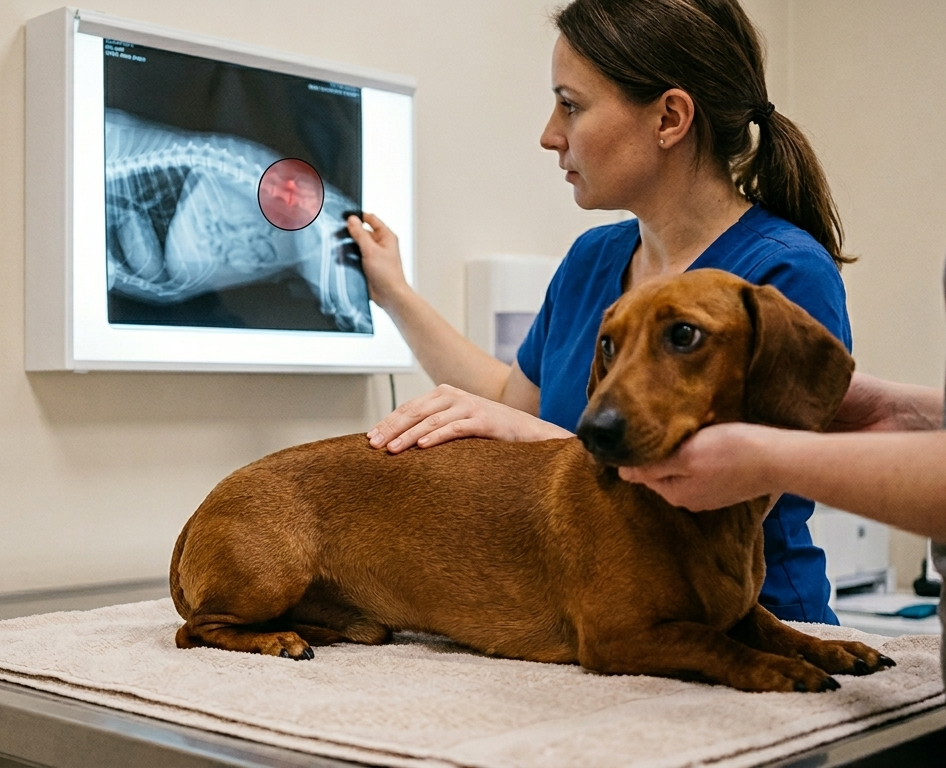
CHECKLIST - Preventive care step by step
Daily:
- observe behavior, appetite, and movement
- check for excessive scratching, paw licking, or squinting
Monthly:
- weigh your dog
- check ears and teeth
Annually:
- blood and urine tests
- abdominal ultrasound
- spinal assessment at the vet
- vaccinations (per schedule)
- deworming (if not done more frequently)
Every 6 months (dachshunds over 7 years old):
- extended lab work
- blood pressure and heart check
Recommended products for dachshunds

Omega-3 Fish Oil for Dogs
★★★★★
Designed to support healthy skin and a shiny coat, helping maintain softness and reduce dryness for a well-groomed appearance

Dog Probiotics & Digestive Enzymes
★★★★★
probiotics for dogs for allergies and itchy skin are enriched with a five-strain probiotic & prebiotic blend
Frequently asked questions
How often should a dachshund have a routine vet visit?
A healthy adult dachshund should have a check-up at least once a year. For older dogs (over 7 years), twice a year is worth it – it’s much easier to catch early changes before they progress.
Does a dachshund need to be vaccinated every year?
Rabies vaccination is required by law in most US states, though many states accept a 3-year vaccine after the initial series – check your local regulations. For the combination vaccine (DHPP), your vet may switch to every 3 years after age 2, sometimes preceded by titer testing. Always work out the schedule individually with your vet.
How do I tell if my dachshund is a healthy weight?
The simplest check: feel for the ribs with your hands. They should be easy to feel with light pressure, but not visible. If you have to press hard to find them, your dog is carrying too much weight.
Can preventive care stop IVDD?
Not completely – IVDD has a genetic component. But maintaining a healthy weight, avoiding jumping, using a harness instead of a collar, and doing regular exercises to strengthen the back muscles can meaningfully reduce the risk and delay the onset of symptoms.
When should preventive testing start?
It’s worth getting a first blood panel as early as 6 months old – that way you have a baseline to compare future results against. After that, once a year.
What is titer testing and is it worth doing?
It’s a blood test that checks whether your dog still has sufficient immunity from previous vaccines. If the levels are adequate, some vaccines don’t need to be repeated that year. It’s a good way to avoid putting unnecessary strain on your dog’s system with vaccines they may not need.
Important information: The content on this page is for educational and informational purposes only. It does not replace professional veterinary advice or diagnosis. If you notice concerning skin changes in your Dachshund, consult a veterinarian or veterinary dermatologist.
Want to learn more about Dachshund health?
Explore our other guides – from spinal health to grooming and everyday care.
More about Dachshund health
Dachshund heat safety: how to protect your dog from summer heatstroke
Low to the ground, high risk in summer Dachshunds overheat faster than most dogs their size because of their body shape: short legs and a long body keep their belly and chest just inches from hot pavement, and their compact respiratory system has to work harder to...

Spaying and neutering a dachshund: timing, benefits, and spinal health
Most vets recommend waiting until your dachshund is at least 12 months old before spaying or neutering - and for females, some spinal health research supports waiting even longer. Dachshunds carry a lifelong risk of IVDD (intervertebral disc disease), and sex hormones...
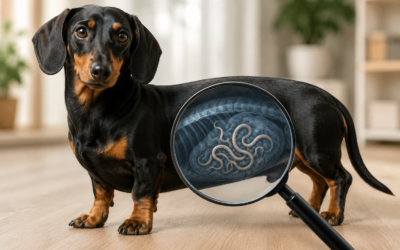
Deworming a dachshund – how often and what to use? An owner’s guide
Your dachshund looks perfectly healthy. Eats well, runs to the door when you pick up the leash, and steals your spot on the couch the moment you stand up. And yet there's a decent chance they're carrying intestinal parasites right now - because that's how parasites...
Join our newsletter
Adres
Dachshunds Planet
Disclaimer: This site contains affiliate links, which means we may earn a commission on purchases made through them.