
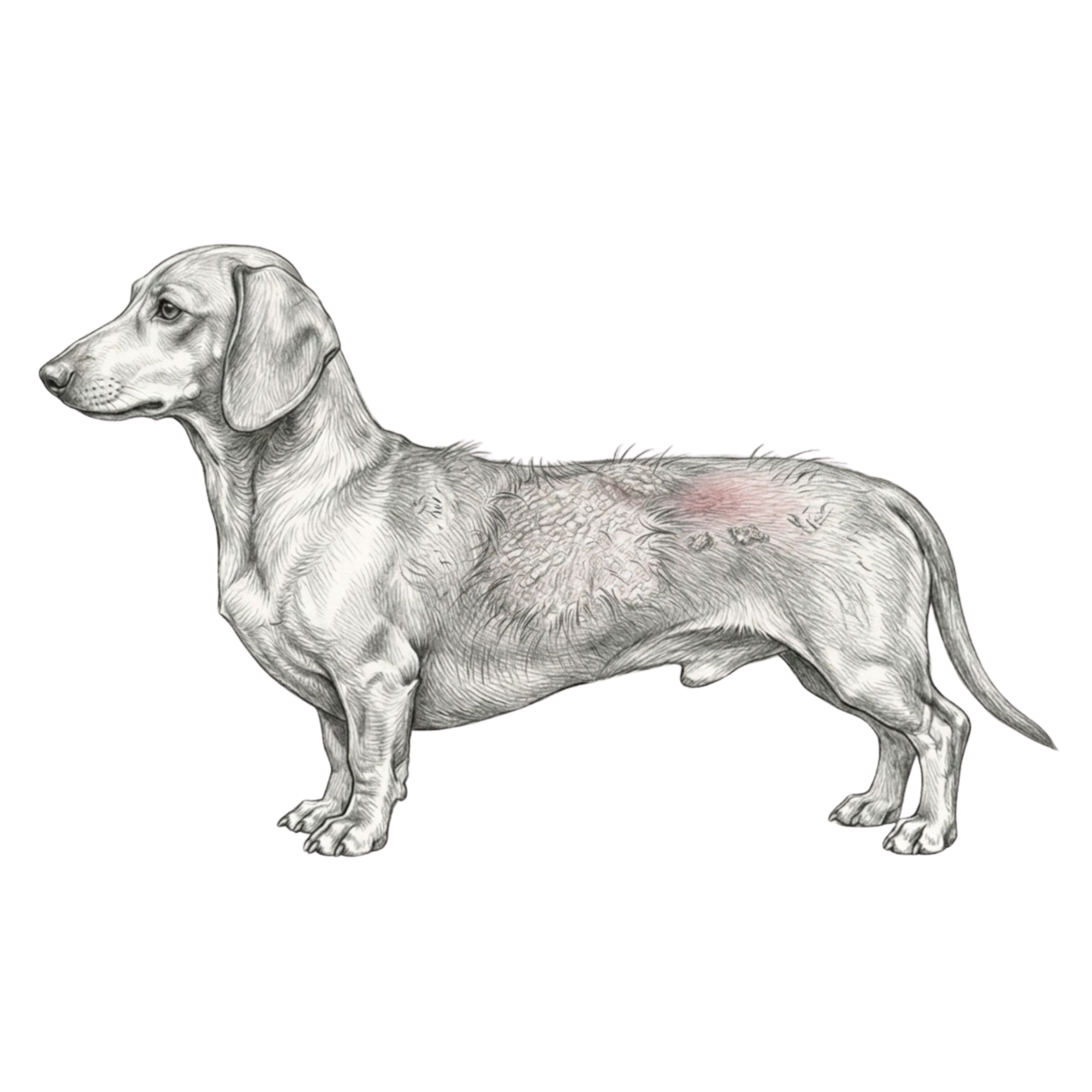
Skin conditions in dachshunds
Are dachshunds more prone to skin diseases than other breeds?
A Dachshund’s body structure – long torso and short legs – means that the chest, belly, and muzzle are in constant contact with the ground. On every walk, the dog is effectively “collecting” pollen, dust mites, road salt, and everything else close to ground level.
On top of that, several breed-specific factors increase skin sensitivity:
- Skin folds in the armpits and groin – constant limb movement against a low-slung body can cause chronic irritation, which over time may lead to hyperkeratosis and darkened skin
- Long, floppy ears – reduced airflow creates a warm, humid environment that is ideal for yeast and bacterial overgrowth
- Lower exposure level to allergens – Dachshunds are essentially “vacuum cleaners” for anything found close to the ground
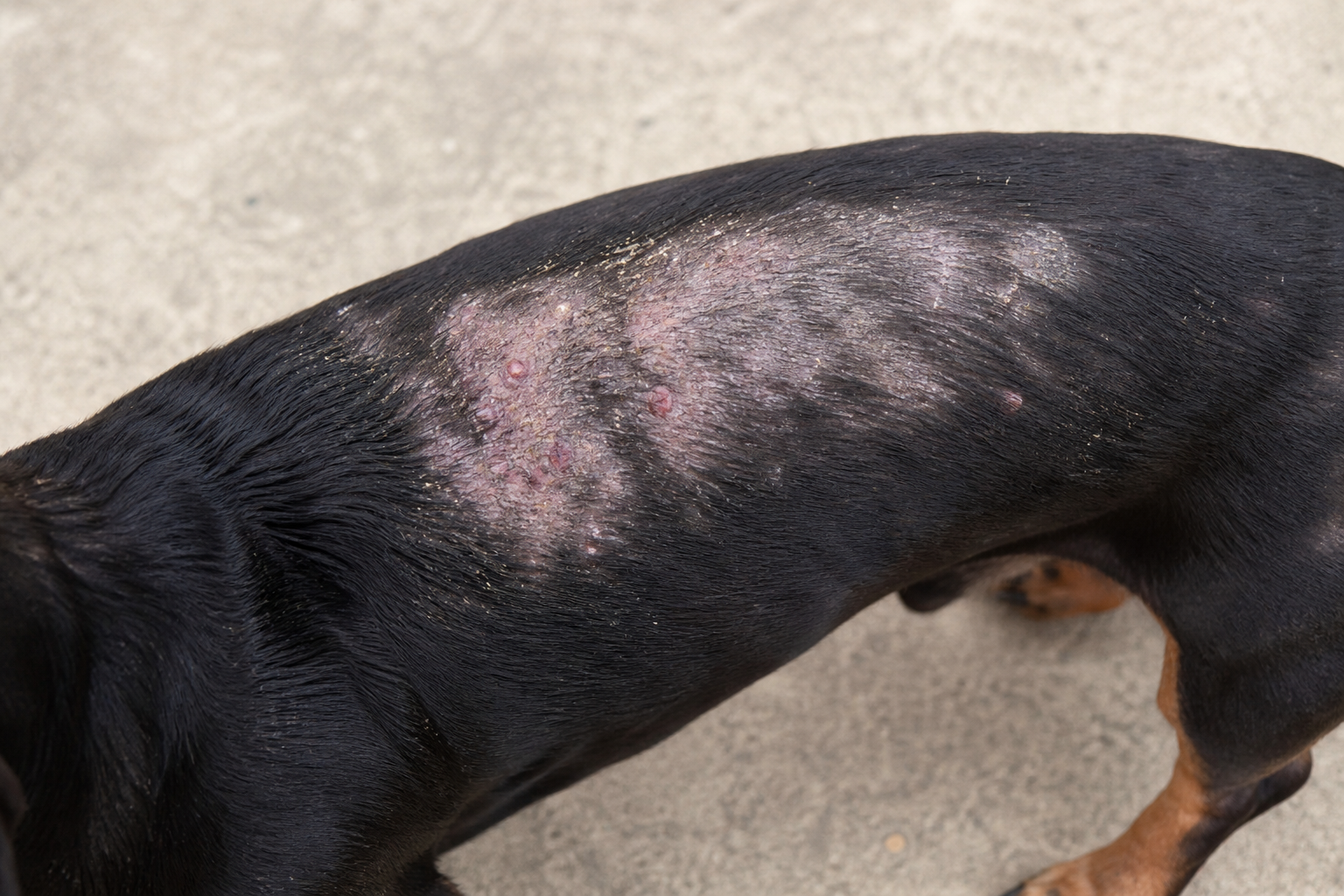
Genetic skin diseases - built into the breed
Several skin conditions occur almost exclusively in Dachshunds or show a strong breed predisposition. Early recognition is essential – these are not curable diseases, but they can be managed. An unaware owner may treat symptoms for years without realising they are dealing with a genetic skin disorder.
Acanthosis Nigricans (primary dark skin thickening)
Acanthosis Nigricans is a genetic dermatosis that is considered almost unique to Dachshunds, where melanocytes show abnormal activity independent of external triggers. The first signs usually appear before the dog reaches one year of age.
The changes typically start as symmetrical darkening of the skin in both armpits. Over time, the skin develops a velvety texture, and the pigmentation spreads to the chest, abdomen, and ear flaps.
- Darkening and velvety thickening of the skin in the armpits
- Symmetrical, bilateral distribution of lesions
- Progressive spread to the abdomen and ears
Important: The condition itself is not painful or itchy. However, the weakened skin barrier almost always leads to secondary yeast or bacterial infections, which are painful and uncomfortable. Treatment therefore focuses mainly on controlling these secondary infections.
Color dilution alopecia - coat loss linked to diluted colour
This condition affects only Dachshunds with diluted coat colours – blue (diluted black) and Isabella (diluted chocolate). A mutation in the melanophilin (MLPH) gene causes pigment to be distributed unevenly within the hair shaft. The resulting macromelanosomes mechanically weaken the hair, causing it to break just above the skin surface.
Puppies are born looking completely healthy. The first signs of hair loss usually appear between 6 months and 3 years of age.
- Hair breaks off just above the skin
- Progressive, irreversible hair thinning and bald patches
- Increased sensitivity of exposed skin to UV radiation
Dogs with Color Dilution Alopecia require sun protection – exposed skin is prone to sunburn and has an increased risk of developing secondary damage, including skin lesions. Avoid prolonged exposure to direct sunlight and ensure constant access to shade.
Pinnal alopecia - patterned ear hair loss
Allergies - the most common reason for dermatology visits
Allergies are the leading cause of skin problems in Dachshunds. What makes them particularly frustrating is that they rarely occur alone – most often we see a combination of atopy, food allergy, and flea allergy dermatitis at the same time.
Atopic dermatitis (AD)
Atopic dermatitis is a genetically influenced dysfunction of the skin barrier, which allows environmental allergens – pollen, dust mites, moulds – to penetrate deeper layers of the skin, where they trigger an immune response.
The main symptom is itching, which in Dachshunds follows a very characteristic pattern: intense licking of the paws, rubbing the muzzle on carpets, scratching the groin and ears. The most affected areas are the abdomen, armpits, and face – exactly the places most exposed to contact with the environment.
A key issue is the vicious cycle: itching → scratching → skin damage → colonisation by Malassezia yeast → increased itching → secondary bacterial infections. Breaking this cycle usually requires treating all stages at the same time, not just the symptoms.
Flea allergy dermatitis (FAD)
Dachshunds are particularly exposed to flea bites during walks in forests and tall grass. In a sensitised dog, a single bite is enough to trigger a strong inflammatory reaction around the base of the tail, hindquarters, and inner thighs.
The absence of visible fleas does not rule out this condition. Fleas spend most of their time in the environment and only briefly feed on the host.
Food allergy vs atopy
| Feature | Food allergy | Atopy (environmental) |
|---|---|---|
| Seasonality | Year-round | Often seasonal (pollen) |
| Additional symptoms | Diarrhoea, vomiting, gas | Conjunctivitis, watery eyes |
| Itch location | Ears, paws, around anus | Armpits, belly, face |
| Diagnosis | Elimination diet (min. 8 weeks) | Intradermal testing |
Malassezia and pyoderma - when natural flora becomes a problem
Dachshunds are particularly prone to opportunistic infections. Moist skin folds, floppy ears, and a tendency toward seborrhoea create the perfect environment for yeast and bacteria. Importantly, these infections are almost always secondary – they signal an underlying issue (such as allergies or hormonal disorders) that must be identified to prevent recurrence.
| Malassezia (yeast) | Pyoderma (bacterial infection) | |
|---|---|---|
| Typical sign | “Old fries” smell, dark ear discharge | Pustules on the abdomen, hair loss patches |
| Common location | Ears, skin folds, armpits | Abdomen, groin area |
| Diagnosis | Cytology – skin swab | Cytology, culture in recurrent cases |
| Treatment | Ketoconazole or chlorhexidine shampoos | Antibiotic therapy (must be completed fully) |
| Key point | Marker of inflammation – always search for the cause | Deep pyoderma requires urgent veterinary care |
Autoimmune diseases and skin cancers
Although less common than allergies or infections, these conditions represent the most serious threats to a Dachshund’s health. Dachshunds show a breed predisposition both to pemphigus foliaceus (the most common autoimmune skin disease in dogs) and mast cell tumours (the most common skin cancer in dogs). Both require rapid diagnosis – time has a real impact on prognosis.
| Pemphigus foliaceus | Mast cell tumour | |
|---|---|---|
| Typical sign | Honey-coloured crusts on nose and ears, thickened cracked paw pads | A lump with changing appearance – from soft nodule to ulcerated mass |
| Warning sign | Nasal depigmentation + thickened paw pads | Darier’s sign – swelling and redness after touching the lump |
| Risk factor | Sun exposure may worsen disease | Any new skin lump must be evaluated |
| Diagnosis | Skin biopsy and histopathology | Fine-needle aspiration (FNA) |
| Prognosis | Manageable, but requires immunosuppressive treatment | Very good if detected at stage 1 |
Hormonal disorders and skin health
In Dachshunds over 7 years old, skin problems are often secondary symptoms – a visible reflection of underlying hormonal imbalances. Before treating a senior Dachshund’s skin, a veterinarian should always check hormone levels. Both Cushing’s disease and hypothyroidism can mimic “normal ageing” for a long time.
| Cushing’s disease | Hypothyroidism | |
|---|---|---|
| Typical skin signs | Thin skin, firm skin plaques (calcinosis cutis), symmetrical hair loss on the trunk | Thickened skin, loss of undercoat, dull and coarse coat |
| Other systemic signs | Pot-bellied appearance, increased thirst and appetite, muscle weakness | Weight gain without diet change, lethargy, cold intolerance |
| Hair loss pattern | Hair loss on trunk with head and limbs spared | Symmetrical hair loss, especially on the flanks |
| Diagnosis | Hormone testing (cortisol, ACTH stimulation test) | Blood tests (TSH, fT4) |
Diet and supplementation - healthy skin from the inside out
Skóra jest odbudowywana od wewnątrz. Nawet najlepsza pielęgnacja zewnętrzna nie zastąpi właściwie zbilansowanej diety.
Omega-3 fatty acids - the foundation of nutritional therapy
-
EPA and DHA (eicosapentaenoic acid and docosahexaenoic acid) are essential in the prevention and management of inflammatory skin conditions. Their mechanism works through competition with arachidonic acid for pro-inflammatory enzymes – Omega-3s essentially “take over” the inflammatory pathway at a molecular level, reducing the production of substances responsible for itching and redness.
- Therapeutic dosage: around 125 mg of EPA + DHA per kg of body weight
- Best sources: wild salmon oil, sardine oil, krill oil (higher bioavailability due to phospholipids)
- Time to effect: visible improvements after at least 6 weeks of consistent supplementation
Vitamins and trace elements
Recommended products for Dachshunds
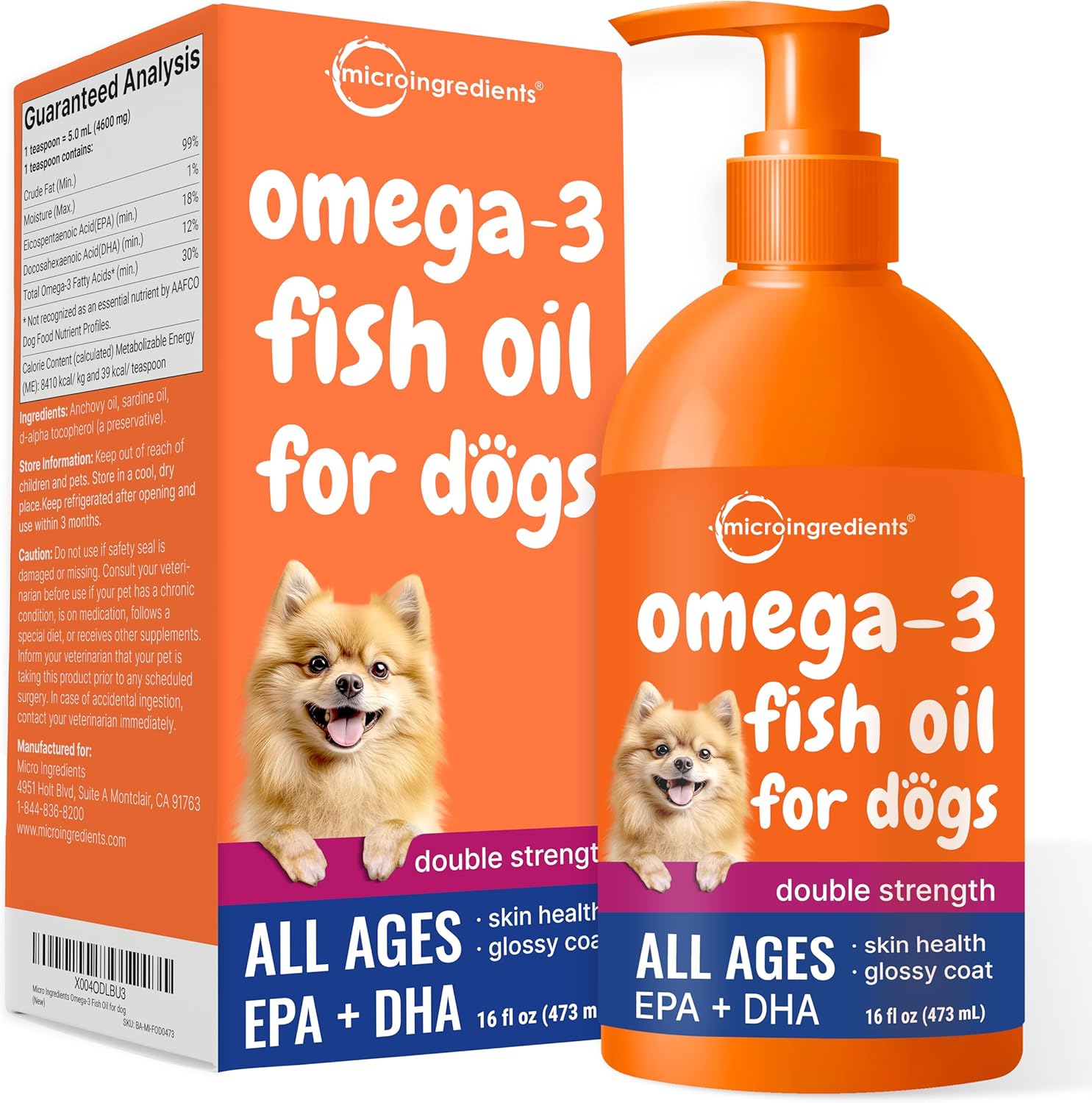
Omega-3 Fish Oil for Dogs
★★★★★
Includes omega-3 fatty acids that help maintain joint flexibility and mobility, allowing pets to stay active
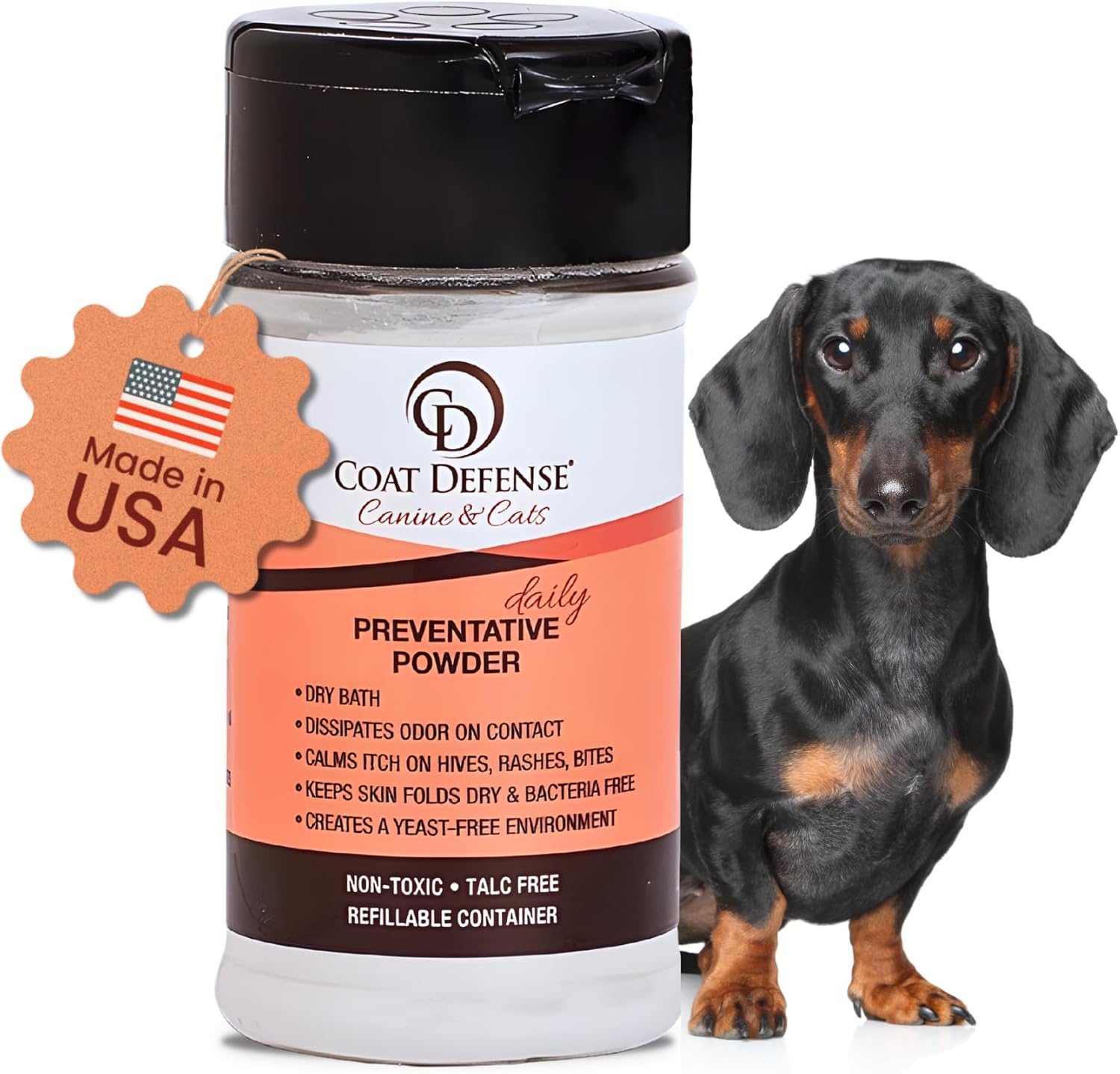
COAT DEFENSE Daily Preventative Powder
★★★★★
This preventative powder provides itch relief for dogs and cats from stubborn skin conditions including hives, hot spots, rashes, bug bites, Dermatitis, skin-related allergies
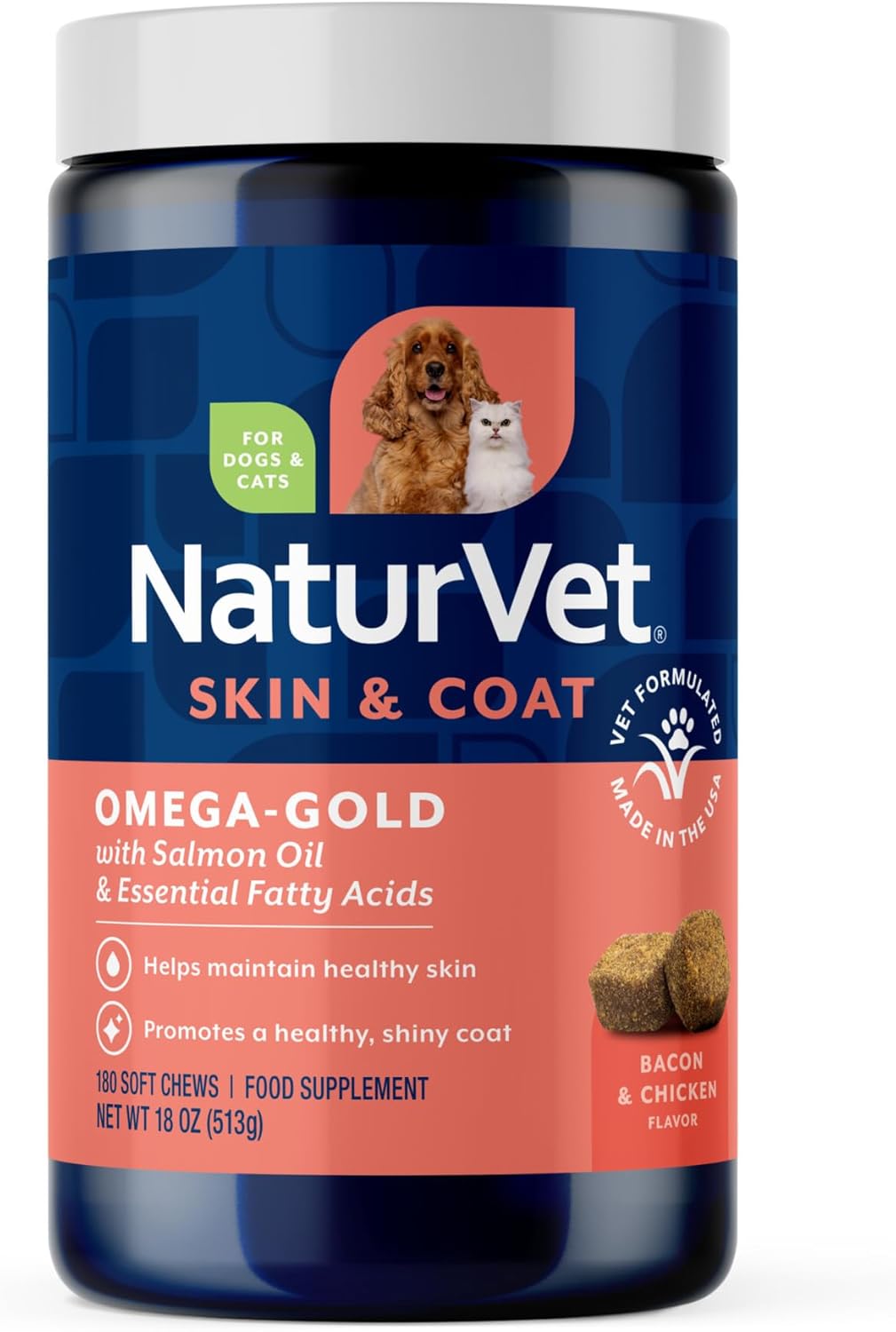
Roślinny suplement diety
★★★★★
Made with salmon oil to help soothe itchy, flaky skin and support year-round moisture, comfort, and coat nourishment.

TropiClean Oatmeal Dog Shampoo for Itchy Skin
★★★★★
Soothing & Effective – With Apha Hydroxy to reduce inflammation, plus soothing Oatmeal & Vitamin E.
Daily Dachshund grooming
Grooming a Dachshund is not just about appearance – it is the first line of defence against skin disease. Each coat type has different needs, and incorrect care can trigger the very problems you are trying to prevent.
👉 Read more: Dachshund grooming guide
Seasonal care - winter and summer
Winter: salt and dryness
Road salt is highly hygroscopic – it draws moisture out of paw pads, leading to cracking and deep sores.
- Apply a paw balm based on beeswax or lanolin before every walk
- Wash paws with lukewarm water (no detergents) immediately after returning home
- Use a humidifier indoors – dry heated air increases itching and flaking
- Short-haired Dachshunds may need protective clothing – chilling can weaken skin immunity
Summer: UV and parasites
UV radiation is a serious risk for Dachshunds with CDA and lighter skin tones. Dachshunds love sunbathing, but the belly and ears can easily become sunburned, and in dogs with pemphigus foliaceus, sun exposure may worsen the condition.
- Provide constant access to shade and avoid walks between 11:00–15:00
- Maintain flea and tick prevention regularly – flea allergy dermatitis worsens in summer and autumn
- Monitor allergic dogs closely in spring – pollen season often triggers flare-ups of atopy
Home dermatology first aid kit
Many mild skin irritations can be soothed with simple supportive care (always alongside veterinary treatment when needed):
- Oat bath – beta-glucans from oats reduce itching; use a cooled oat infusion in bath water for 20–30 minutes
- Starch bath – potato starch creates a protective, non-drying barrier; useful for sudden itching episodes
- Apple cider vinegar rinse – diluted 1:1 with water helps restore acidic skin pH (5.5–6.0) and inhibits Malassezia overgrowth
- Coconut oil (topical use) – lauric acid has mild antibacterial and antifungal properties; safe even if licked by the dog
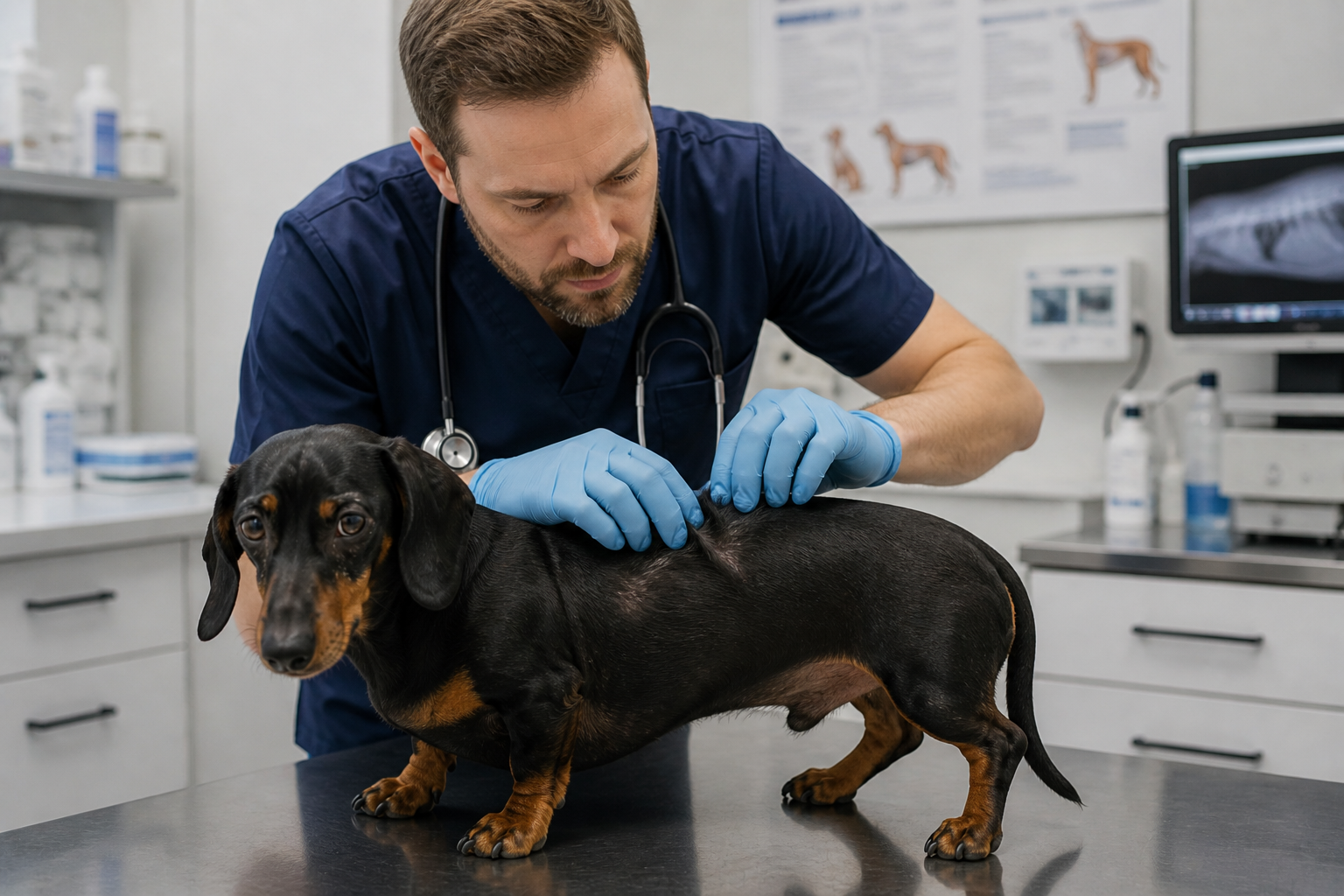
When you should absolutely see a veterinarian
Remember: Managing a Dachshund’s skin health is an ongoing process – it does not end once a single infection clears up. A Dachshund with healthy, shiny skin and coat is usually a dog with a balanced immune system, stable hormones, and properly tailored daily care.
| Symptom | Possible cause | What to do |
|---|---|---|
| Sudden facial swelling, hives, difficulty breathing | Anaphylactic reaction (insect sting, medication) | Seek emergency veterinary care immediately – risk of shock |
| Fast-growing lump under or on the skin | Tumour (mast cell tumour and others) | Urgent veterinary visit and fine-needle biopsy |
| Honey-coloured crusts on the nose and ears, cracked paw pads | Pemphigus foliaceus (autoimmune disease) | Skin biopsy and histopathology |
| Symmetrical hair loss on the trunk without itching, pot-bellied appearance | Cushing’s disease or hypothyroidism | Blood tests and hormonal profile |
| Darkening of the armpit skin with a strong “yeasty” smell | Malassezia dermatitis + Acanthosis Nigricans | Cytology and medicated shampoo therapy |
Frequently asked questions
Why is the skin under my Dachshund’s armpits turning dark - is that normal?
It may be Acanthosis Nigricans – a genetic skin disorder strongly associated with Dachshunds. If the darkening is symmetrical, appears before the first year of life, and is not accompanied by itching or pain, it is likely the primary form of the condition. The real issue comes from secondary yeast and bacterial infections that often develop on affected skin – and those do require treatment. Consult your veterinarian for a proper diagnosis.
My Dachshund has bald ears - what could it be?
Most likely Pinnal Alopecia – patterned hair loss of the ear flaps, which is common in this breed. It is usually a cosmetic condition and does not cause pain or itching. However, a veterinarian should still rule out other causes such as hormonal disorders (hypothyroidism or Cushing’s disease) and vasculitis.
My Dachshund is blue/Isabella and losing hair - what could this mean?
This is most likely Color Dilution Alopecia (CDA), a condition associated with diluted coat colours. Unfortunately, there is no cure and the lost hair will not regrow. Focus on protecting exposed skin from UV radiation and extreme temperatures. A veterinary consultation is important to rule out other causes of hair loss.
How long does Omega-3 supplementation take before I see improvements in my dog’s skin?
Usually at least 6 weeks of consistent supplementation are needed before fatty acids reach stable levels within skin cell membranes. Do not stop after 2–3 weeks just because “nothing has changed yet” – that is still too early. A therapeutic dose is around 125 mg of EPA + DHA per kilogram of body weight daily. Always discuss dosage and supplementation with your veterinarian.
What does a “yeasty” smell coming from my Dachshund mean?
Important information: The content on this page is for educational and informational purposes only. It does not replace professional veterinary advice or diagnosis. If you notice concerning skin changes in your Dachshund, consult a veterinarian or veterinary dermatologist.
Want to learn more about Dachshund health?
Explore our other guides – from spinal health to grooming and everyday care.
More about Dachshund health
Dachshund heat safety: how to protect your dog from summer heatstroke
Low to the ground, high risk in summer Dachshunds overheat faster than most dogs their size because of their body shape: short legs and a long body keep their belly and chest just inches from hot pavement, and their compact respiratory system has to work harder to...

Spaying and neutering a dachshund: timing, benefits, and spinal health
Most vets recommend waiting until your dachshund is at least 12 months old before spaying or neutering - and for females, some spinal health research supports waiting even longer. Dachshunds carry a lifelong risk of IVDD (intervertebral disc disease), and sex hormones...
Deworming a dachshund – how often and what to use? An owner’s guide
Your dachshund looks perfectly healthy. Eats well, runs to the door when you pick up the leash, and steals your spot on the couch the moment you stand up. And yet there's a decent chance they're carrying intestinal parasites right now - because that's how parasites...
Join our newsletter
Adres
Dachshunds Planet
Disclaimer: This site contains affiliate links, which means we may earn a commission on purchases made through them.