Low to the ground, high risk in summer
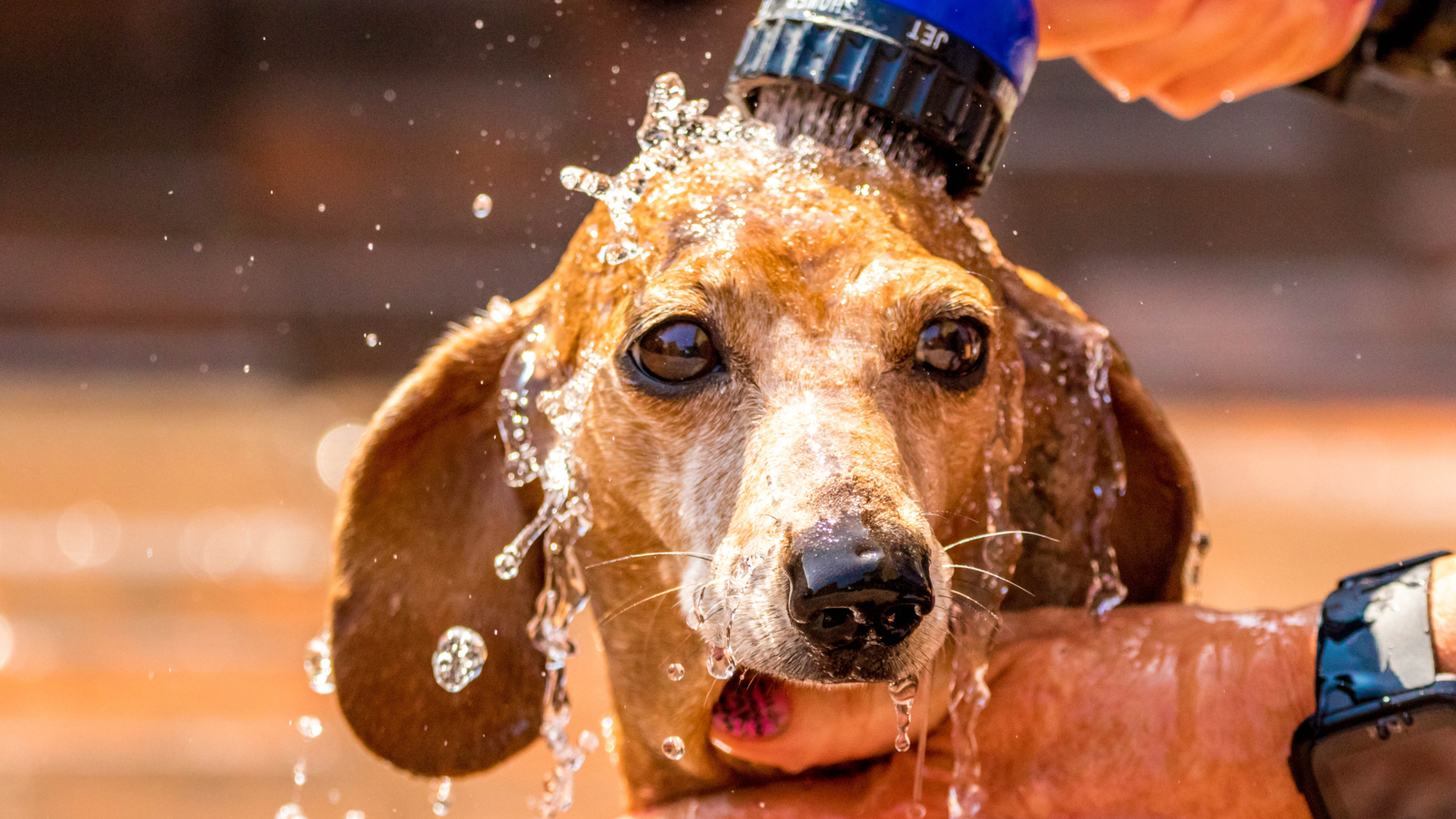
Dachshunds overheat faster than most dogs their size because of their body shape: short legs and a long body keep their belly and chest just inches from hot pavement, and their compact respiratory system has to work harder to dissipate heat through panting. The safest hours to be outside are early morning and evening; between 10am and 4pm, pavement and air temperatures peak and heatstroke risk climbs fastest. Watch for heavy panting that doesn’t ease up, pale or bluish gums, and weakness – these call for immediate cooling and a vet visit, not a wait-and-see approach.
The rest of this guide covers the details: how to adjust walk timing, safe ways to cool a dachshund from the inside and outside, every warning sign of heatstroke, and what to do before you can get to a vet.
Why heat is more dangerous for dachshunds than for other breeds
The “frying pan” effect – low clearance near hot asphalt
Dogs with standard body proportions have several inches, sometimes closer to a foot, of clearance between their belly and the ground. A dachshund typically has only 4-6 inches, which puts their belly and chest close enough to hot asphalt to absorb significant radiant heat. Research on pavement temperature shows that at an air temperature of 77°F, asphalt in direct sun can reach about 125°F, and at 86°F air temperature it can climb to 135°F or higher – hot enough to cause burns in under a minute. Dogs cool down mainly through panting (evaporation from the tongue, nasal passages, and airway) and through vasodilation in the ears and face; the sweat glands in their paw pads play only a small, supporting role in this process. Extended contact with hot pavement is therefore not just uncomfortable – it’s a real burn risk for the paw pads.
Long spine and cooling the back
Dachshunds, as a chondrodystrophic breed, are predisposed to intervertebral disc disease (IVDD), and research has found that acute IVDD episodes occur more often during periods of colder ambient temperature. There’s no direct evidence that cooling a dog with a fan or air conditioning triggers an IVDD episode, but given how sensitive this breed’s back is in general, it makes sense to direct cool air and water toward the belly, groin, and paws rather than straight at the spine.
A new walk schedule: dawn, dusk, and the 5-second rule
When to walk
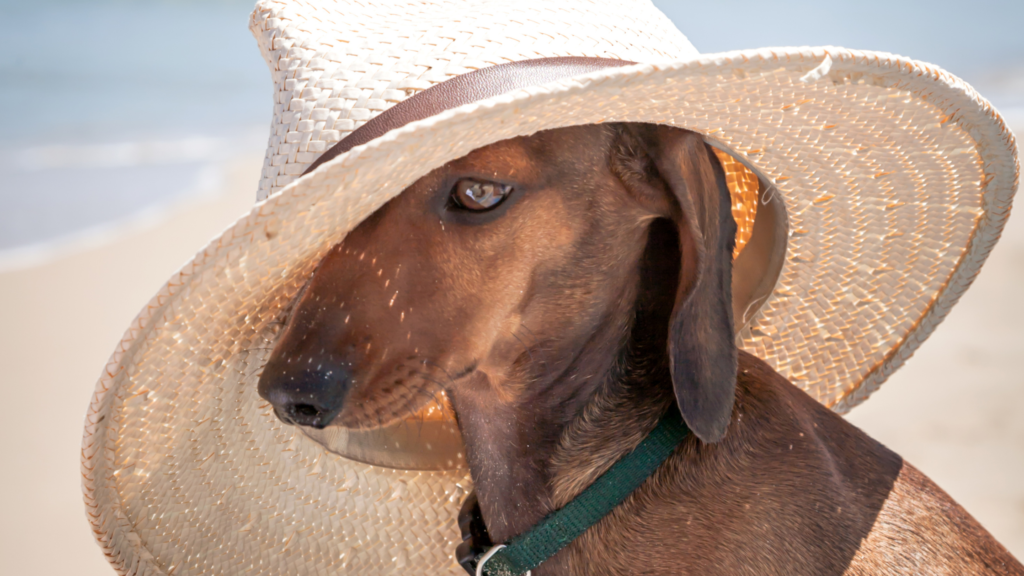
In summer, shift walks to early morning (before 8am) and evening (after 7-8pm), avoiding the most dangerous window of 10am to 4pm, when both air and pavement temperatures peak. On days with extreme heat warnings, it’s better to limit outdoor time to a quick bathroom break instead of a full walk.
What about bathroom breaks during the day?
Shifting walks to dawn and dusk doesn’t mean your dachshund has to hold it for ten hours in the middle of the day. In practice, this means swapping a long, recreational walk for a short, controlled trip outside that’s strictly business:
- Cut the outing down to the essentials. Instead of a 20-30 minute walk, 2-3 minutes is enough for your dog to relieve themselves close to the house, ideally in the shade of a building or tree.
- Choose grass over asphalt. Lawns, dirt, and gravel heat up far less than concrete or asphalt, so even a short stretch of grass is safer than crossing a hot street.
- Carry your dog to the nearest patch of grass if the path there crosses hot pavement – for a dachshund, this is an easy fix that protects their paw pads from direct contact with the hot surface.
- Use a yard, patio, or pee pad if your dog is already comfortable with one – on extreme heat days (90°F and above), this is a safer option than any time spent outside at midday.
- Watch your dog’s behavior, not the clock. If your dachshund is dragging their feet, lifting their paws, seeking shade after just a few steps, or panting heavily, that’s a sign even a short outing has gone on too long. Head back inside.
- Bring water even for a 2-minute trip on days above 85°F – a short time outside doesn’t eliminate the risk of overheating if the sun is intense.
The rule of thumb: during the day, you’re minimizing contact with hot pavement and sun exposure, not eliminating outdoor time altogether. A dog who needs to go should be able to do it quickly and safely, without waiting until evening.
The 5-second pavement test
Before heading out, press the back of your hand against the pavement and hold it there for 5 seconds – this is the standard test most commonly recommended for dachshunds specifically, given how close their bellies and paws sit to the ground. If it’s too hot for your hand, it’s too hot for your dachshund’s paws. Paw pad burns happen faster than most owners expect, and they take a long time to heal.
Indoor activities as an alternative
Dachshunds were bred as scent hounds, so mental fatigue affects them in a way similar to physical exercise. During the hottest hours, scent games in a cool room work well: hiding treats around the house, a snuffle mat, or a quick obedience session. This burns off energy without exposing your dog to direct sunlight.
Diet and hydration: cooling from the inside
Why a water bowl alone isn’t enough
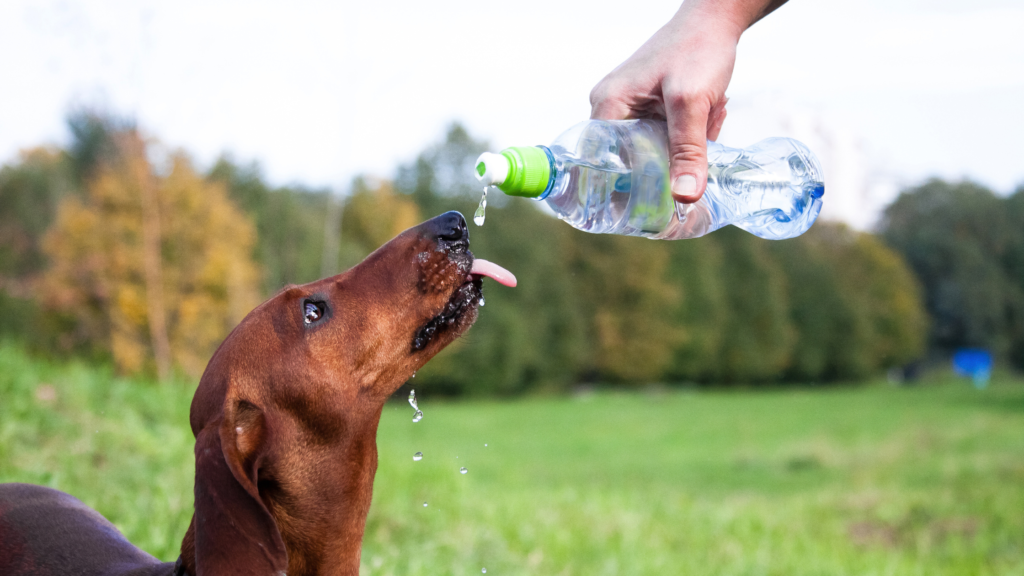
In summer, refresh your dog’s water more than once a day – warm water becomes less appealing, and dogs tend to drink less of it. Bring water and a collapsible bowl on walks; a dachshund shouldn’t have to wait until you’re back home to drink.
Frozen treats – safe cooling recipes
A frozen Kong-style toy or a lick mat is a simple way to combine cooling with mental enrichment. Safe ingredients to fill it with:
- plain yogurt with no added sugar
- a small amount of mashed banana
- cooked, unseasoned meat (chicken or turkey) as a flavor base
Avoid fatty add-ins like liver pâté in large amounts – in hot weather, fatty treats put extra strain on the pancreas and can trigger digestive upset, which is an added risk on top of heat stress.
Cooling gear: what actually works
Cooling mats
Gel-based or pressure-activated cooling mats work by drawing heat away from the body on contact – they don’t need to be frozen and recharge after a few minutes of no contact. The catch is that some dachshunds refuse to lie on them because of the rustling sound or plastic smell. Covering the mat with a thin cotton blanket helps; cooling power drops slightly, but most dogs use it more willingly.
The wet towel mistake
Draping a damp towel over a dog’s back is one of the most common mistakes owners make. The towel heats up against the body and starts acting like insulation, trapping heat instead of releasing it. The correct use is the opposite: the dog should lie on top of a cool, damp towel, so heat transfers away from the body and into the fabric.
Summer coat care: smooth, wire-haired, and long-haired dachshunds
Wire-haired and long-haired – don’t shave them down
The undercoat and topcoat work as natural insulation, protecting against heat the same way they protect against cold. Shaving a dachshund down to the skin in summer removes that protection and exposes the skin to sunburn, and the coat can grow back with a different texture. Regular brushing to thin out the undercoat is enough – there’s no need to cut the topcoat short.
Smooth-haired – watch for sunburn
Smooth-haired dachshunds, especially those with light-colored skin (blue, isabella, and some piebald dogs), are more prone to sunburn around the ears, nose, and belly. On long, sunny days, apply a dog-safe sunscreen to these areas – human sunscreen can contain ingredients that are toxic if licked off.
Heatstroke in dachshunds: every second counts
A dog’s normal body temperature runs between 101°F and 102.5°F – already higher than ours. Once core temperature climbs past 104°F, a dog needs treatment for heatstroke. According to Cornell University’s veterinary researchers, heatstroke can set in within 15 minutes in hot conditions, especially during physical activity – which is part of why prevention matters more than reaction.
Never leave your dachshund in a parked car
This deserves its own warning because it’s one of the most common – and most preventable – causes of fatal heatstroke. Even with the windows cracked, a parked car heats up fast: at an outside temperature of 85°F, the inside of a car can reach 102°F within minutes and climb to around 120°F after just 30 minutes. Cracking the windows barely slows this down. If you need to run an errand where dogs aren’t allowed inside, it’s safer to leave your dachshund at home.
Warning signs you shouldn’t ignore
- very fast, heavy panting that doesn’t slow down after a short rest
- blue-tinged or very pale gums and tongue
- a glassy, unfocused look in the eyes
- weakness, reluctance to stand, or loss of coordination
- vomiting or diarrhea
Any of these signs combined with high temperatures call for immediate action, not a wait-and-see approach. Senior dachshunds, overweight dogs, and dogs with existing heart or respiratory conditions are at higher risk and should be watched even more closely on hot days.
First aid, step by step
- Move your dog to a cool, shaded area, ideally near a fan or air conditioning.
- Pour cool (not ice-cold) water over the paws, groin, belly, and ears – water that’s too cold causes skin blood vessels to constrict, which actually slows down heat loss. Don’t cover your dog with a wet towel – this traps heat instead of releasing it, the same way it does with everyday overheating.
- Offer small amounts of water to drink, but never force your dog to drink, especially if they’re weak or unresponsive.
- Get to a vet as quickly as possible, even if symptoms seem to improve – heatstroke can damage internal organs without obvious outward signs. Dogs that are cooled before arriving at the clinic have a significantly better chance of survival than those that aren’t cooled until they get there.
Burned paws: a different emergency
Hot pavement doesn’t just cause discomfort – it causes actual burns, which are graded by severity:
- the affected area is red and swollen (first degree)
- clear blisters form (second degree)
- the skin appears charred (third degree)
If your dog has burned paws, contact a vet as soon as possible. While you arrange that, cool the affected paws under slow-running water that isn’t ice-cold, then wrap each paw or, if you don’t have bandages on hand, cover it with a clean sock to keep your dog from licking or further injuring the area.
Heat safety checklist
Do:
- walk at dawn and dusk
- run the 5-second pavement test before heading out
- refresh water several times a day
- cover the cooling mat with a thin blanket
- play scent games indoors during peak heat
Avoid:
- walking between 10am and 4pm in direct sun
- draping a wet towel over your dog’s back
- shaving wire-haired or long-haired dachshunds down to the skin
- fatty treats as a “cooling” snack
- pointing a fan directly at your dog’s spine
- leaving your dachshund in a parked car, even for a few minutes
FAQ: hot weather and dachshunds
Can dachshunds eat regular ice cream?
No. Ice cream made for people contains sugar and often dairy in amounts that can upset a dog’s stomach. A safer alternative is frozen plain yogurt or a homemade frozen banana treat.
How do I cool down my dachshund without a cooling mat?
A damp, cool towel placed on the floor (not draped over the dog), access to a shaded, well-ventilated spot, and frequent fresh water are enough in most homes without specialized gear.
Do dachshunds like swimming in hot weather?
Some dachshunds enjoy swimming, but their short legs and long torso make it more physically demanding than it is for dogs with standard proportions. First attempts should happen in shallow water, under supervision, ideally with a canine life vest.
Should my dachshund sleep in an air-conditioned room?
Yes, but the airflow shouldn’t blow directly onto their back. A steady, moderate room temperature (around 72-75°F) is safer than a strong stream of cold air aimed at the spine.
How can I tell if my dachshund is dehydrated?
Dry, sticky gums, sunken-looking eyes, and a loss of skin elasticity (gently lift the skin at the scruff – it should snap back quickly) are common signs. If you notice these, offer water right away and contact your vet.
Does my dachshund need sunscreen in summer?
Yes, especially smooth-haired dachshunds with light skin, on the ears, nose, and belly. Use a sunscreen made specifically for dogs, since human products can be harmful if licked.
Should I shave my dachshund’s coat for summer?
For wire-haired and long-haired dachshunds, shaving down to the skin removes natural protection from the sun and increases the risk of sunburn, so it’s better to stick with regular brushing to thin the undercoat.
How much water should a dachshund drink on a hot day?
Needs vary by individual dog, but water intake noticeably increases in hot weather compared to cooler days. What matters more than a specific number is constant access to fresh, cool water and watching that your dog is drinking normally.
Can I still take my dachshund out in the middle of the day if they need to go?
Yes – skip the full walk, but a quick 2-3 minute trip to a grassy spot near the house, away from direct pavement contact, is fine even on a hot day. Watch your dog’s behavior and head back inside at the first sign of discomfort.
Is it ever okay to leave my dachshund in the car for a quick errand?
No. Even with the windows cracked, a car’s interior heats up far faster than most people expect, reaching over 100°F within minutes on a warm day and well above that within half an hour. If a stop doesn’t allow dogs inside, it’s safer to leave your dachshund at home.
This article has been reviewed for accuracy on dachshund care in hot weather. If you suspect heatstroke or notice any other concerning symptoms, always contact your veterinarian.
Sources
Note: the sources above are for general information only and don’t replace veterinary care. In urgent situations (suspected heatstroke, burned paws, dehydration), always contact your veterinarian.
- FOUR PAWS US. Hot Asphalt – A Danger to your Dog’s Paws. Based on a Frostburg State University study on surface temperatures. https://www.fourpawsusa.org/our-stories/publications-guides/hot-asphalt-a-danger-to-your-dogs-paws
- American Kennel Club. How to Protect Dog Paws From Hot Pavement, Sidewalks – data via the Journal of the American Medical Association and commentary from Dr. Jerry Klein, DVM, AKC Chief Veterinary Officer. https://www.akc.org/expert-advice/health/dog-paws-hot-pavement/
- AKC. Do Dogs Sweat? How Do Dogs Sweat? – overview of canine thermoregulation (panting, merocrine sweat glands in paw pads, vasodilation). https://www.akc.org/expert-advice/health/do-dogs-sweat/
- PetMD. Do Dogs Sweat? – the supporting role of paw pad sweat glands relative to panting. https://www.petmd.com/dog/general-health/do-dogs-sweat
- Mayhew PD, Mowat F, et al. Colder Ambient Temperatures Influence Acute Onset Canine Intervertebral Disc Extrusion. PMC, a study of 101 chondrodystrophic dogs from the Lake Geneva region, including dachshunds (17.8% of the study population). https://pmc.ncbi.nlm.nih.gov/articles/PMC7154144/
- Dachshund-specific veterinary and breed-safety guidance. Recommendation of the “five-second test” as a standard method for checking pavement temperature before a walk, given how close a dachshund’s body sits to the ground. https://www.ellevetsciences.com/pet-care/hot-pavement-preventing-and-treating-pad-burn-in-dogs/
- Preventive Vet. How to Treat Heat Exhaustion & Heatstroke in Pets – guidance on offering small amounts of water and never forcing a dog to drink. https://www.preventivevet.com/pets/how-to-treat-heatstroke-heat-exhaustion-in-dogs-and-cats
- Cornell University College of Veterinary Medicine. Heatstroke: A medical emergency – on the risk of internal organ damage from elevated body temperature, the 15-minute onset window during physical activity, and the need for veterinary care regardless of whether symptoms appear to resolve. https://www.vet.cornell.edu/departments-centers-and-institutes/riney-canine-health-center/canine-health-information/heatstroke-medical-emergency
- Vets Now. How to: first aid for heat stroke in pets. The “cool first, transport second” principle and survival data for dogs cooled before arriving at a clinic. https://www.vets-now.com/pet-care-advice/first-aid-for-heatstroke-in-pets/
- Royal Veterinary College (RVC). Heatstroke in dogs and cats – prevention, symptoms and first aid tips for pet owners. Guidance on avoiding ice-cold water due to skin vasoconstriction, which slows heat loss. https://www.rvc.ac.uk/small-animal-vet/teaching-and-research/fact-files/heatstroke-in-dogs-and-cats


0 Comments