
SPINAL PROBLEMS IN DACHSHUNDS (IVDD)
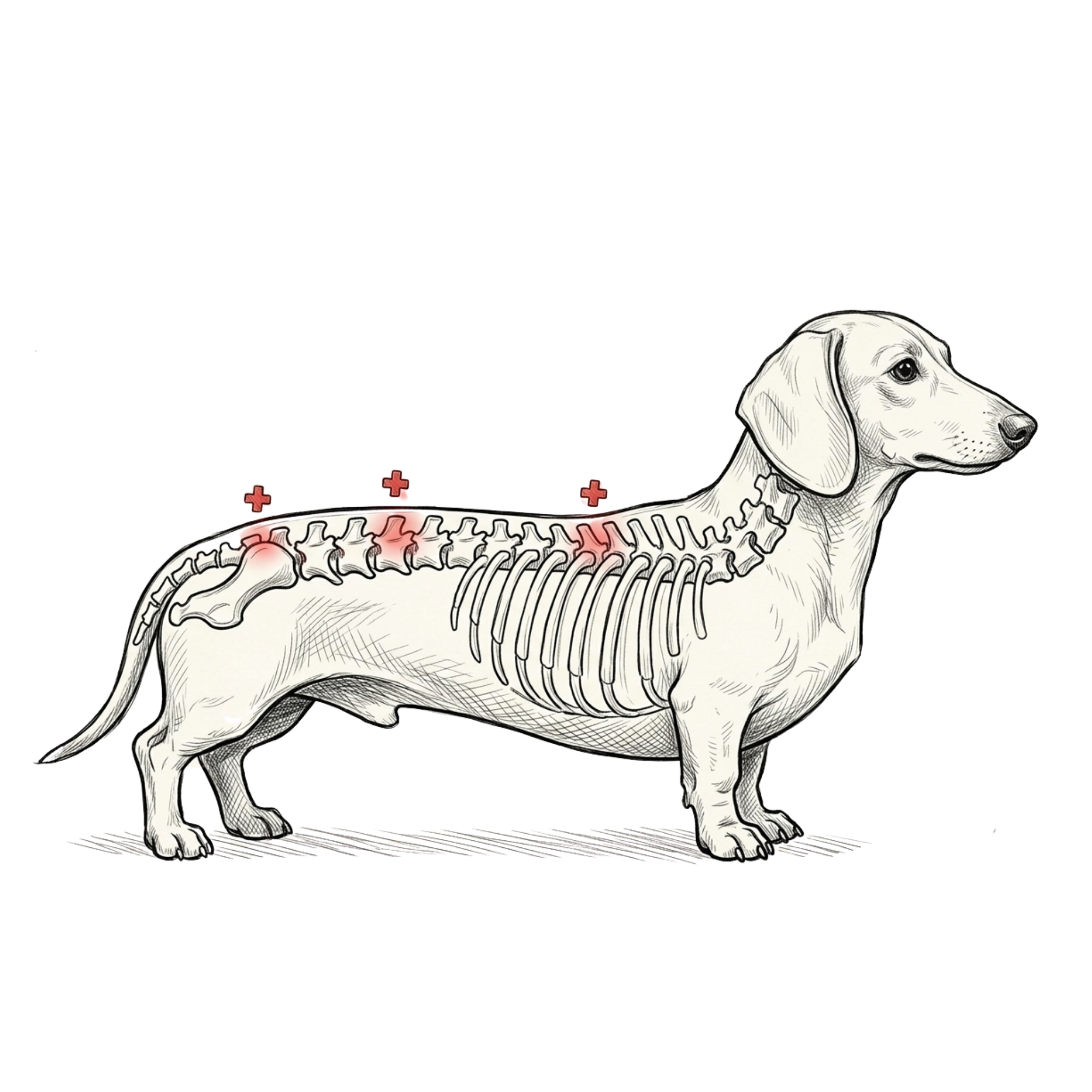
Dachshunds are one of the dog breeds most prone to spinal problems, especially Intervertebral Disc Disease (IVDD). Their long backs, short legs, and chondrodystrophic body structure make their spinal discs degenerate much faster than in many other breeds.
This guide will help you recognize the early warning signs of IVDD, understand the causes, and learn how to protect your Dachshund’s spine through proper daily care and prevention.
This page is for informational purposes only and does not replace professional veterinary advice. Always consult your veterinarian if you notice symptoms or changes in your dog’s mobility.
What Is IVDD?
IVDD (Intervertebral Disc Disease) is a spinal condition in which the discs between the vertebrae begin to degenerate, rupture, or slip out of place, putting pressure on the spinal cord.
In Dachshunds, the most common form is Hansen Type I IVDD, a sudden and painful disc herniation that can quickly lead to neurological symptoms, mobility problems, or even paralysis.
U jamników występuje najczęściej typ I, czyli gwałtowne, bolesne uszkodzenie krążka.
Why Are Dachshunds More Prone to IVDD?
Dachshunds have a significantly higher risk of spinal disease because of several factors:
- genetic chondrodystrophy,
- early degeneration of spinal discs,
- long spine combined with a relatively heavy body structure,
- inherited family predisposition to IVDD.
Signs of Spinal Problems in Dachshunds
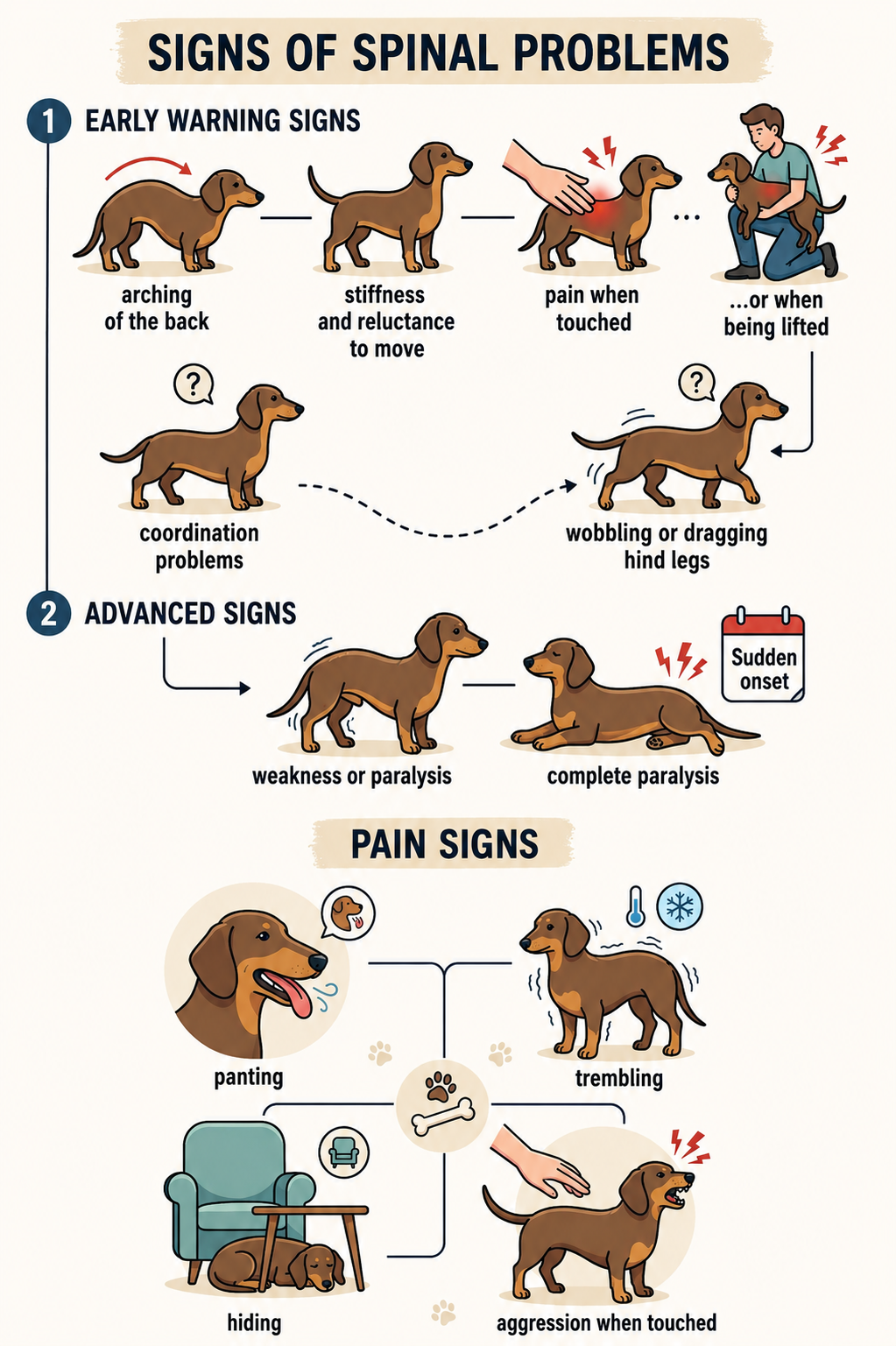
Symptoms can appear suddenly or develop gradually over time.
Common Warning Signs
- stiffness and reluctance to move,
- arched or hunched back,
- pain when touched or lifted,
- coordination problems,
- wobbling or dragging hind legs,
- weakness or partial paralysis,
- sudden paralysis.
Signs of Pain
- excessive panting,
- trembling or shaking,
- hiding or withdrawing,
When is IVDD an emergency?
Get to a vet immediately if your dachshund:
- suddenly stops walking
- starts dragging their back legs
- loses bladder control
- cries or whimpers in pain
- shows tremors, seizures, or muscle stiffness
With IVDD, time = prognosis.
The faster your dog gets veterinary help, the higher the chance of recovery and getting back on their paws.
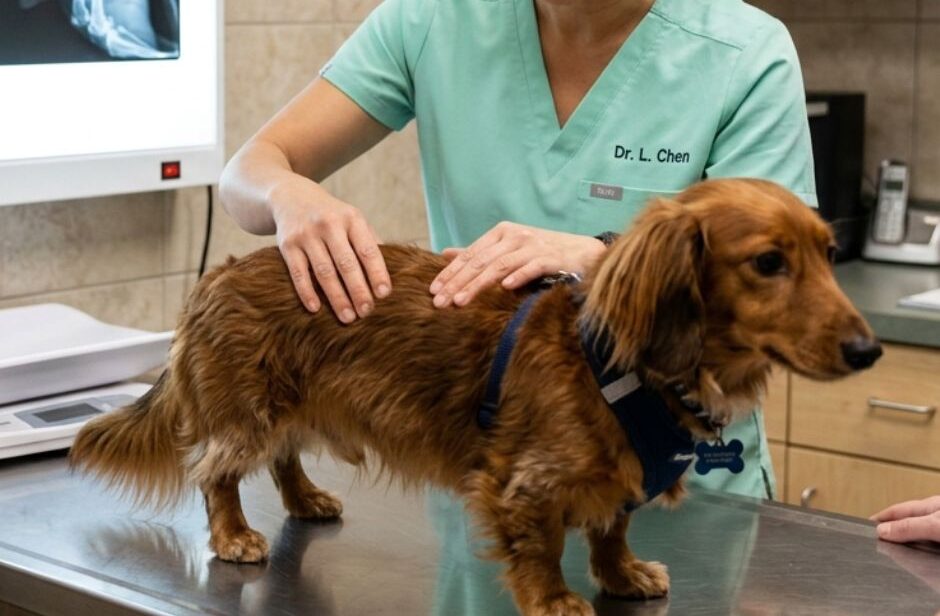
IVDD diagnosis
Neurological exam
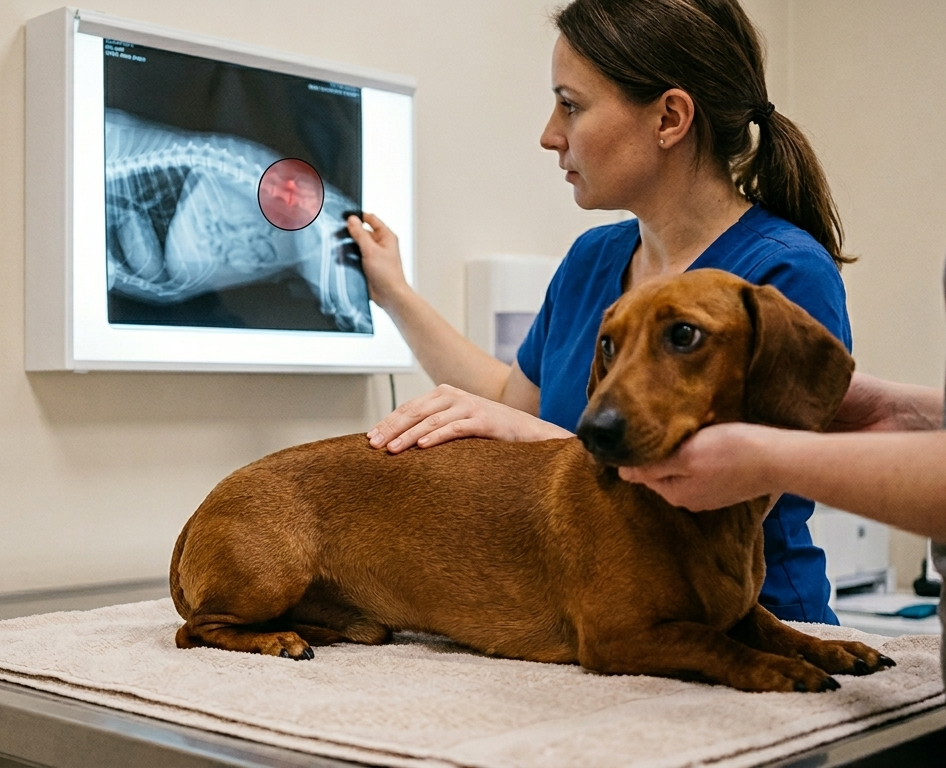
X-ray (RTG)
MRI scan
CT scan
IVDD treatment
With IVDD, the treatment path depends on severity — and early, correct intervention can completely change the outcome.
Conservative treatment (mild cases)
- strict crate rest for 4–6 weeks
- pain relief medication
- anti-inflammatory medication
- physiotherapy once pain is under control
Surgical treatment (severe cases)
- hemilaminectomy
- fenestration
- post-operative rehabilitation
When is surgery necessary?
- weakness in the hind legs (paresis)
- paralysis
- loss of deep pain sensation
- recurring episodes
Rehabilitation of a dachshund after IVDD
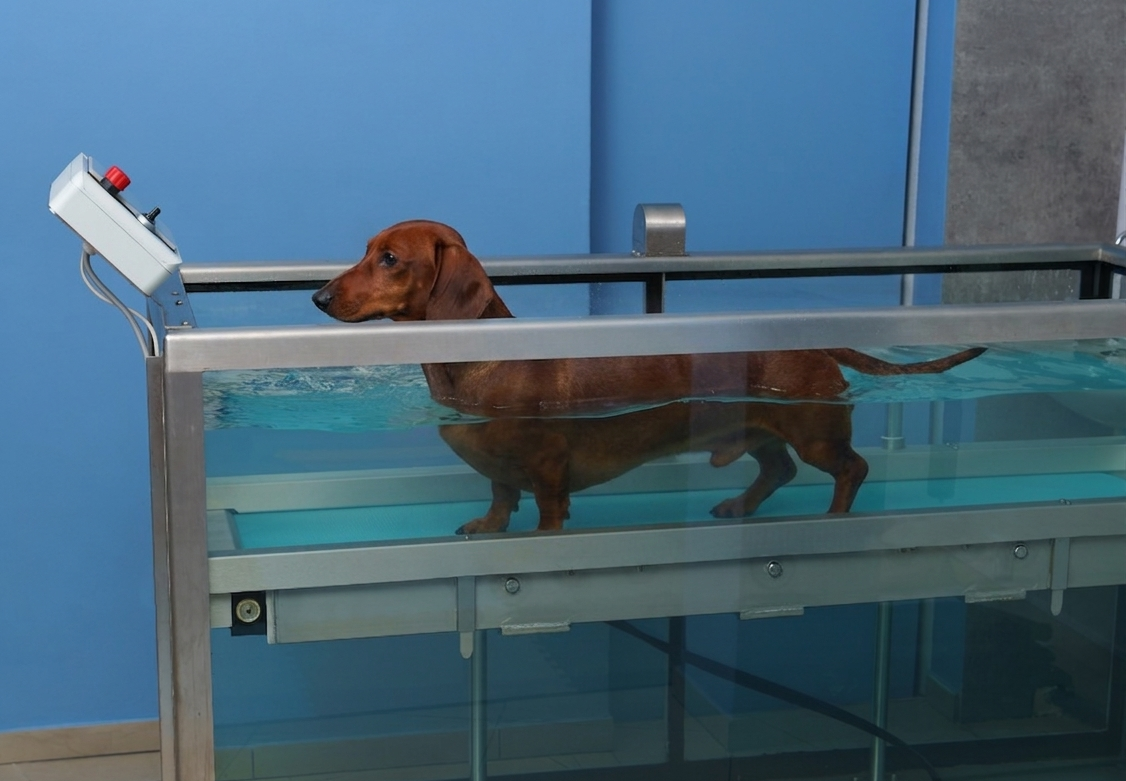
Rehabilitation is a key part of recovery and returning to mobility and quality of life.
Most commonly used methods include:
• hydrotherapy (underwater treadmill)
• laser therapy
• massage therapy
• proprioception exercises (body awareness and balance training)
• electrostimulation
Every recovery plan is individual — consistency, patience, and proper guidance are what help a dachshund regain strength step by step.
Prevention of spinal problems in dachshunds
IVDD in dachshunds (Intervertebral Disc Disease): Symptoms, treatment and prevention
IVDD (Intervertebral Disc Disease) is the most serious health challenge dachshund owners may face. The statistics are clear: up to 1 in 4 dachshunds will experience a disc disease episode during their lifetime.
And while that sounds alarming, there is important hope. Early response and proper care can make a huge difference in recovery.
More about spinal health
FAQ - Frequently asked questions
What are the first signs of spinal problems in a dachshund?
The earliest signs are usually reluctance to jump, cautious walking, a hunched posture, or crying out when being picked up. These symptoms can seem subtle, but early action matters because quick intervention may help slow the progression of IVDD.
Is every dachshund at risk of IVDD?
Yes. Dachshunds have a genetic predisposition to faster degeneration of the spinal discs. That does not mean every dachshund will develop IVDD, but proper prevention can significantly reduce the risk.
When should a dachshund see a vet?
Immediately if you notice sudden pain, difficulty walking, seizures, blood in urine or stool, vomiting combined with lethargy, breathing problems, or sudden behavioral changes. In less urgent situations, it is still worth scheduling a routine veterinary check-up.
Do spinal problems always mean surgery?
No. In many mild to moderate cases (Grade I-II), strict crate rest and conservative treatment may be enough. Surgery is usually recommended when weakness or paralysis develops.
How can I reduce the risk of spinal problems in my dachshund?