
Most vets recommend waiting until your dachshund is at least 12 months old before spaying or neutering – and for females, some spinal health research supports waiting even longer. Dachshunds carry a lifelong risk of IVDD (intervertebral disc disease), and sex hormones play a role in musculoskeletal development. Timing this decision well matters for your dog’s long-term health.
What spaying and neutering actually means
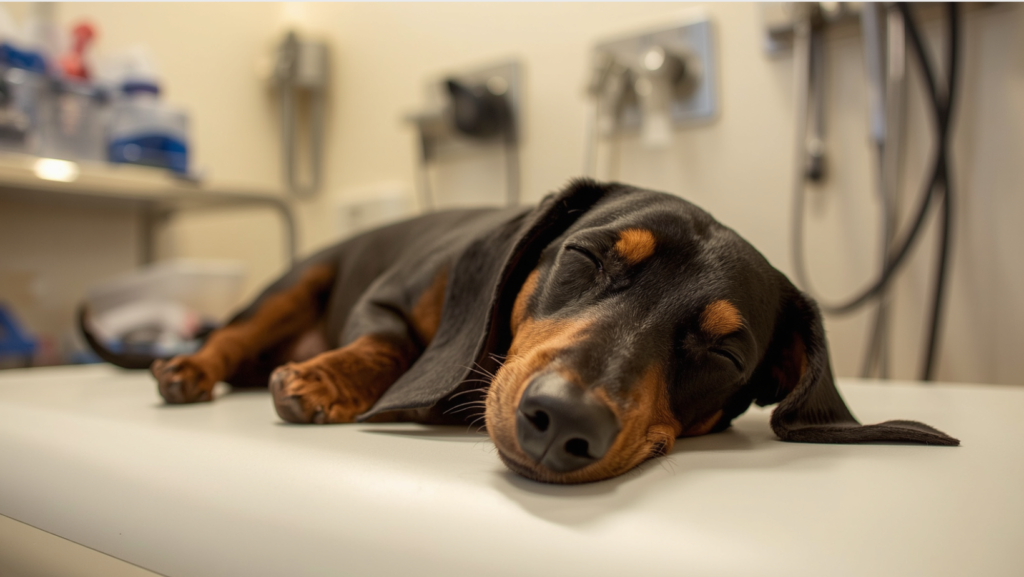
Spaying refers to the surgical removal of a female dog’s ovaries and uterus (ovariohysterectomy). Neutering – or castration – refers to the surgical removal of a male dog’s testicles. Both procedures are performed under general anesthesia by a licensed veterinarian.
The word “neutering” is technically a gender-neutral term covering both procedures, but in everyday American usage it most often refers to males. You’ll see “spay/neuter” used as a pair throughout this article.
Why dachshunds are different from other dogs
The standard advice for small breeds has long been: spay or neuter at 6 months, before the first heat. For many small dogs, that guidance holds up reasonably well. Dachshunds are a different case.
The breed is chondrodystrophic – meaning their cartilage and bone develop differently from non-chondrodystrophic breeds. This same trait that gives them their distinctive short-legged shape also predisposes them to early intervertebral disc degeneration. Up to 25% of dachshunds will experience a clinically significant IVDD episode in their lifetime, and the spinal discs begin degenerating far earlier than in most breeds – sometimes before age 2.
Sex hormones – estrogen and testosterone – are not just reproductive signals. They influence growth plate closure, bone density, ligament strength, and muscle development. Remove them before the skeleton has fully matured, and you may be removing scaffolding the body still needs.
What the research says about IVDD and neutering timing
This is where dachshund owners and vets need to look carefully, because the evidence is genuinely mixed – and two large studies point in opposite directions.
The UK survey data (DachsLife 2015 and 2018)
The Dachshund Breed Council in the UK has run large owner-reported health surveys since 2015. Their DachsLife data found:
- Neutered dachshunds over age 3 had nearly double the odds of IVDD compared to intact dogs (1.8x increase)
- Dogs neutered before 12 months showed higher IVDD rates than those neutered after 12 months
- Female dachshunds neutered before 24 months were four times more likely to have reported an IVDD incident compared to intact females of the same age group
- In the most striking subgroup – 4-year-old dachshunds neutered before 6 months – IVDD incidence was 12 times higher than in intact dogs of the same age
A 2018 peer-reviewed study by Dorn and Seath (published in Companion Animal Health and Genetics) analyzed the DachsLife data formally. It found significantly increased IVDD risk in early-neutered dachshunds of both sexes. For early-neutered males (under 12 months), the risk ratio was 1.54. For early-neutered females, it was 2.12. The study’s conclusion: “gonadectomy, especially if performed before 12 months old, increases risk of IVDH in this breed.”
The 2024 clinical study (Doeven et al.)
A 2024 study published in the Journal of Small Animal Practice took a different approach – looking specifically at 154 female dachshunds who had already experienced surgically confirmed thoracolumbar disc extrusions. It compared early-neutered, late-neutered, and intact females on factors including age at onset, severity of disc extrusion, and rate of subsequent episodes.
The finding: no significant difference between the three groups on any of the variables studied. Neuter status and timing did not affect age at onset or severity of disc extrusion in this clinical population.
How to interpret conflicting evidence
These studies aren’t directly contradictory – they’re asking different questions. The DachsLife surveys track whether neutered dogs are more likely to experience IVDD at all (population risk). The 2024 Doeven study looks at severity and progression once IVDD has already occurred.
The honest answer is that the relationship between neutering and IVDD risk is not definitively resolved. What is well-established is that sex hormones matter for skeletal development, and that very early neutering (before 6 months) shows the most consistent association with increased IVDD occurrence in the survey data.
The UC Davis Hart studies – the most comprehensive breed-specific neutering research in the US – found that for dachshunds specifically, altering did not significantly increase IVDD occurrence in males or females in their clinical record data. However, in male corgis (another chondrodystrophic breed), neutering before 6 months drove IVDD rates from 3% to 18%.
What this means for your decision: The research does not definitively prove that waiting eliminates IVDD risk. IVDD in dachshunds is primarily genetic. But given the breed’s extreme vulnerability, there is a reasonable precautionary case for allowing skeletal development to complete before removing sex hormones – particularly for females.
Recommended timing by sex
Female dachshunds
Most dachshund-aware veterinarians and breed organizations currently recommend waiting until after the first heat cycle, typically around 12-18 months. Some experts suggest waiting until 18-24 months for maximum benefit.
The first heat in dachshunds typically occurs between 6 and 12 months. Spaying before the first heat does reduce mammary cancer risk significantly (more on this below), but it also removes hormonal support during the final stages of musculoskeletal development.
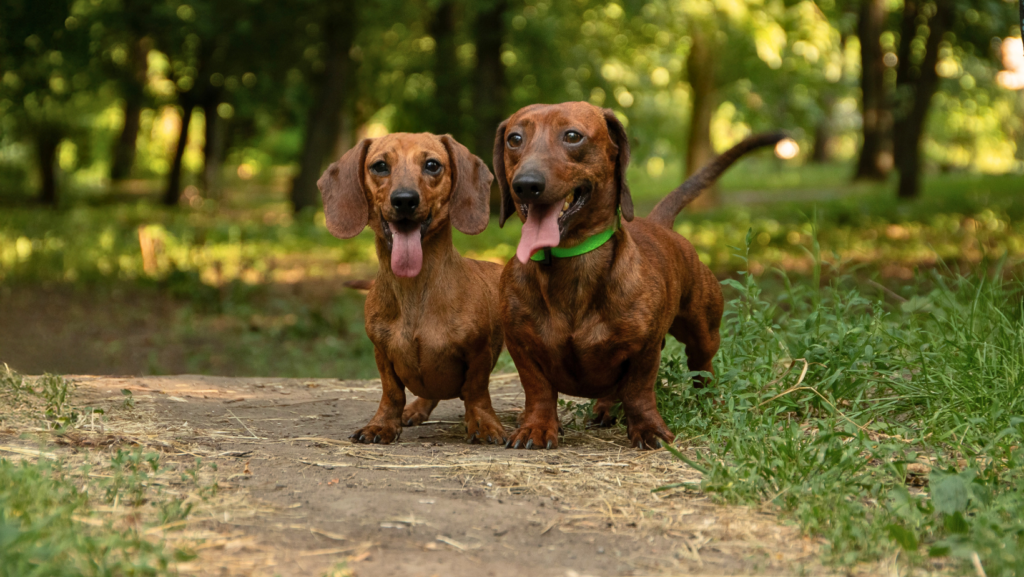
A practical approach many vets use:
- If IVDD is your primary concern: wait until 18 months
- If you want to balance IVDD risk against mammary cancer risk: spay after the first heat but before the second, around 12-15 months
- If your dog lives with intact males and management is difficult: discuss timing with your vet based on your specific situation
Male dachshunds
Evidence for males is somewhat less dramatic than for females, but the same growth-plate argument applies. Waiting until 12-18 months is widely recommended within the dachshund community and increasingly by veterinarians familiar with the breed-specific research.
Early neutering (before 6 months) in males is the scenario most consistently associated with negative outcomes in the studies – including the UC Davis data showing the extreme jump in IVDD rates for male corgis neutered under 6 months.
The benefits of spaying and neutering – what you’re weighing against timing
This is not a purely precautionary exercise. There are real health and practical benefits to consider.
For female dachshunds
- Mammary cancer prevention is the strongest argument for spaying. Intact female dogs have approximately a 26% lifetime risk of developing mammary tumors. Spaying before the first heat reduces that risk to under 1%. After the first heat, the risk increases to around 8%. After the second heat, it rises to approximately 26%. Dachshunds are listed among breeds with higher mammary tumor susceptibility, so this benefit is meaningful.
- Pyometra elimination is the other major factor. Pyometra is a life-threatening uterine infection that affects an estimated 23% of intact female dogs before age 10. It requires emergency surgery and can be fatal within 24-48 hours of rupture. Spaying removes the uterus entirely, making pyometra impossible. For intact female dachshunds, pyometra risk is a real and serious concern as they age.
- False pregnancy elimination. Intact females can experience pseudopregnancy after every heat cycle – sometimes severe enough to require veterinary intervention. Spaying ends this entirely.
For male dachshunds
- Testicular cancer affects only intact males. Neutering eliminates this risk entirely.
- Benign prostatic hyperplasia (BPH) affects approximately 50% of intact male dogs by age 5, and up to 95% by age 9. BPH causes discomfort, urinary problems, and infections. Neutering greatly reduces this risk.
- Behavioral changes vary by individual dog but can include reduced roaming (which means less risk of injury and getting lost), decreased urine marking inside the home, and reduced reactive behavior toward intact females. These are not guaranteed outcomes, and behavior modification training remains important regardless of neuter status.
Risks and trade-offs to know about
| Risk / Consideration | Applies To | Key Takeaway | Best Practice |
|---|---|---|---|
| IVDD risk with early neutering | Both sexes | Early neutering (especially under 12 months) may increase IVDD risk. | Wait until at least 12 months. Females may benefit from waiting until after first heat. |
| Bone growth changes | Both sexes | Early neutering can delay growth plate closure, leading to slightly longer legs and altered proportions. | Consider delaying surgery until growth is complete (12 – 18 months). |
| Weight gain | Both sexes | Metabolism slows after surgery, increasing obesity risk. | Reduce calories by 20 – 25% and monitor body condition regularly. |
| Urinary incontinence | Females | Spaying before first heat may increase the risk of urinary leakage later in life. | Discuss timing with your vet. Risk may be lower when spayed after first heat. |
| Mammary cancer risk | Females | Delaying spay increases mammary tumor risk with each heat cycle. | Many owners choose to spay after the first heat but before the second. |
| Surgical risks | Both sexes | All procedures require anesthesia. Spays are more invasive than neuters. | Ensure your dog is healthy and at an ideal weight before surgery. |
| Behavior changes | Both sexes | Surgery may reduce roaming, marking, and heat-related behaviors but is not a cure for training issues. | Continue training and behavior management regardless of neuter status. |
Quick Summary
For most Dachshunds:
- Males: Consider neutering at 12 – 18 months.
- Females: Consider spaying after the first heat but before the second (typically around 12 – 15 months).
- Maintain a healthy weight throughout life, as excess weight is one of the biggest modifiable risk factors for IVDD.
IVDD basics: what’s happening in a dachshund’s spine
No spay/neuter decision guide for dachshunds is complete without this context.
IVDD (intervertebral disc disease) is caused by degeneration of the cushioning discs between the vertebrae. In dachshunds, this degeneration – called chondroid metaplasia – begins in the first year of life in many dogs. The discs harden and lose elasticity. Over time, or following a sudden movement, a disc can herniate – rupturing into the spinal canal and compressing the spinal cord.
Symptoms range from back pain and stiffness to partial paralysis (paresis) to complete paralysis with loss of bladder and bowel control. Treatment ranges from rest and anti-inflammatories for mild cases to emergency spinal surgery for severe ones. Surgery can cost $3,000-$10,000 or more, and outcomes depend heavily on how quickly treatment is received.
Because IVDD is primarily genetic in dachshunds – driven by the FGF4 retrogene variant that causes chondrodystrophy – no amount of lifestyle management eliminates the risk. But lifestyle factors including weight, exercise type, and possibly neutering timing can influence when and how severely it manifests.
Every dachshund owner should know IVDD warning signs:
- Sudden reluctance to move, jump, or use stairs
- Crying out when picked up or touched on the back
- Hunched posture
- Wobbling or weakness in the hind legs
- Loss of bladder or bowel control
If you see hind leg weakness or loss of bladder control, treat this as a veterinary emergency. Time to surgery directly affects the odds of recovery.
The surgical procedure: what to expect
| Stage | What Happens | Dachshund Tip |
|---|---|---|
| Fasting | No food for 8 – 12 hours before surgery. Water instructions vary by clinic. | Confirm fasting times with your vet to avoid delays. |
| Pre-Surgery Check | Bloodwork and a health exam ensure your dog is fit for anesthesia. | Females should not be spayed while in heat. Wait 2 – 3 months after a heat cycle. |
| Anesthesia | General anesthesia is administered and monitored throughout the procedure. | Ask how your clinic monitors dogs during surgery. |
| Neutering (Males) | Testicles are removed through a small incision. | Recovery is usually quicker and less invasive than spaying. |
| Spaying (Females) | Ovaries and uterus are removed through an abdominal incision. | Ask about laparoscopic spay options if available. |
| Restricted Activity | Running, jumping, and rough play should be avoided for 10 – 14 days. | Use ramps and limit stairs to protect your Dachshund’s back. |
| Cone or Recovery Collar | Prevents licking and chewing of the incision. | Soft recovery collars are often more comfortable than plastic cones. |
| Incision Care | Check the wound daily for swelling, redness, or discharge. | Contact your vet if the incision opens or looks infected. |
| Pain Relief | Prescription pain medication is provided for several days. | Never give human pain medications to dogs. |
| Follow-Up Visit | Recheck appointment to assess healing and remove sutures if needed. | Ask whether your dog’s sutures are dissolvable. |
Before surgery
- Follow fasting instructions
- Complete bloodwork and health check
- Avoid scheduling females during a heat cycle
After surgery
- Restrict activity for 10 – 14 days
- Prevent licking of the incision
- Monitor healing daily
- Attend the follow-up appointment
Laparoscopic spay
Laparoscopic (minimally invasive) spaying is increasingly available at specialty and larger general practices in the US. It involves smaller incisions, typically less post-operative pain, and faster recovery. If this option is available in your area, it is worth asking about. It typically costs $200-$400 more than a traditional open spay.

What it costs in the US
Spay/neuter costs vary significantly by region, practice type, and your dog’s individual health status.
- Neutering (male): National average approximately $487, with a range of roughly $385-$885 at full-service veterinary practices.
- Spaying (female): National average approximately $455, with a range of roughly $361-$829. Dogs in heat, pregnant, or overweight cost more to spay due to increased surgical complexity.
- Low-cost options: Many areas have nonprofit low-cost spay/neuter clinics, humane society programs, and subsidized community clinics. These can bring costs to $50-$200. The ASPCA, local shelters, and the SpayUSA network can help you find programs in your area. For straightforward, healthy young dogs, a low-cost clinic can be a reasonable choice – but ensure the facility has a veterinarian on-site and standard anesthesia monitoring equipment.
Alternatives to traditional spay/neuter
| Alternative Procedure | What It Does | Potential Benefits | Availability |
|---|---|---|---|
| Ovary-Sparing Spay (OSS) / Hysterectomy | Removes the uterus and cervix while leaving the ovaries intact. | Prevents pregnancy and pyometra while preserving natural hormones that support growth, bone health, and metabolism. | Not widely available, but becoming more common. May be worth discussing with your vet if you own a Dachshund. |
| Vasectomy (Males) | Prevents reproduction while leaving the testicles intact. | Maintains normal testosterone production and hormone-related benefits. | Rarely offered and not available at most veterinary practices. |
| Suprelorin Implant (Chemical Castration) | Temporary hormone-suppressing implant that reduces fertility and testosterone production. | Reversible alternative to surgical neutering. | Available in Europe and Australia. Not currently FDA-approved for dogs in the United States. |
These alternatives allow some or all natural hormone function to remain while preventing reproduction. They may appeal to Dachshund owners concerned about the potential effects of early hormone removal on growth, body condition, and IVDD risk. Availability varies significantly by location and veterinary practice.
How to have this conversation with your vet
Many general practice veterinarians in the US were trained with the pre-2010 standard recommendation of spaying and neutering at 6 months, and some are not yet fully familiar with the dachshund-specific IVDD research published since 2015. This does not make them bad veterinarians – it reflects how recent this research is.
You can bring this topic up directly. Some framing that tends to work well:
- “I’ve been reading about the UK DachsLife survey data on IVDD and neutering timing – can we talk about what age makes sense for my dog specifically?”
- “I know the research is mixed, but given that IVDD is so common in this breed, I want to wait until at least 12 months. What do we need to manage in the meantime?”
- “What’s your experience with dachshunds specifically on this question?”
A good vet will engage with your concerns rather than dismiss them, and the best answer will be tailored to your individual dog’s health, your household situation, and the practical realities of managing an intact dog.
FAQ – Frequently asked questions
At what age should I spay my female dachshund?
Most dachshund-aware vets currently recommend waiting until after the first heat, between 12 and 18 months. Some research supports waiting until 18-24 months to allow full skeletal maturation. Spaying before the first heat maximizes mammary cancer protection but may remove hormonal support before the spine and ligaments have fully developed.
At what age should I neuter my male dachshund?
Waiting until 12-18 months is the current consensus for dachshunds. This allows testosterone to support growth plate closure and musculoskeletal development. Neutering before 6 months shows the strongest association with increased IVDD rates in survey data.
Does spaying or neutering cause IVDD?
Not directly. IVDD in dachshunds is primarily genetic. The question is whether removing sex hormones early affects the development of structures that would otherwise provide some protection against disc herniation. The research suggests a possible association, especially with early neutering (before 12 months), but the evidence is not definitive.
My dachshund was already neutered young – is he at higher risk now?
Possibly, relative to late-neutered dogs – but the absolute risk depends heavily on genetics, weight, exercise habits, and luck. Focus on what you can control: keep your dachshund at a healthy weight, use ramps instead of allowing jumping, avoid high-impact activities, and learn the warning signs of IVDD.
Can I spay my dachshund while she is in heat?
Technically yes, but most vets prefer to wait 2-3 months after a heat cycle. Spaying during heat involves more blood vessel engorgement, which increases surgical risk and cost. Plan the timing to avoid heat cycles when possible.
Will my dachshund’s personality change after spay/neuter?
Sex-hormone-driven behaviors like roaming, urine marking, and heat-related restlessness typically reduce. Core personality – the curiosity, stubbornness, and affection dachshunds are known for – is not hormonally driven and does not change.
How do I manage an intact dachshund safely?
For females: track heat cycles (typically every 6-8 months, lasting 2-3 weeks) and keep your dog separate from intact males during this time. Consider doggy diapers during active bleeding. For males: consistent training and appropriate management of marking behavior. Both sexes benefit from solid recall training and secure fencing or leash management when outside.
Is there a genetic test for IVDD risk?
Yes. The FGF4 retrogene test (sometimes called the CDDY test) identifies whether a dachshund carries the mutation most strongly associated with early disc degeneration. A dog that tests homozygous (two copies) is at higher risk than a heterozygous dog. This test is available through several veterinary genetics labs and can inform management decisions – though it does not change the recommendation to wait on neutering timing. Ask your vet or look into Embark or the Orthopedic Foundation for Animals (OFA) for testing options.
What does spay/neuter cost at a low-cost clinic vs a private vet?
Low-cost clinics and shelter programs typically charge $50-$200. Private veterinary practices average $400-$700 for spays and $400-$500 for neuters nationally, with significant regional variation. Higher-cost areas like New York or California often exceed these averages.
This article is for informational purposes and does not replace advice from your veterinarian. Decisions about spay/neuter timing should be made in consultation with a vet who knows your individual dog.

0 Comments