Important: This article is for informational purposes only and does not replace veterinary advice. If your dog shows any signs of illness or injury, contact a veterinarian immediately.
If your Dachshund suddenly stops using their back legs, drags them behind, or cannot stand up, the most likely cause is IVDD – intervertebral disc disease. This is a medical emergency. Do not wait to “see if it improves” – get your dog to a vet immediately.
With spinal problems, time matters. The sooner your dog receives specialist care, the higher the chance of recovery.
What to do before you reach the clinic
Before getting in the car, take these steps:
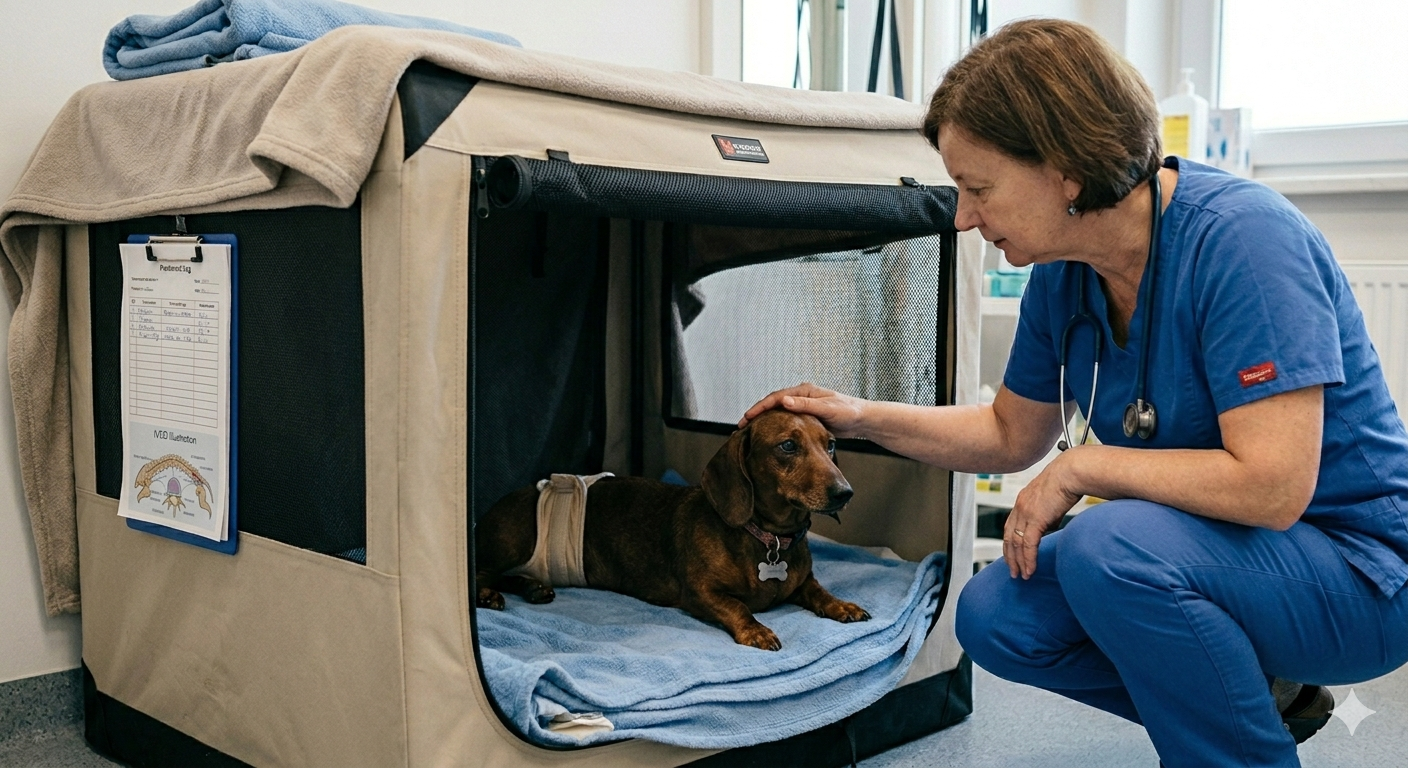
- Restrict movement completely: Place your Dachshund on a hard, flat surface – ideally a board, firm carrier, or rigid crate with soft padding inside. The goal is to keep the spine as stable as possible during transport. If you do not have anything firm available, wrap your dog securely in a blanket to limit movement.
- Do not allow walking, jumping, or climbing: Every movement can worsen spinal cord damage. Carry your dog with one hand supporting the chest and the other supporting the hindquarters. Never carry them without fully supporting the back end.
- Call the clinic before arriving: Tell them you are coming with a Dachshund showing signs of hind leg paralysis and possible spinal injury. This allows the clinic to prepare and reduce waiting time.
- Do not give any medication: No human painkillers. No leftover medication from previous treatments. Nothing without veterinary instruction.
- Make notes about symptoms: When did you first notice the problem? Did anything happen beforehand – jumping, falling, rough play? Was your dog previously reluctant to use stairs, whining, or walking stiffly? These details are extremely valuable for the veterinarian when treating IVDD in Dachshunds.
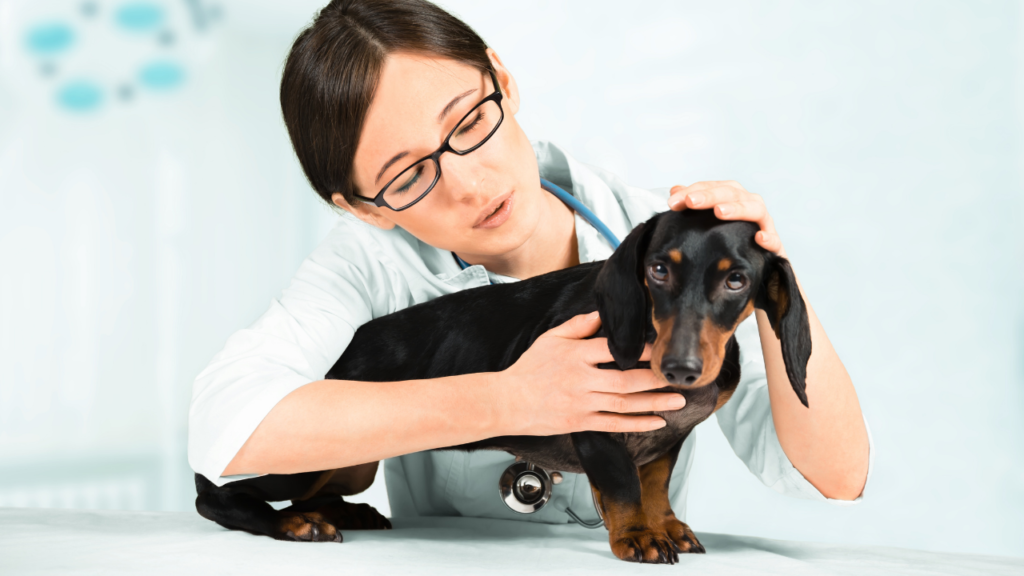
Why Dachshunds are so vulnerable – understanding IVDD
What has most likely happened to your dog has a name: IVDD (Intervertebral Disc Disease). Around 25% of Dachshunds develop this condition during their lifetime, making it one of the breed’s most serious health risks.
Between the vertebrae are spinal discs – soft cushions that absorb shock. In Dachshunds and other chondrodystrophic breeds, these discs begin hardening and calcifying unusually early, sometimes as young as 3 – 4 months old.
When a hardened disc ruptures or bulges, disc material presses against the spinal cord.
The result can include:
- severe pain
- weakness in the legs
- loss of coordination
- complete paralysis of the back legs
- loss of bladder and bowel control
Symptoms may appear gradually over days or suddenly within hours.
How vets assess the severity of IVDD
Veterinary neurologists usually classify IVDD into five stages:
| Grade | Symptoms |
|---|---|
| 1 | Pain only, normal walking |
| 2 | Pain with wobbly or unsteady walking |
| 3 | Difficulty standing and walking, partial limb function remains |
| 4 | Paralysis of hind legs, but deep pain sensation still present |
| 5 | Paralysis with loss of deep pain sensation |
The deep pain test is especially important for prognosis.
The vet applies firm pressure to a toe on the back paw – not to check reflex withdrawal, but conscious pain perception. If the dog consciously reacts, spinal cord damage is less severe. If there is no response, the situation becomes far more serious.
Treatment – surgery or conservative management?
This decision is made together with a veterinary neurologist, usually after imaging such as MRI, which is considered the gold standard for IVDD diagnosis.
- Conservative treatment – Strict crate rest combined with anti-inflammatory and pain medication may be enough for milder cases. However, it requires extremely careful management and close monitoring.
- Surgery – Surgery is usually recommended for grades 3–5. The goal is to remove disc material compressing the spinal cord.
Outcomes are often very good when surgery happens quickly:
- Dogs unable to walk but still feeling deep pain have an 83–93% chance of recovery after surgery
- Dogs that have lost deep pain sensation may still recover if surgery happens within 24 hours, though chances decrease significantly
- After 48 hours without deep pain sensation, prognosis becomes much poorer
This is why every hour matters.
Can a Dachshund walk again after paralysis?
Yes – and it is more common than many owners initially fear.
Dogs that undergo surgery while still retaining deep pain sensation often regain the ability to walk within weeks. Many dogs with partial limb function before surgery walk independently again within 10–13 days.
Even more severe cases can improve significantly within 6–12 weeks.
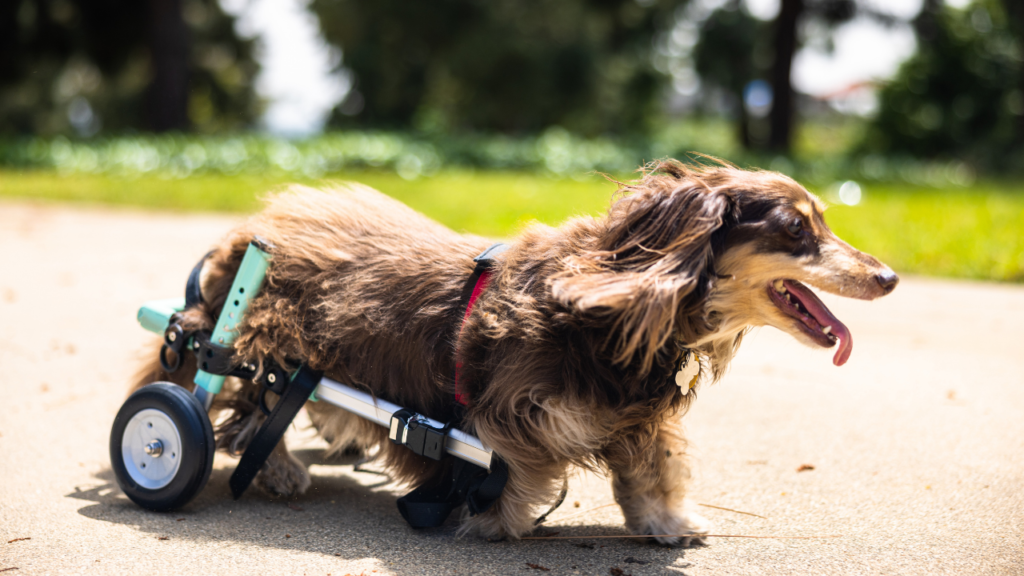
Dogs that do not fully regain mobility can still live active, happy lives with the help of mobility carts or wheelchairs.
Rehabilitation – including hydrotherapy, physiotherapy, and targeted exercises – can greatly improve recovery. Ask your neurologist about referral to a veterinary physiotherapist.
Warning signs you should never ignore
IVDD rarely appears completely without warning. Many owners later realise their dog showed earlier signs:
- reluctance to use stairs or jump onto furniture
- crying out when lifted or standing up
- hunched back or lowered head posture
- wobbling, stumbling, or dragging back paws
- stiffness after rest
- slower movement getting up
If you notice any of these signs, do not wait for them to worsen.
Summary – what matters most
If your Dachshund suddenly cannot use their back legs:
- do not let them walk
- carry them with full spinal support
- transport them on a stable, flat surface
- call the clinic before arriving
- seek veterinary care immediately
And most importantly – do not blame yourself while focusing on getting help quickly.
Fast action can make the difference between permanent paralysis and recovery.
FAQ – common questions about Dachshund paralysis and IVDD
Can a Dachshund recover from hind leg paralysis without surgery?
Yes, in milder IVDD cases (grades 1–3), conservative treatment with crate rest and medication may be enough. In more severe cases, surgery greatly improves recovery chances.
How quickly does surgery need to happen?
If deep pain sensation remains, earlier treatment is always better. If deep pain sensation is lost, surgery within 24 hours gives the best chance of recovery.
How should I transport a Dachshund with suspected IVDD?
Place them on a hard, flat surface and fully support both the chest and hindquarters. Prevent walking and jumping completely.
Can IVDD return after surgery?
Yes. Surgery removes the damaged disc, but other discs may degenerate in the future. Long-term lifestyle changes remain essential.
What is the deep pain test?
The veterinarian applies strong pressure to a toe to assess conscious pain perception, not just reflex movement. This test is one of the most important indicators for prognosis and treatment planning.

0 Comments