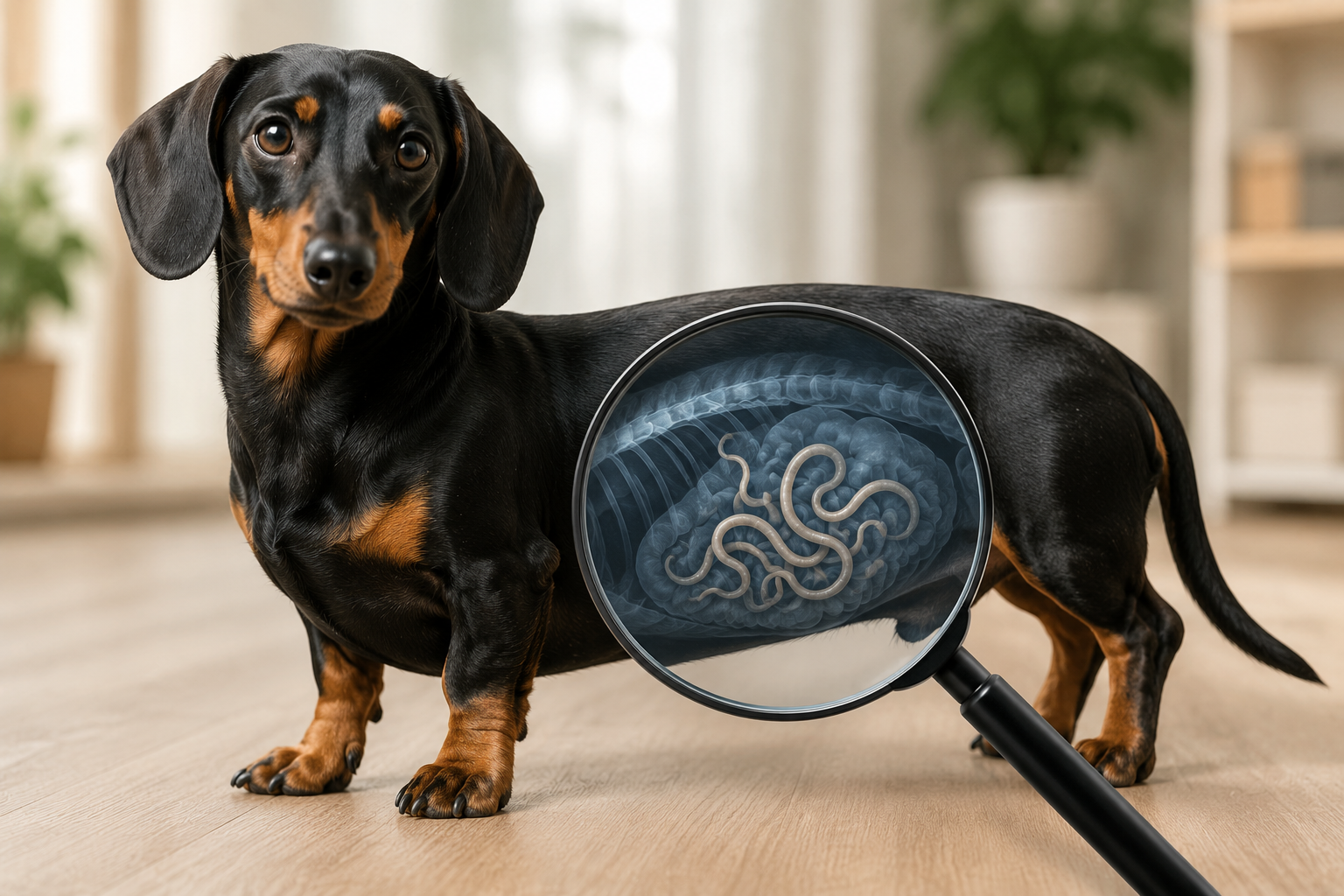
Your dachshund looks perfectly healthy. Eats well, runs to the door when you pick up the leash, and steals your spot on the couch the moment you stand up. And yet there’s a decent chance they’re carrying intestinal parasites right now – because that’s how parasites work. They don’t announce themselves. They live quietly in the gut for weeks or months while your dog shows no signs at all.
That’s why deworming isn’t something you do when you suspect a problem. It’s a scheduled part of owning a dachshund, like nail trims or annual checkups – just less visible. This guide covers the full picture: what parasites your dachshund can actually pick up in the US, how often to treat based on age and lifestyle, which products work and which gaps they leave, and what it costs so there are no surprises.
Why deworming matters
Internal parasites aren’t just a problem for dogs that run through forests or eat off the ground. Any dog – even one who only walks on sidewalks – can pick them up by sniffing grass, licking their paws after a walk, or brushing past the feces of another animal.
Once inside, worms steal nutrients, damage the intestinal lining, and quietly tax the immune system. A dog with a heavy roundworm load may lose weight, develop a dull coat, and become lethargic – but a dog with a moderate load often shows nothing at all. Puppies are the exception: in young dachshunds, a parasite burden that an adult would barely register can cause serious, sometimes life-threatening illness. Several species also transfer to humans, which puts children in the same household at real risk.
That’s the case for treating this as routine. Not because your dachshund is visibly sick, but because waiting until they are means the problem is already established.
What parasites can your dachshund carry?
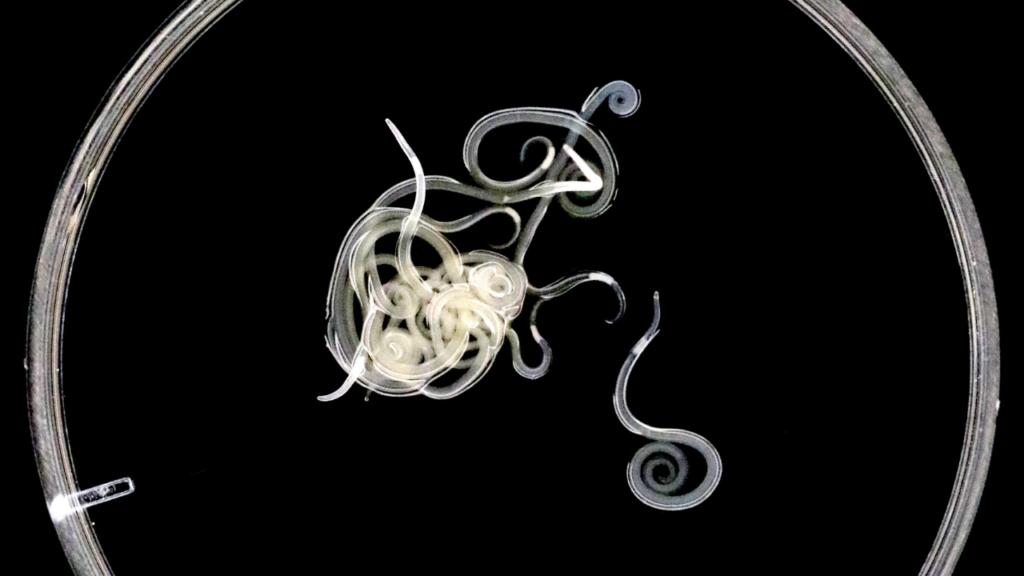
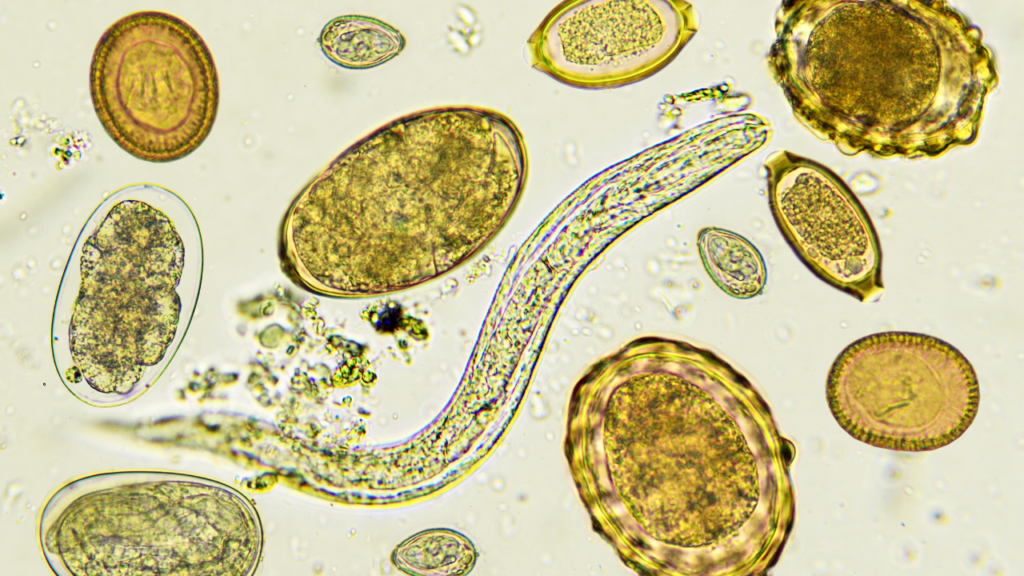
Dachshunds in the US are most likely to encounter roundworms, hookworms, whipworms, and tapeworms. Each one works differently, which is why the “one product covers everything” approach doesn’t quite hold up.
Roundworms, hookworms, and whipworms
Roundworm (Toxocara canis) is the most common intestinal parasite in US dogs, and the one vets worry about most in puppies. Larvae can cross the placenta before birth or pass through the mother’s milk – which means a puppy can arrive already infected, even from a well-cared-for litter. Adults grow up to 6 inches long and live in the small intestine. Signs include vomiting, diarrhea, a pot-bellied appearance, and a rough, dull coat. In puppies, a heavy infestation can stunt growth or cause intestinal blockage.
Hookworms (Ancylostoma, Uncinaria) are blood feeders. They can enter a dog’s body by being swallowed or – less obviously – by burrowing directly through the skin, including through the soft tissue of the paw pads. Miniature dachshunds, given their small body mass, can develop anemia faster than larger breeds if a hookworm load goes untreated.
Whipworm (Trichuris vulpis) lives in the large intestine and is contracted by ingesting contaminated soil or feces. It’s one of the harder parasites to detect on a fecal exam because it sheds eggs intermittently. Chronic whipworm infection causes bloody or mucousy diarrhea and weight loss.
Tapeworms – the flea connection
Dipylidium caninum (the common dog tapeworm) spreads in a way most owners don’t expect: through fleas. A dog that grooms itself or chews at its skin can accidentally swallow a flea that’s carrying a tapeworm larva. You typically notice tapeworm infection when you see the segments in the stool – small, flat, and when fresh, still moving. They look like grains of rice.
This is why flea control and tapeworm treatment are linked. If your dachshund picks up fleas and you deworm without treating the fleas, the tapeworm will be back within weeks.
Echinococcus species are less common but worth knowing about if your dachshund has any outdoor exposure in rural areas or contact with wildlife. Dogs can pick it up from coyotes, foxes, or contaminated water. In humans, it can cause serious disease affecting the liver and other organs. If your dachshund hunts or lives near wildlife, mention it to your vet.
Signs your dachshund might have worms
Most of the time, there are none – which is the whole problem. But when a burden is heavy enough to cause symptoms, look for:
- Scooting – dragging the rear end along the floor due to anal itching
- Vomiting or diarrhea, sometimes with visible mucus or blood
- Tapeworm segments in the stool or around the anus (flat, white, rice-sized)
- Bloated or hard belly, particularly in puppies
- Weight loss despite eating normally
- Dull, brittle coat and visible decline in condition
- Coughing – a less obvious sign, but roundworm larvae migrate through the lungs on their way to the intestine
- Unusual tiredness or low energy
If you’re seeing these, don’t wait until the next scheduled deworming – go to the vet and ask for a fecal exam. It identifies the specific parasite, which lets you use the right product rather than a broad-spectrum guess.
How often should you deworm a dachshund?
The answer depends on age and lifestyle, and for adult dogs, there’s more flexibility in the US than many owners realise.
Dachshund puppies – start early and repeat often
Puppies need the most intensive deworming schedule of their lives. The reason goes back to how roundworm spreads: larvae can cross the placenta before birth, so even a puppy from a carefully managed litter may arrive already infected. The standard schedule recommended by the Companion Animal Parasite Council (CAPC) looks like this:
| Puppy age | What to do |
|---|---|
| 2 weeks old | First deworming – with the litter and mother |
| Every 2 weeks | Continue through 8 weeks old |
| 8 weeks to 6 months | Monthly deworming |
| Before each vaccine | Deworm 7-10 days beforehand |
One thing worth noting for dachshunds specifically: dosing is always by body weight, and the size difference between varieties matters. A miniature dachshund puppy at 8 weeks may weigh under 2 lbs – check the weight carefully before every treatment, and if you’re unsure, confirm the dose with your vet rather than estimating.
Adult dachshunds – quarterly as the standard, monthly as an option
After 6 months of age, CAPC recommends deworming every 3 months – four times a year. This is the baseline for a typical adult dachshund with normal outdoor access.
Many US owners use monthly broad-spectrum prevention instead, and there’s a practical argument for it: products like Interceptor Plus or Sentinel cover intestinal parasites alongside heartworm and (in Sentinel’s case) flea control, all in one monthly chewable. It’s easier to remember, and for dachshunds that visit dog parks or boarding facilities, the more frequent coverage makes sense.
If your dachshund leads a genuinely low-exposure life – walks on suburban sidewalks, no contact with wildlife, no raw food diet – your vet may suggest fecal testing every 3-4 months as an alternative to automatic treatment. A negative result doesn’t guarantee zero parasites, but it does let you target treatment rather than give medication reflexively.
When quarterly isn’t enough
Some dachshunds need monthly deworming regardless of the standard schedule. Move to monthly if your dog:
- Hunts or has regular contact with wildlife (foxes, coyotes, deer)
- Eats raw meat
- Has a habit of eating other animals’ feces
- Spends time at boarding facilities, dog shows, or dog parks
- Lives with young children or anyone with a compromised immune system
In these cases, a schedule built around regular fecal testing combined with targeted treatment is often smarter than automatic monthly dosing – but that’s a conversation worth having with your vet, not a decision to make based on a general article.
What to use – a guide to deworming products and costs
No single product covers every parasite your dachshund might encounter. The table below covers the most commonly used options in the US, what each one actually treats, and roughly what to budget.
| Product | Form | Covers | Approx. cost | Notes |
|---|---|---|---|---|
| Drontal Plus | Flavored tablet | Roundworms, hookworms, whipworms, tapeworms | $15-25 per dose | Broad intestinal coverage; OTC; from 3 weeks of age |
| Interceptor Plus | Chewable tablet | Roundworms, hookworms, whipworms + heartworm | $20-35/month | Rx required; good all-in-one monthly option |
| Panacur (fenbendazole) | Liquid, paste, granules | Roundworms, hookworms, whipworms, Giardia | $10-20 per course | OTC; 3-day course; safe for puppies and pregnant females |
| Sentinel | Chewable tablet | Roundworms, hookworms, whipworms + heartworm + flea prevention | $25-40/month | Rx required; broadest monthly coverage |
| Revolution Plus | Spot-on | Roundworms, hookworms + external parasites + heartworm | $25-40/month | Rx required; good for dogs that won’t take tablets; does not cover tapeworms or whipworms |
A few things the table doesn’t capture: Interceptor Plus and Sentinel require a heartworm test before your vet will prescribe them. Drontal Plus and Panacur are available over the counter but the right product still depends on what your dachshund is actually exposed to. If your dog has fleas – which means tapeworm risk – you need Drontal Plus or a separate tapeworm treatment alongside anything else you’re using, because Revolution Plus and Interceptor won’t cover it.
Vet visits for a fecal exam typically run $25-60 depending on the clinic and location. If you’re doing fecal-based deworming rather than automatic quarterly treatment, factor that in.
How to give a tablet to a dachshund who won’t take it
Dachshunds were bred to be persistent and independent – qualities that are charming on a walk and considerably less charming when you’re trying to get a pill into one. The hiding-in-food approach works for most dogs, but dachshunds have a talent for eating around the tablet, carrying it to the other end of the room, and depositing it somewhere you won’t find for three days.
A few approaches that actually work:
- Pill pockets or pill wrap – soft, moldable treats specifically designed to hide medication. The texture makes it hard to separate the pill from the treat. Most pet stores carry them; Greenies Pill Pockets are the most widely available.
- Flavored chewables – products like Interceptor Plus and Sentinel are formulated to taste like treats. Many dachshunds take them without any negotiation required. If you’re going to use a monthly prevention product anyway, this is the path of least resistance.
- The cheese pocket method – a small folded piece of American cheese or cream cheese wrapped around the tablet. Works on the same principle as pill pockets but costs less. Soft cheese is harder to sort through than hard cheese.
- Panacur granules or liquid – if your dachshund is categorically refusing tablets, fenbendazole in granule form can be mixed into food, and the liquid version is given directly into the mouth. Useful for puppies especially.
- The manual method – hold the upper jaw with one hand, tip the head back, drop the tablet as far back on the tongue as you can reach, close the mouth, and gently stroke the throat downward to encourage swallowing. It works reliably, but it creates a negative association with handling. Use it if you have to, not as the default.
- One thing that genuinely helps: give the dewormer before the first meal of the day. A hungry dachshund is dramatically less selective about what’s in their food.
Deworming and vaccines – the right order
This trips up a lot of new owners because no one mentions it until there’s a problem. The rule is simple: deworm before vaccinating, not after – at least 7-10 days before the shot.
Intestinal parasites put ongoing stress on the immune system. A dog that’s carrying a worm burden when it gets vaccinated may not mount a strong enough antibody response for the vaccine to work properly. In puppy schedules especially, the deworming tablet should always come first in the sequence, with the vaccine appointment following about a week later.
If you’re adopting an adult dachshund with an unknown history, deworm before their first round of shots rather than doing both at the same visit.
Can my dachshund’s parasites infect me?
Several common dog parasites are zoonotic, meaning they can transfer to humans. This is the detail that tends to get people’s attention even if they’ve been relaxed about the rest.
Toxocara canis (dog roundworm) is the main one to know. After entering a human – usually through accidental ingestion of contaminated soil or contact with an infected dog’s feces – the larvae migrate through organs. They can reach the lungs, eyes, and in rare cases the brain. Young children who play with dogs or in sandboxes are most at risk, because they’re more likely to put their hands in their mouths. Toxocariasis in children has been linked to cases of vision loss and respiratory symptoms.
Echinococcus can cause serious disease in humans, primarily affecting the liver. The risk in the US varies by region and is higher in rural areas with wildlife exposure.
Practical steps that actually matter: wash hands after handling your dog or picking up feces, keep sandboxes covered when not in use, and don’t let young children kiss the dog on the mouth. Combined with a regular deworming schedule, these habits reduce the transmission risk significantly.
Dachshund deworming schedule – quick reference
| Life stage | Frequency | Notes |
|---|---|---|
| Puppy: 2-8 weeks | Every 2 weeks | With litter and mother |
| Puppy: 8 weeks to 6 months | Monthly | Sync with vaccine schedule |
| Adult (6 months+), typical lifestyle | Every 3 months | CAPC baseline; 4x per year |
| Adult, higher-risk lifestyle | Monthly | Hunting, raw diet, dog parks, wildlife contact |
| Home with young children or immunocompromised people | Monthly | CAPC recommendation |
| Female before whelping | Up to 2 weeks before delivery | Fenbendazole is safe in pregnancy |
| Female after whelping | 2 weeks postpartum | Treat alongside the puppies |
FAQ
How often should I deworm a miniature dachshund vs. a standard?
The schedule is the same – but the dose isn’t. Miniature dachshunds weigh 8-11 lbs, standards 16-32 lbs, and all deworming products are dosed by body weight. Weigh your dog before every treatment rather than assuming last time’s dose still applies, especially with puppies who are growing quickly.
Which dewormer is best for dachshunds?
There’s no single best product – it depends on what your dog is exposed to. For a typical adult dachshund on quarterly treatment, Drontal Plus covers the broadest range of intestinal parasites including tapeworms. For monthly prevention that also covers heartworm, Interceptor Plus is the most commonly recommended option. If your dog won’t take tablets at all, Revolution Plus spot-on is an alternative – but note it doesn’t cover tapeworms or whipworms. Ask your vet to help you match the product to your dog’s actual risk profile.
Can I buy dachshund deworming medicine without a vet visit?
Some products – Drontal Plus and Panacur – are available over the counter at pet stores and online retailers. Monthly prevention products that include heartworm coverage (Interceptor Plus, Sentinel, Revolution Plus) require a prescription, which in turn requires a current heartworm test. A vet visit typically runs $50-100 for the exam plus the cost of the test and prescription. For puppies or dogs with unknown parasite history, seeing a vet before starting any deworming protocol is genuinely worth it.
Do I need to fast my dachshund before deworming?
Most products don’t require it – they can be given with or without food. Giving the tablet before the morning meal does make it easier to hide in food, but it’s not medically necessary for most dewormers. Check the specific product label to be sure.
How long after deworming will I see worms in the stool?
Dead parasites are typically expelled within 24-48 hours. Seeing worms in the stool after treatment is normal and means the medication worked – not a cause for concern.
Are there side effects from deworming a dachshund?
Side effects are uncommon but can happen, particularly in dogs with a heavy parasite burden. The most typical reactions are temporary vomiting, loose stool, or mild lethargy in the 24 hours after treatment. If symptoms are pronounced or last more than a day, call your vet.
Does deworming prevent re-infection?
No – deworming kills parasites present at the time of treatment. It doesn’t provide ongoing protection. Your dachshund can be re-infected the next day on a walk. That’s the whole reason for repeating treatment on a schedule rather than doing it once.
Related reading:



0 Comments