
Dachshund care covers five main areas: home safety and ergonomics, regular physical and scent-based activity, a balanced age-appropriate diet, consistent grooming of coat and teeth, and structured training from puppyhood. This breed has specific health predispositions – especially intervertebral disc disease (IVDD) – that require conscious daily decisions.
Before you start: what you should know about the breed
A Dachshund is not a dog for someone looking for a “calm little pet”. This is a breed with history – for centuries it was bred to hunt badgers and foxes independently, without guidance from a hunter. That independent gene is still very much present.
What this means in practice:
- A Dachshund thinks independently and may sometimes decide your command is less important than an interesting scent behind a fence
- They form very strong attachments and may develop separation anxiety if not taught how to stay alone
- They bark. A lot. At strangers, sounds, cats outside, sometimes at nothing in particular
- They love digging and burrowing into blankets – it is part of their nature
When you accept this and know what you are committing to, you get one of the most loyal, funny, and affectionate companions imaginable.
Home safety – the first and most important step
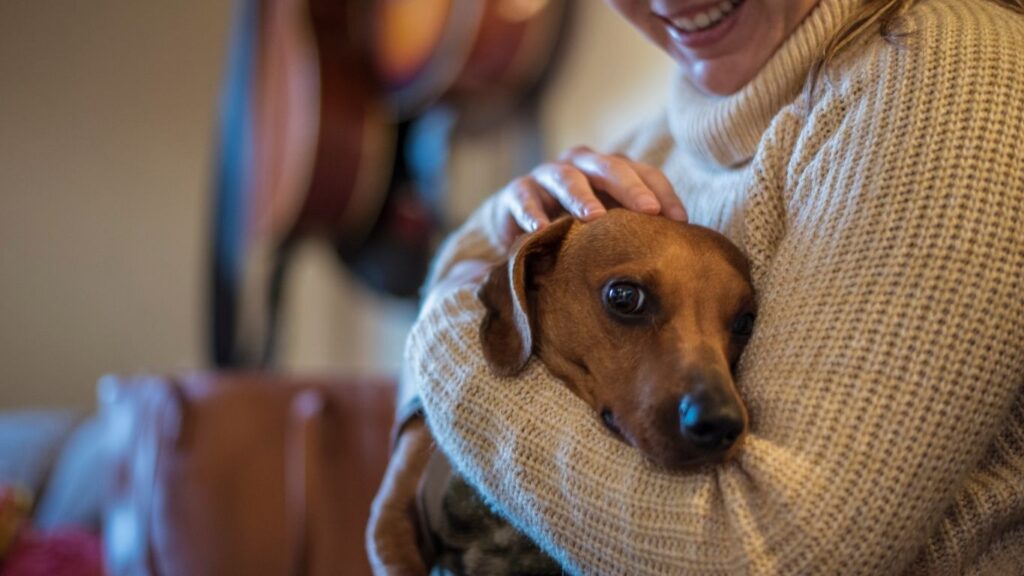
A Dachshund has a long spine and short legs. This body structure is their signature trait, but also their biggest health risk. The main concern is intervertebral disc disease (IVDD), which in severe cases can lead to paralysis.
Before your Dachshund enters your home, prepare the environment:
- Ramps and steps – not optional, essential
- Jumping off sofas, chairs, or stairs places direct stress on spinal discs. Even one bad jump can lead to a veterinary neurology emergency.
- Install ramps or pet stairs for furniture. If you have stairs in your home, reduce their daily use as much as possible – or carry your dog when needed.
- How to properly lift a Dachshund
- This is more important than it may seem. Never lift by the front or back alone – the spine must be supported at all times.
- Correct method: one hand under the chest, the other under the hindquarters, keeping the body level.
- Harness instead of collar
- A collar puts pressure on the neck and cervical spine. Use a harness instead – one that distributes pressure evenly and does not strain the back. Make sure it is well fitted and does not rub the armpits or slip.
- Safe resting space
- A Dachshund bed should have a low entrance – they should not need to jump in. They also love being covered, so blankets are ideal. Enclosed beds or “den-like” spaces work especially well, as they feel safe in enclosed environments.
Walks – consistency matters more than length
A Dachshund needs regular movement. Not intense, not extreme – but consistent. Two or ideally three walks per day are recommended.
How much exercise does an adult Dachshund need?
Around two 20–30 minute walks per day is a good baseline. Dachshunds are not built for long-distance running, repetitive jumping, or agility sports at high intensity.
A key rule: two calm walks are better than one long exhausting session.
Walks are not just exercise – they are scent work
A Dachshund is a scent hound. Their nose matters more than their eyes. Allow them to sniff during walks – this is real mental work.
A few minutes of sniffing can be more tiring than physical exercise. Let them explore instead of constantly pulling them forward. A 3–5 meter leash gives them space for natural behaviour.
Weather and surfaces
Dachshunds do not tolerate cold or rain well – you may need patience when going outside. Avoid hard surfaces during long walks and use protective clothing in winter, especially for short-haired or small dogs.
Puppies – less is more
Puppies have delicate bones, joints, and spines. Avoid overexertion. Short, calm outings are best. Too much physical activity early in life can negatively affect developing joints and discs.
Scent stimulation – their real job
Scent work is more than play for a Dachshund – it satisfies deep hunting instincts. A dog without sniffing and searching opportunities will become bored, which often leads to barking, destruction, and frustration.
What you can do:
- Snuffle mats – hide food and let the dog search. A short session can replace a long walk in terms of mental fatigue
- Nosework games – hide treats around the house in simple locations
- Interactive toys – puzzle feeders and Kongs slow down eating and engage the brain
- Fetch – only on soft surfaces, without jumping
Mental fatigue is just as important as physical exercise. A mentally engaged Dachshund is calmer and more balanced.

Diet – weight control is spinal protection
Dachshunds are prone to weight gain. Their body shape makes excess weight particularly dangerous, as every extra kilogram increases strain on the spine.
Feeding guidelines
- Adult Dachshund: 2 meals per day at fixed times
- Puppy up to 6 months: 3–4 smaller meals per day
- Portions: measure accurately, do not estimate
- Treats: include in daily calorie intake (max around 10 percent of total diet)
What food to choose
Look for food designed for small breeds, rich in animal protein to support muscle strength. Digestibility is important, as Dachshunds can be prone to digestive sensitivity.
A mixed feeding model (dry food in the morning, wet food in the evening) works well for many dogs.
How to check body condition
Run your fingers along the ribs. You should be able to feel them without pressing, but not see them clearly. If you need to press hard, the dog is overweight.
What to avoid
Avoid table scraps, sugary snacks, and feeding on demand. Dachshunds are experts at begging, but you are responsible for their health and spine.
Grooming – depends on coat type
There are three coat types: smooth, long-haired, and wire-haired. Each has different needs.
- Smooth coat – Low maintenance. Weekly brushing is enough. Bath only when necessary.
- Long-haired – Brush 2–3 times per week, daily during shedding. Pay attention to areas behind ears, legs, and belly where tangles form. Bath every few weeks with appropriate shampoo.
- Wire-haired – Requires hand stripping several times per year. Regular brushing between sessions. Less frequent bathing.
Common care needs
- Nail trimming every 3–4 weeks
- Weekly ear checks for redness, odor, or discharge
- Dental care – Dachshunds are prone to tartar and periodontal disease. Daily brushing is ideal
Start grooming training early – a puppy that accepts handling calmly becomes much easier to care for as an adult.

Training – from day one, no exceptions
A Dachshund is intelligent, but intelligence combined with stubbornness and hunting instinct creates a dog that understands you perfectly – and still chooses whether to comply.
Training must begin on day one.
What works best
- Short sessions – 5 to 10 minutes
- High-value rewards – small, tasty treats are highly motivating
- Consistency – rules must be the same for everyone in the household
- Positive reinforcement – no punishment, no shouting, no force
First commands to teach
- Name and attention
- Sit and stay
- Recall (critical for safety)
- “Go to place” – learning to rest calmly
- Alone time training
Socialisation window
Early months are crucial. Exposure to people, dogs, environments, and sounds builds confidence. Poor socialisation often leads to barking, fear, and reactivity.
Separation training
Start gradually from puppyhood. Increase alone time slowly. Never make departures or arrivals emotionally intense.
Health overview
Dachshunds live long lives – typically 12–16 years or more with good care.
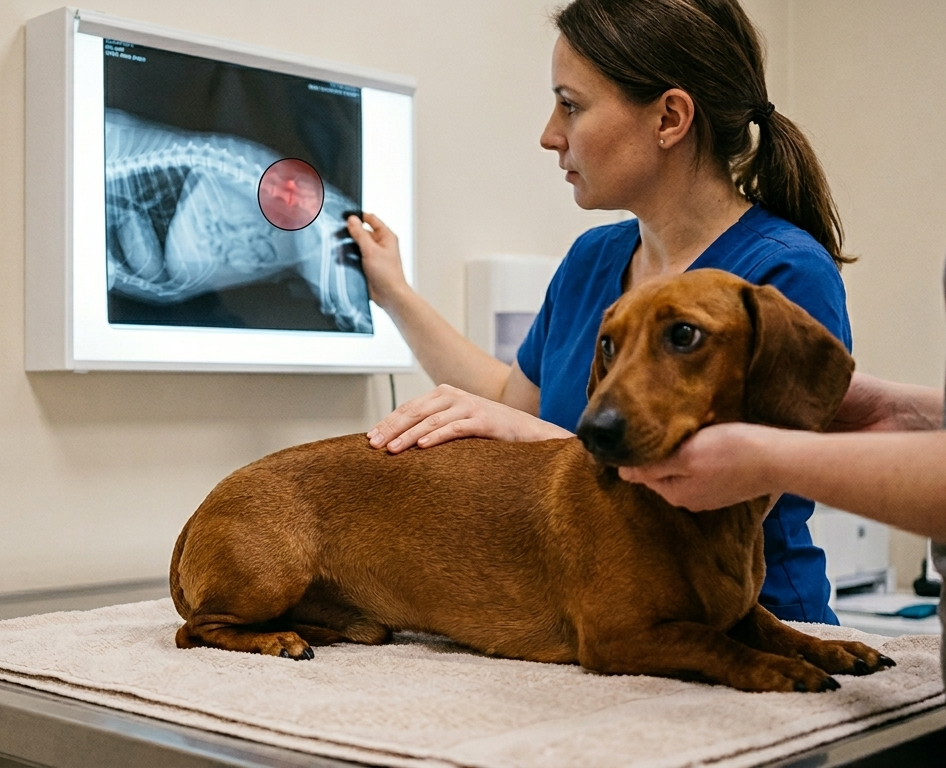
- IVDD
- main risk
- Intervertebral disc disease is the most common serious condition. Symptoms include back pain, reluctance to move, and in severe cases paralysis.
- Prevention includes weight control, avoiding jumps, harness use, ramps, and regular exercise.
- Seek veterinary care immediately if you notice pain or mobility changes.
- Obesity
- Closely linked to spinal disease. One of the biggest risk factors.
- Teeth
- Prone to tartar. Regular dental care is essential.
- Eyes
- Miniature Dachshunds may be predisposed to retinal atrophy and cataracts.
- Vet care
- Annual check-ups are recommended.
Daily routine example
Dachshunds thrive on predictability.
- Morning: walk (15–20 minutes), breakfast
- Daytime: rest, short training session, scent game or mat
- Afternoon: longer walk (20–30 minutes), free time
- Evening: dinner, short walk, wind-down time
Summary
Dachshund care is not complicated, but it requires consistency, knowledge, and respect for the breed’s needs.
Key points:
- Spine protection is priority – harnesses, ramps, correct lifting, weight control
- Routine and rules from day one create a stable, happy dog
- Scent work is as important as walking
- Diet and weight management are essential prevention tools
- Positive reinforcement training works best
A Dachshund will reward you with deep attachment, warmth, and endless personality.
FAQ – dachshund care
How often should I walk a Dachshund?
2–3 walks per day. Around 1–1.5 hours total daily activity.
When should I start training?
From day one in the home.
Can a Dachshund stay alone?
Yes, if trained gradually from puppyhood.
How long do Dachshunds live?
Typically 12–16 years.

0 Comments