
Dachshund Training
How do you train a dachshund without punishment? Learn effective methods for dealing with stubbornness, teaching recall, and house training. A guide from puppyhood to the senior years. Check it out!
A dachshund is a dog with a huge personality packed into a small body. Training one is an adventure that often requires more patience than training many larger breeds. Not because dachshunds are unintelligent – quite the opposite. They understand everything perfectly well, but as former hunting dogs, they always ask themselves: “What’s in it for me?”
The good news is: dachshunds can absolutely be trained. With a positive approach, a bit of consistency, and an understanding of how this particular breed thinks, training can become genuinely enjoyable for both of you.
This guide brings together everything worth knowing – before you start, and once you already have.
Can a Dachshund Be Trained?
Yes — but on their own terms. Dachshunds are a breed that spent centuries working independently during hunts. They had to make decisions without instructions from the hunter. That independence, determination, and strong personal opinion about everything are deeply built into their character.
Independence Is Not Stubbornness
For generations, dachshunds worked alone in underground burrows. They had to think and react on their own. That instinct is still part of their DNA today. When a dachshund seems to “ignore” a command, it’s often because they’re busy analyzing a scent they find far more interesting.
Positive Reinforcement Works Best
This is the only truly effective training method for dachshunds. Punishment usually triggers fear — or even more stubbornness. Rewards such as treats, play, or sniffing opportunities activate the dog’s dopamine system, making them want to repeat the behavior.
Tip: If your dachshund doesn’t follow a command, don’t repeat it louder. Instead, make the “offer” more attractive.
Where Should You Start Training a Dachshund?
The best answer: as early as possible and with the simplest steps.
A dachshund puppy can start learning basic skills and socialization as soon as they arrive home – usually between 8 and 12 weeks of age. During this stage, a dog’s brain is incredibly receptive, and what they learn now often stays with them for life.
The First Things Worth Teaching
- Name recognition – this is the foundation. A dog should respond to their name before learning anything else.
- House training – teaching them to go outside and establishing a regular daily routine.
- Socialization – helping them get comfortable with people, other dogs, sounds, and new situations.
- Sit – often the first command even very young puppies can learn successfully.
An adult dachshund can still learn new things too – although it usually requires a bit more consistency and patience.
Training Stages: From Puppy to Senior
Puppy Training (8–16 Weeks)
This is the “golden period.” A puppy’s brain works like a sponge.
Priorities:
- Name recognition
- House training (bladder training)
- Socialization with city sounds and everyday environments
Important:
Don’t wait until your dog is older. Start learning through play from the very first day at home.
👉 When should you start training a dachshund puppy? Stages and first exercises
Training an Adult Dachshund
At this stage, the focus shifts toward emotional control and safety.
Key areas:
- Emergency recall — essential because of the dachshund’s strong hunting instinct
- Loose-leash walking — teaching the dog that pulling on the leash is not the way to reach their goal
Senior Dachshund (7+)
How Long Does It Take to Train a Dachshund?
That depends on what you’re teaching and when you start.
Most dachshunds learn basic commands — such as sit, stay, heel, and come — within a few weeks of regular practice, especially with short daily sessions lasting around 10–15 minutes.
House training can take anywhere from a few weeks to several months, particularly if the puppy is very young or has already developed bad habits.
Socialization is not a one-time event — it’s an ongoing process that continues throughout the dog’s first two years of life.
The key is to think of training not as a project with a finish line, but as a lifestyle with your dog. A dog that “passed training” two years ago but hasn’t practiced since will lose fluency in commands — just like people forget a language they no longer use.
Most Common Dachshund Training Problems
- Why does a dachshund bark?: Barking is a natural behavior for this breed – deeply rooted in its hunting instincts. Completely eliminating it is neither possible nor necessary. However, you can teach the “quiet” command and work on preventing barking from going on endlessly. More on this in the barking article.
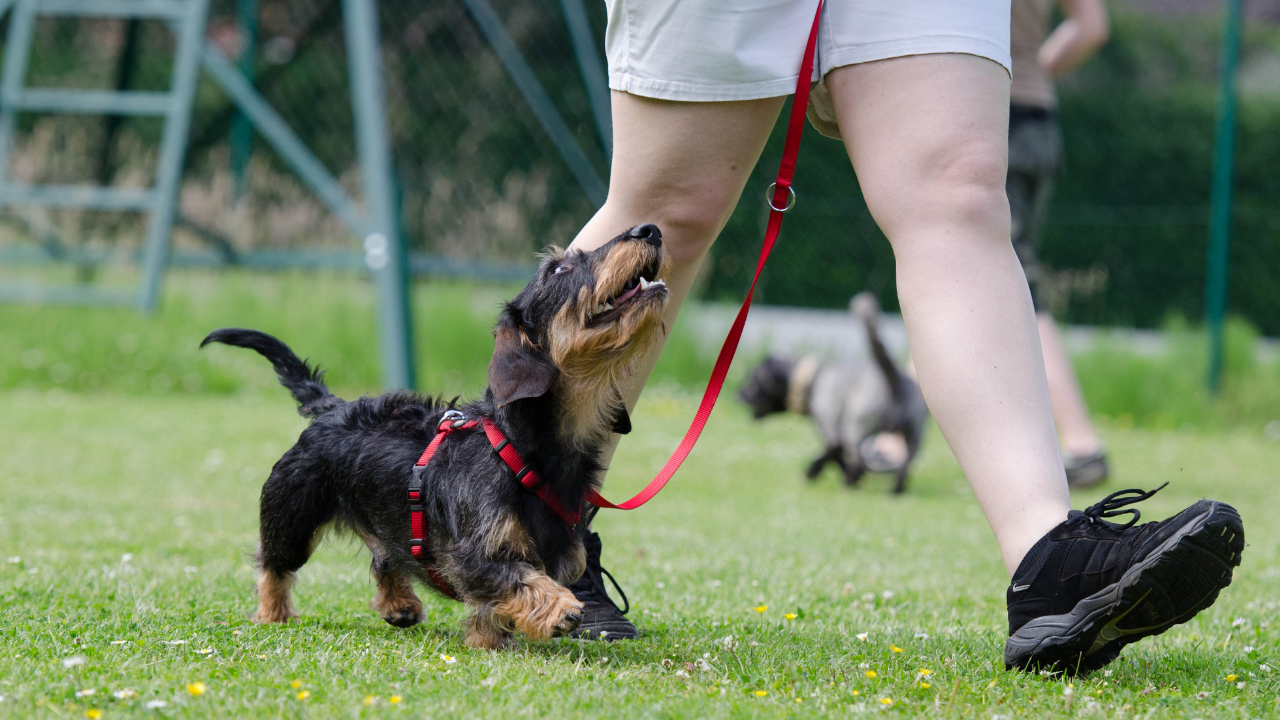
- How do you stop pulling on the leash?: Use guard-style harnesses (safe for the spine) and the “tree” technique (you stop walking whenever the leash becomes tight).
- A dachshund still toilets indoors despite training: Make sure you go out regularly – and always reward your dog after every successful outdoor toilet. Puppies don’t yet have full bladder control; it’s physiology, not misbehavior.

Commands Every Dachshund Should Know
- “Sit” — the foundation of self-control.
- “Stay” — teaches patience (difficult, but absolutely possible!).
- “Come / Here” — a life-saving command.
- “Leave it” — protects your dog from eating something dangerous during walks.
- “Quiet” — helps manage the breed’s natural guarding and alert instincts.
Positive Reinforcement - Why Does It Work Better Than Punishment?
Dachshunds respond far better to rewards than to punishment. From a biological perspective, rewards activate the dopamine system – making the dog want to repeat behaviors associated with pleasure. Punishment, on the other hand, creates stress and can lead to fear or aggression. It does not teach the dog what to do – only what to fear.
In practice, a dachshund punished for unwanted behavior usually just becomes more careful about doing it when the owner is nearby. The behavior itself often doesn’t stop – the dog simply waits for a moment when nobody is watching.
Rewards can take many forms:
- Treats (preferably small ones – pea-sized treats or tiny pieces of meat)
- Verbal praise and petting
- Playing with a favorite toy
- For some dachshunds – permission to dig or sniff around
It’s worth discovering what motivates your dachshund the most. Every dog is different.
What Do Good Training Sessions Look Like?
Short and positive – that’s the golden rule of dachshund training.
A session should last no more than 10–15 minutes. Dachshunds have a relatively short attention span and quickly get bored if exercises become repetitive. It’s better to do three short sessions a day than one long one.
A few rules that help:
- Train before meals, when your dachshund is more food-motivated
- End every session with success – even if it’s just a simple “sit”
- Introduce only one new exercise at a time – don’t mix multiple commands at once
- Practice in different environments so commands work outside the living room too
Training Accessories: What Might Be Useful?
- Guard-type harnesses: They don’t restrict shoulder movement and avoid putting pressure on the neck.
- Long line (5–10m): Essential for teaching recall in open areas while still maintaining safety and control.
- Snuffle mat: A great reward tool and a way to help your dachshund calm down through sniffing and foraging.
- Clicker: Great for precise training and clear communication (optional, but very effective for detail-oriented dachshunds).
FAQ - Frequently asked questions about dachshund's training
Is a dachshund difficult to train?
A dachshund is not difficult, but it is demanding. It requires creativity from the owner and high-value rewards. In terms of “working intelligence” it ranks around average, but in adaptive intelligence (problem-solving), it is among the top breeds.
At what age should you start training a dachshund?
Immediately after bringing the dog home – usually between 8 and 12 weeks of age. The first weeks are a golden window for socialization and learning basic skills.
How many times a day should you train a dachshund?
Ideally, three sessions of about 5 minutes each. A dachshund’s short attention span means a 15-minute continuous session can already feel too tiring and may lead to frustration.
What rewards work best for dachshunds?
Can you teach an adult dachshund new things?
Absolutely. Dachshunds learn throughout their entire lives. In older dogs, the process may take a bit longer due to established habits, but their willingness to work for food rewards remains unchanged.
What should you do when your dachshund ignores you on a walk?
Most likely, a smell is more interesting than your reward. Increase the value of the treats (use dried meat or cheese) and practice first at home, then in the garden, and only afterward in the park.
Do miniature or rabbit dachshunds learn the same way as standard ones?
That might interest you:
Dachshund playdates: socializing your wiener dog
Safe dachshund playdates pair your dog with one or two familiar, similarly built dogs on flat, obstacle-free ground, in sessions of 15 to 20 minutes with full supervision. Because dachshunds carry a genetic predisposition to intervertebral disc disease (IVDD) - a...

Dachshund Resource Guarding: Why It Happens & How to Stop It Gently
If you’ve ever reached for your dachshund’s toy or walked past their food bowl only to be met with a growl, a hard stare, or even a snap, you’re not alone. This behavior, known as resource guarding, can be confusing and even a little scary. But here’s the good news:...
Training tips for stubborn dachshunds (that actually work)
How do you train a stubborn dachshund? Train a stubborn dachshund using short sessions (5–10 minutes), high-value food rewards, and consistent cues. Dachshunds aren't defiant - they're independent. They calculate whether a command is worth the effort. Your job is to...
Join our newsletter
Adres
Dachshunds Planet
Disclaimer: This site contains affiliate links, which means we may earn a commission on purchases made through them.