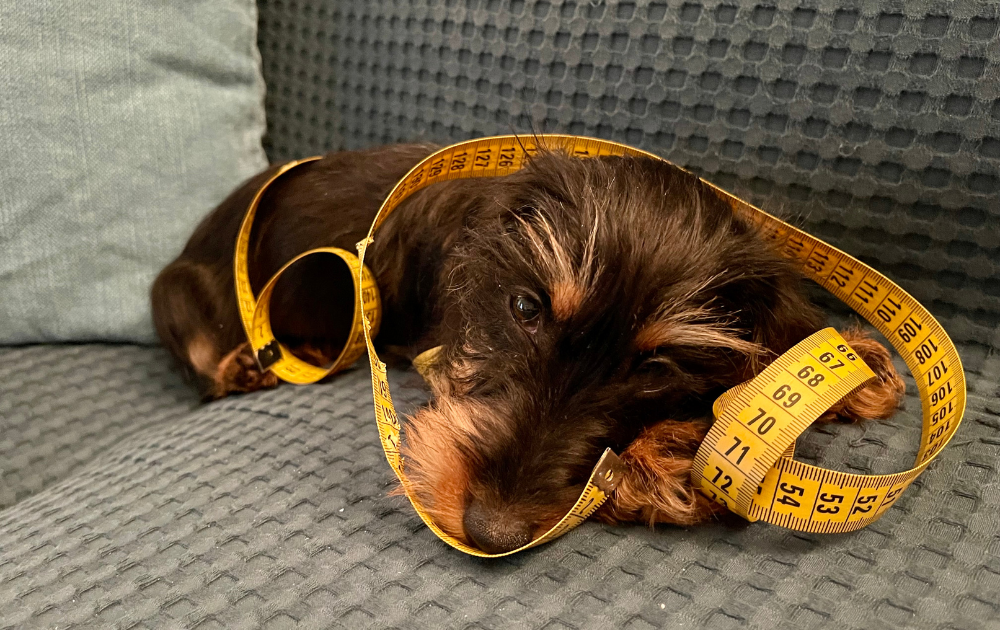
A miniature dachshund is a small-breed scent hound weighing under 11 pounds. Built on the same long-bodied, short-legged frame as the standard dachshund but compact enough to fit in your lap. They’re not a separate breed from the standard, just a size variant, and everything that makes a dachshund a dachshund. The stubbornness, the loyalty, the absolute certainty that they are the most important creature in any room – applies here in equal measure.

History and origin
Miniature dachshunds descend from their standard-sized counterparts, which were developed in Germany as far back as the 15th century specifically to hunt badgers – “Dachs” meaning badger, “Hund” meaning dog.
The miniature Dachshund was developed in Germany during the 1800s to hunt rabbits in narrow burrows. Breeders selectively reduced the size of standard Dachshunds while preserving the breed’s key traits: a long body, powerful digging ability, and remarkable courage.
Although smaller than their standard counterparts, miniature Dachshunds retained the fearless temperament that made the breed an effective hunting dog. Today, that same bold, confident nature remains one of the breed’s most recognizable characteristics.
In the United States, the Miniature Dachshund Club was established in 1931, and the American Kennel Club has recognized dachshunds (in both sizes) since 1885. The miniature classification became formalized in the US based on weight rather than height – under 11 pounds at 12 months of age.
What does a miniature dachshund look like?
A miniature dachshund typically weighs between 8 and 11 pounds and stands 5 to 7 inches tall at the shoulder – roughly half the size of a standard dachshund, with the same dramatically elongated body, deep chest, and short but muscular legs.
The body shape is what makes this breed immediately recognizable. The ribcage is long and oval in cross-section rather than round, the chest drops noticeably lower than the elbows, and the tuck-up behind the ribcage is pronounced. Their front paws turn slightly outward – a feature bred intentionally to help them paddle soil efficiently when digging. It gives them a slightly waddling gait that many owners find endearing and that is entirely normal.
Their heads are long and tapered, with medium-length muzzles and a slight stop. Eyes are medium-sized and dark in most color varieties, though dapple dachshunds can have blue or partially blue eyes. Ears are set near the top of the skull, hang close to the cheeks, and reach roughly to the nose when pulled forward. They’re velvety to the touch.
Coat types
Miniature dachshunds come in three coat types, and the differences go beyond aesthetics.
- Smooth-coated miniatures have short, dense, shiny fur that lies flat to the body. Minimal grooming required – an occasional wipe-down and a weekly brush is usually sufficient. This is the coat type most people picture when they think “dachshund.”
- Longhaired miniatures have soft, slightly wavy fur with feathering along the ears, chest, legs, and tail. The silkier the coat, the more brushing it needs – plan for at least three sessions a week to prevent tangles, particularly behind the ears and under the armpits. Many owners find longhaired minis slightly more laid-back in temperament, though that’s anecdotal rather than established science.
- Wirehaired miniatures have a dense, coarse outer coat with a softer undercoat, plus the distinctive beard and eyebrows that give them a permanently skeptical expression. They need hand-stripping twice a year rather than clipping to maintain proper coat texture, though many pet owners clip instead without much consequence. Wirehaired minis are often described as the clowns of the dachshund family – a little more independent, a little more mischievous.
Colors and patterns
The AKC recognizes numerous colors and patterns. The most common colours are red (from pale cream to deep mahogany), black and tan, chocolate and tan, and wild boar in wirehaired dachshunds. Dapple, a mottled pattern caused by the merle gene, is popular but risky – breeding two dapple dogs can produce double dapples, which are often linked to vision and hearing problems. Brindle and piebald patterns also appear with some regularity.
Personality and Temperament
Miniature dachshunds are affectionate, stubborn, deeply loyal, and fully convinced they are in charge of wherever they live. It’s charming until it becomes a problem.
Fearless and feisty:
Despite their size, mini dachshunds are bold and brave. Bred as badger hunters, they carry a natural fearlessness and will often approach life with confidence and curiosity.
Affectionate and loyal:
They bond strongly with their people – sometimes the whole family, sometimes just one person. They like to stay close and are rarely far from your side, often following you from room to room and involving themselves in everything you do.
Playful and energetic:
Mini dachshunds love play. They enjoy both indoor and outdoor games and need regular activity to stay mentally and physically healthy. Fetch, tug-of-war, and interactive play all work well for them.
Intelligent but independent:
They are smart dogs, which makes training very possible, but their independent streak means they won’t always choose to cooperate. Consistency and patience are essential.
Protective and vocal:
They have strong watchdog instincts and will alert you to anything unusual. This can make them quite barky, so early training and consistency are important to manage noise levels.
Sociable (with early socialisation):
With proper early exposure, they can be friendly and well-adjusted around people and other dogs. Socialisation from a young age plays a big role in shaping their confidence.
Prone to separation anxiety:
Mini dachshunds often struggle with being left alone. This can show up as barking, stress, or destructive behaviour. It’s an important lifestyle consideration – they do best in homes where they aren’t left for long hours without support or routine.

Health and lifespan
Miniature dachshunds typically live 12 to 16 years, which is longer than many breeds, but this lifespan can come with health considerations, the most serious being intervertebral disc disease (IVDD).
IVDD – the back problem you need to understand
Intervertebral disc disease (IVDD) is the single most important health issue for any dachshund owner, miniature or standard. The elongated spine and chondrodystrophic (short-legged) build mean the intervertebral discs – the cushioning between each vertebra – are more prone to premature calcification.
A calcified disc can herniate, putting pressure on the spinal cord and causing pain, weakness, or, in severe cases, paralysis.
Research suggests that up to 25% of dachshunds will experience clinically significant IVDD at some point in their lives. It can happen suddenly – a dog who was fine at breakfast is dragging a back leg by dinner.It can be genuinely alarming to see, so it’s important to recognise the warning signs: reluctance to use stairs, a hunched posture, crying when picked up, weakness or wobbling in the back legs, or any sudden change in movement or posture.
Treatment ranges from strict crate rest and anti-inflammatory medication (for mild cases) to surgical decompression for severe disc herniations. Surgery costs between $3,000 and $8,000 depending on location and severity. Pet insurance that covers IVDD is worth taking seriously before you bring a miniature dachshund home.
Practical prevention matters. Avoid repetitive jumping on and off furniture – ramps and steps are not optional extras for this breed, they’re spine protection. Keep your mini at a healthy weight; every extra pound is additional load on those discs. We cover this more in the care section below.
For a full breakdown of dachshund spinal health, including how to recognize IVDD symptoms early and what recovery looks like, read our complete guide.
Other health considerations
- Dental disease: Very common in small breeds like miniature dachshunds due to tightly spaced teeth, which encourages faster tartar build-up. Daily brushing is ideal, along with regular professional cleanings.
- Obesity: Often underestimated because a slightly overweight dachshund can still look “cute.” A healthy mini should have a visible waist and a tuck behind the ribs, and ribs should be easy to feel. Excess weight also increases IVDD risk.
- Patellar luxation: A condition where the kneecap slips out of place. Mild cases may only show as an occasional skip in the gait, while more severe cases can require surgery.
- Cushing’s disease (hyperadrenocorticism): More common in dachshunds than in the general dog population. Causes symptoms like weight gain and lethargy, which can be mistaken for diet or age-related changes.
Read more about common health problems in dachshunds in our Health Guide.

Caring for a miniature dachshund
Good miniature dachshund care focuses on three key areas: protecting their spine, maintaining a healthy weight, and providing enough mental stimulation to prevent them from inventing their own entertainment.
Diet and weight management
A miniature dachshund needs roughly 400 to 600 calories per day, though the exact amount depends on age, activity level, and whether they’re neutered. Your vet or the food manufacturer’s guidelines (based on target weight, not current weight if your dog is overweight) are the most reliable starting point. Split meals into two servings rather than free-feeding – dachshunds will eat past satiety without hesitation.
Treats add up fast with a small dog. A single medium biscuit can represent 10-15% of a miniature dachshund’s daily calorie allowance. If you’re training with treats, use tiny pieces and account for them in the daily total.
Grooming
- Smooth coat: A weekly once-over with a soft bristle brush or rubber grooming mitt removes loose hair and distributes skin oils. Bathe as needed, typically every four to six weeks. Nail trims every three to four weeks.
- Longhaired coat: Brush at least three times a week with a slicker brush, working through the feathering behind the ears and under the armpits where mats form first. A detangling spray helps. Monthly baths recommended. The ear feathering needs particular attention – it drags on the ground and picks up debris.
- Wirehaired coat: A slicker brush two to three times a week handles day-to-day maintenance. Hand-strip twice yearly to maintain proper coat texture, or have a groomer do it. The beard collects water and food, so wipe it down regularly.
All three coat types need their nails trimmed regularly and their ears checked weekly – the floppy ears trap moisture and debris, making miniature dachshunds somewhat prone to ear infections.
Spine protection at home
This matters more than most people realize before they own a dachshund. Invest in a good ramp or set of pet stairs for any furniture or beds your dog accesses. Keep them off the couch or bed entirely if you prefer, but if they’re allowed up, make sure they have a safe way down – a dachshund landing from a jump with their long spine absorbs that impact in ways it shouldn’t. FurHaven and PetSafe both make well-reviewed ramp options, and a basic set of foam stairs costs under $40.
When you pick up a miniature dachshund, support their full length – one hand under the chest, the other under their hindquarters. Letting them hang unsupported from the front stresses the lumbar spine.

Training and socialization
Miniature dachshunds are intelligent enough to learn quickly, but stubborn enough to make you question the effort – so consistent positive reinforcement is the only training approach that reliably works with this breed.
- Start socialization as early as possible. Puppies exposed to a wide range of people, dogs, sounds, and environments in their first 16 weeks are more likely to become adaptable adults. Without this early socialisation, miniature dachshunds can become reactive, shy, or overly defensive, and these behaviours are much harder to change once established.
- Basic obedience training works best in short sessions – five to ten minutes at a time is more productive than a thirty-minute slog. Dachshunds lose interest fast and then start operating on their own agenda. Keep it positive, keep it brief, and end on a success.
- Housetraining is, to put it plainly, one of this breed’s weak points. It typically takes longer than it does with other breeds, and some miniature dachshunds remain unreliable indoors for months. Crate training helps significantly – they generally don’t want to soil where they sleep. Be consistent, don’t expect rapid results, and don’t punish accidents after the fact.
- Excessive barking is a training challenge for many miniature dachshund owners. They were bred to bark – it was part of the job. Teaching a “quiet” cue early is far more effective than trying to address a barking habit once it’s entrenched. Reward silence, not the cessation of barking, otherwise you’re inadvertently rewarding the bark itself.
- Leash manners need early work. Their hunting instincts mean they’ll pull toward any interesting scent, and with a harness on, they can develop strong forward momentum for a small dog. A front-clip harness gives better control than a collar and is also spine-friendlier than a neck collar if they do lunge.
Training Resources
There are many training resources available, from dog training classes to online tutorials and books. Consider enrolling in a local obedience class, especially if you’re a first-time dog owner.
Patience and Positive Reinforcement
It’s worth emphasizing that patience and positive reinforcement are key to successful training. Reward good behavior with treats and praise, and avoid punishment-based methods, which can be counterproductive.
Miniature Dachshunds are clever, and while this makes them quick learners, it also means they can be a bit headstrong at times. With consistency and patience, you can help them develop into well-behaved companions.

How Much Exercise Does a Miniature Dachshund Need?
A miniature Dachshund typically needs 30 to 45 minutes of exercise per day. Two shorter walks are often better than one long walk, and plenty of sniffing provides valuable mental stimulation.
Indoor games such as fetch, tug, puzzle toys, and treat searches are great ways to add exercise, especially during bad weather.
Avoid frequent jumping, rough play with larger dogs, and activities that put excessive strain on the back. While Dachshunds are active and sturdy, protecting their spine is essential.
Swimming can be an excellent low-impact exercise, but always supervise closely, as Dachshunds tire quickly and are not natural swimmers..

Do miniature dachshunds make good family pets?
Miniature dachshunds generally do well in family homes, including with children, but they’re not a breed that tolerates rough handling – supervision with younger kids is non-negotiable.
Their size makes them look like a toy, and children who haven’t been taught otherwise will treat them accordingly. A miniature dachshund who gets grabbed, squeezed, or dropped is at risk of back injury as much as any distress response. Teach children to let the dog come to them, to sit on the floor to interact rather than picking the dog up, and to recognize when the dog wants space.
With appropriate socialization, most miniature dachshunds get along well with other dogs and can coexist with cats they’ve been introduced to gradually. They have a prey drive that may make smaller pets – rodents, birds, rabbits – a poor fit for the same household.
They suit apartment living better than many breeds – they don’t need a yard, and their exercise needs are manageable in an urban setting. The caveat is barking, which in an apartment building with close neighbors can become a real problem if it isn’t addressed in training.
They’re excellent companions for single people and retirees, particularly those who are home for significant parts of the day. The breed genuinely struggles when left alone for eight-plus hours routinely, and that’s worth being honest about when evaluating whether the timing is right for this dog.
How much does a miniature dachshund cost?
From a reputable breeder in the United States, a miniature dachshund puppy typically costs between $800 and $2,500, with most falling in the $1,000 to $1,500 range depending on coat type, color, lineage, and the breeder’s location and reputation.
Price depends on coat type
Longhaired and wirehaired miniatures often sit at the higher end of that range simply because they’re less commonly bred than smooths. Certain colors – particularly the so-called “rare” patterns like double dapple or platinum cream – are sometimes priced far above that range. Be cautious here. Double dapples carry documented health risks; the premium price doesn’t reflect value, it reflects marketing. Patterns shouldn’t drive your decision, and breeders who lead with “rare color” pricing deserve scrutiny.
Find a reputable breeder
A reputable breeder will health test parent dogs (at minimum for IVDD predisposition through PennHIP or OFA, as well as eye certification for dapple lines). They’ll have a waiting list. They’ll ask you as many questions as you ask them. They won’t have puppies available immediately or multiple litters always on hand.
Rescue is a real option
Dachshund-specific rescues operate across the country, and adult miniature dachshunds available for adoption are more common than you might expect. Adoption fees typically run $150 to $400. The advantage of adopting an adult is that their personality is established – you’re not guessing how the puppy will turn out. Many rescue dachshunds come from owners who underestimated the breed’s demands, so reputable rescues are thorough in their matching process.
Ongoing costs matter too. Food runs roughly $30 to $60 per month. Pet insurance for a breed with IVDD risk is around $40 to $80 per month depending on coverage. Factor in routine vet care, dental cleanings (which for dachshunds are not optional long-term), grooming if you have a longhaired or wirehaired dog, and supplies including the ramps and spine-safe harness they need.
Should you get one?
Miniature dachshunds are a genuinely wonderful breed. They are also genuinely demanding in specific ways that not every household is set up to handle well.
They suit you if you want a dog who is deeply bonded to you, entertaining on a daily basis, compact enough for apartment or city living, and willing to adapt to a relatively moderate exercise routine. If you work from home, or have someone home with the dog for most of the day, the separation anxiety piece becomes much more manageable.
They’re probably not the right fit if you’re away from home for long stretches regularly, if you have very young children who haven’t been taught to handle dogs carefully, or if you’re looking for a dog who’ll reliably comply with training without negotiation. They’re also not ideal if you’re not prepared to make the spine-health accommodations – the ramps, the weight management, the limitations on jumping – genuinely part of daily life.
If you go in with clear expectations, this breed rewards you with more personality per pound than almost anything else out there.
Miniature Dachshund Celebrities
Miniature Dachshunds have captured the hearts of people around the world. In an era of social media, many of these tiny pups have their own profiles where the owners share adorable moments and adventures.
Let’s take a look at a few of our favorite Miniature Dachshund celebrities:
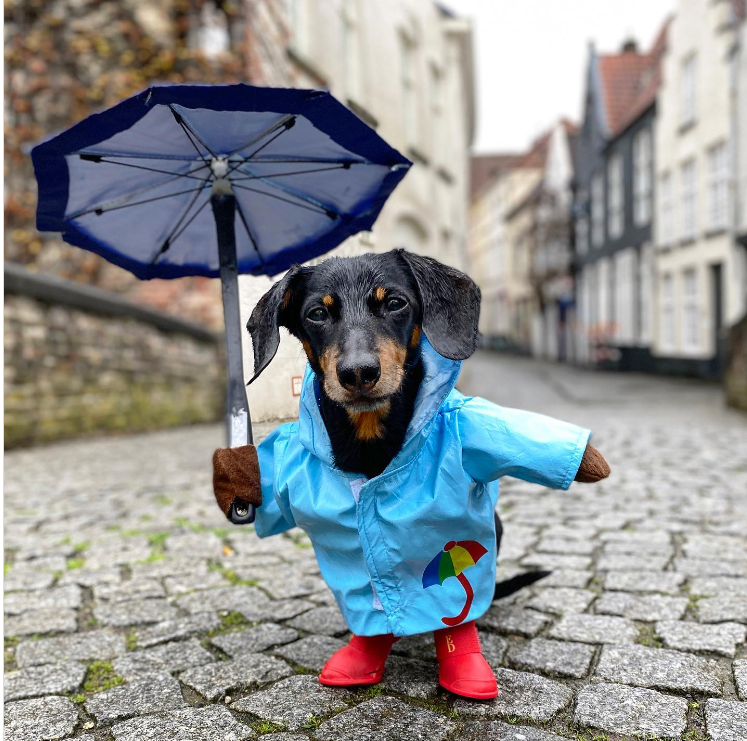
Crusoe the Dachshund: Crusoe is a social media sensation, boasting millions of followers on platforms like Instagram or YT. This Mini Dachshund’s adventures, costumes, and clever tricks have made him a beloved internet personality. He is even the author of the bestselling book, “Crusoe, the Celebrity Dachshund: Adventures of the Wiener Dog Extraordinaire”
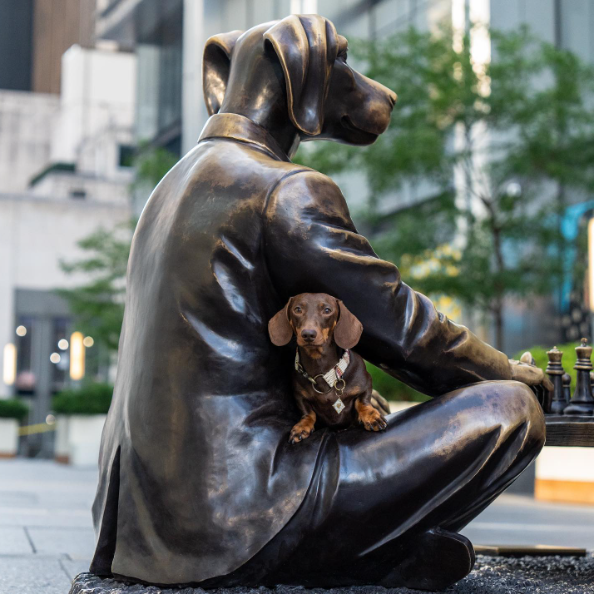
Parker the Mini Dachshund: He is a proper Englishman in New York. His IG Account is full of adorable photoshoots in NY scenery. What’s important, he and his owners educate others on Force Free Training.
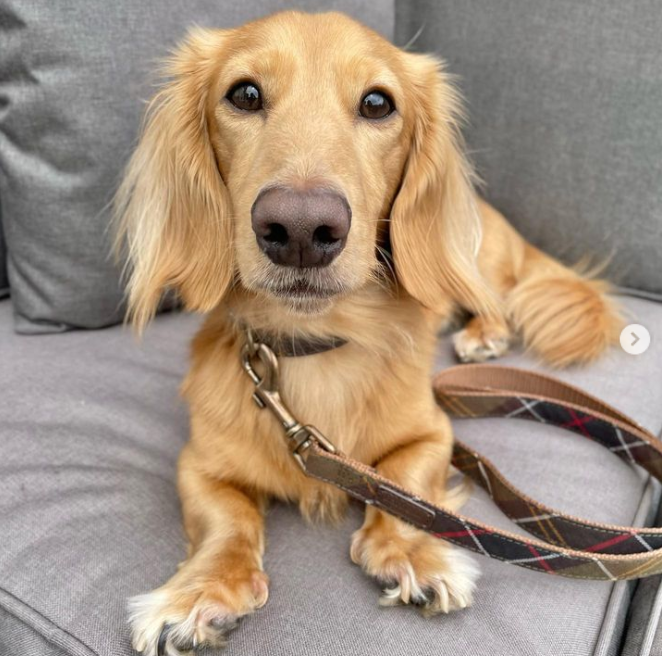
Miniature Dachshund George: This Cream Long-haired Mini Dachshund beauty is a Manchester TikTok celebrity sharing his videos and photos with Cream Dachshund lovers around the world.
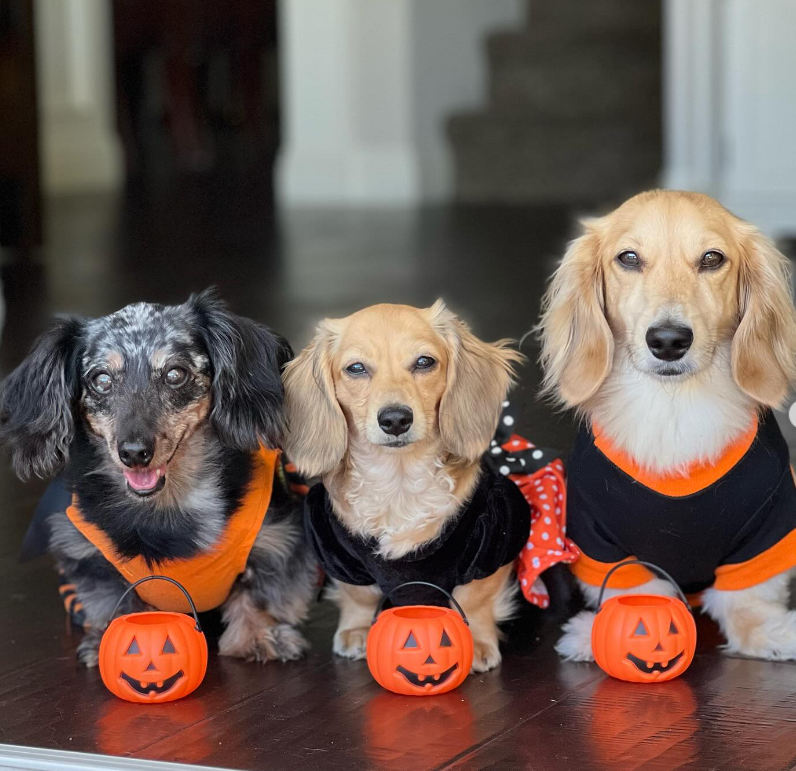
Sherman “Shermi” Mini Doxie – This Mini Cream Doxie Champion Barker, with his gorgeous look lives in sunny California and poses in the photos with his cute little siblings Rosey and Poppy. We love their outfits and the confidence they present on each shoot.
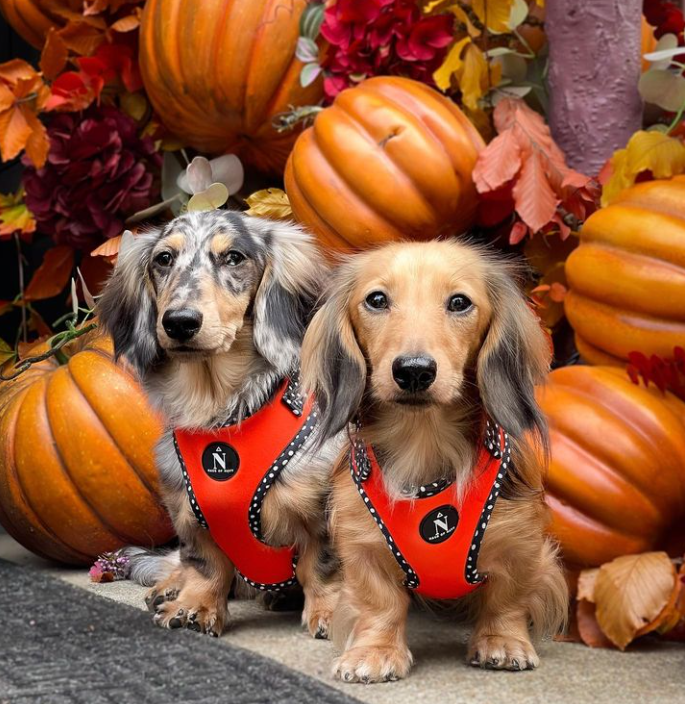
𝗟𝗼𝘂𝗶𝗲 and 𝗟𝗮𝗻𝗰𝗲 – Two Long-haired Minis, with distinctive coat patterns. They are professional posers – just look at those amazing photos on their IG! They were born models!
FAQ
What is the difference between a miniature and a standard dachshund?
The primary difference is size. A miniature dachshund weighs under 11 pounds at 12 months of age according to AKC standards, while a standard dachshund typically weighs between 16 and 32 pounds. Both share the same breed standard in terms of body proportions, temperament, and coat varieties. Miniatures were developed specifically for hunting rabbits in smaller burrows where standard dachshunds were too large. Temperamentally, they are considered broadly similar, though some owners report miniatures tend to be slightly more anxious and vocal – though that’s highly individual and influenced enormously by socialization and training.
How long do miniature dachshunds live?
Miniature dachshunds typically live between 12 and 16 years, making them one of the longer-lived small breeds. There are documented cases of dachshunds reaching 20 years, though that’s unusual. Longevity is influenced by genetics, weight management, IVDD history, and general preventive care. Keeping a miniature dachshund lean is probably the single most impactful thing an owner can do to support a long, healthy life – excess weight accelerates disc degeneration and puts strain on joints.
Are miniature dachshunds good for first-time dog owners?
They can be, but they come with a specific learning curve. The stubbornness and housetraining difficulty catch a lot of first-time owners off guard. The IVDD risk requires owners to learn and maintain specific handling and lifestyle habits that other breeds don’t demand. That said, miniature dachshunds are affectionate, manageable in size, and don’t require the high-intensity exercise routine that some other breeds need. A first-time owner who does their research, uses a trainer for at least basic obedience, and goes in with realistic expectations can absolutely succeed with a miniature dachshund.
Do miniature dachshunds bark a lot?
More than average, yes. Dachshunds were bred to bark during hunts – the bark was the signal that they’d found their quarry underground. That instinct remains fully functional. They typically bark at strangers, unfamiliar sounds, other animals, and sometimes apparently nothing at all. With consistent training from puppyhood, the barking can be managed and directed appropriately, but it’s unrealistic to expect a naturally quiet dachshund. If you live in an apartment building with noise restrictions or close neighbors, this is worth weighing seriously before committing to the breed.
What are the most common health problems in miniature dachshunds?
IVDD (intervertebral disc disease) is the most significant, affecting an estimated one in four dachshunds at some point in their lives. Beyond IVDD, miniature dachshunds are prone to dental disease, obesity, patellar luxation, Cushing’s disease, and hypothyroidism. Eye conditions including progressive retinal atrophy (PRA) appear in some lines. Dapple miniatures are at higher risk of congenital eye and hearing abnormalities, particularly double dapples. Responsible breeders health test for the conditions that have genetic screening available.
Can miniature dachshunds be left alone during the day?
Not comfortably for extended periods. Miniature dachshunds bond closely with their owners and are prone to separation anxiety, which can manifest as barking, destructive behavior, or house soiling. Most do better when alone for no more than four to five hours at a stretch. If your schedule requires longer absences regularly, solutions like a dog walker, doggy daycare, or a second dog (introduced properly) can help. Crate training helps some dachshunds feel more secure when alone – for others it increases anxiety. It depends heavily on the individual dog and how crate training was introduced.
Are miniature dachshunds hypoallergenic?
No. There’s no truly hypoallergenic dog breed – all dogs produce the proteins that trigger allergies in sensitive people. Smooth-coated miniature dachshunds are relatively low shedders compared to longhaired or wirehaired varieties, but that doesn’t make them allergy-safe. The allergens that affect most people are primarily found in dog saliva and skin dander, not just the hair itself. If allergies are a concern, spending time with the specific coat type before bringing a dog home is the most realistic test.
What size crate does a miniature dachshund need?
A 24-inch crate is the right size for most miniature dachshunds – large enough for them to stand up, turn around, and lie down comfortably, but snug enough to feel den-like rather than cavernously empty. Go too large and the crate loses its security appeal. Look for a crate with a divider panel so you can adjust the size as a puppy grows. Avoid wire-floor crates without a mat or pad – the gaps are uncomfortable for small dogs and can catch a leg.
How much do miniature dachshunds shed?
Smooth-coated miniature dachshunds shed a moderate amount year-round – you’ll notice short hairs on furniture and clothing but it’s rarely overwhelming. Longhaired miniatures shed more noticeably, particularly in spring and fall seasonal blows. Wirehaired miniatures are generally the lowest-shedding coat type of the three due to the texture of the outer coat, though they still shed. Regular brushing for all three coat types reduces shedding significantly by removing dead hair before it ends up on your sofa.


0 Comments