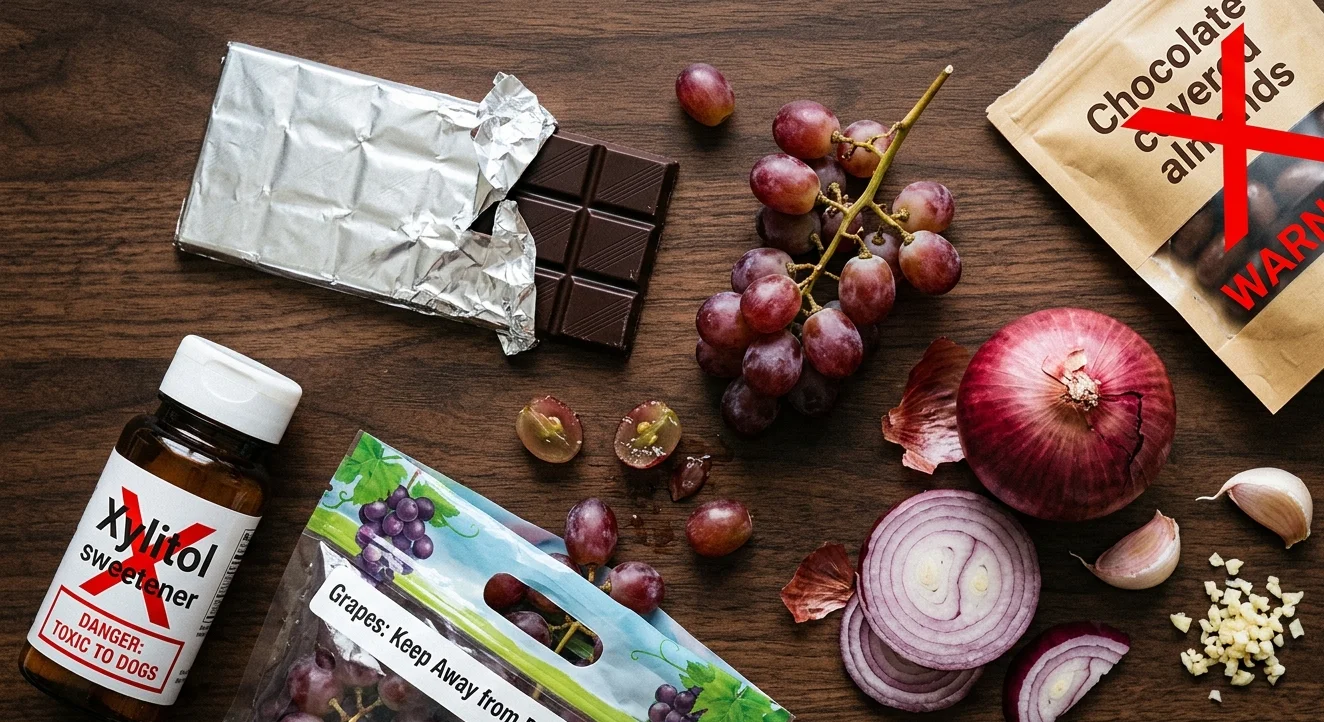
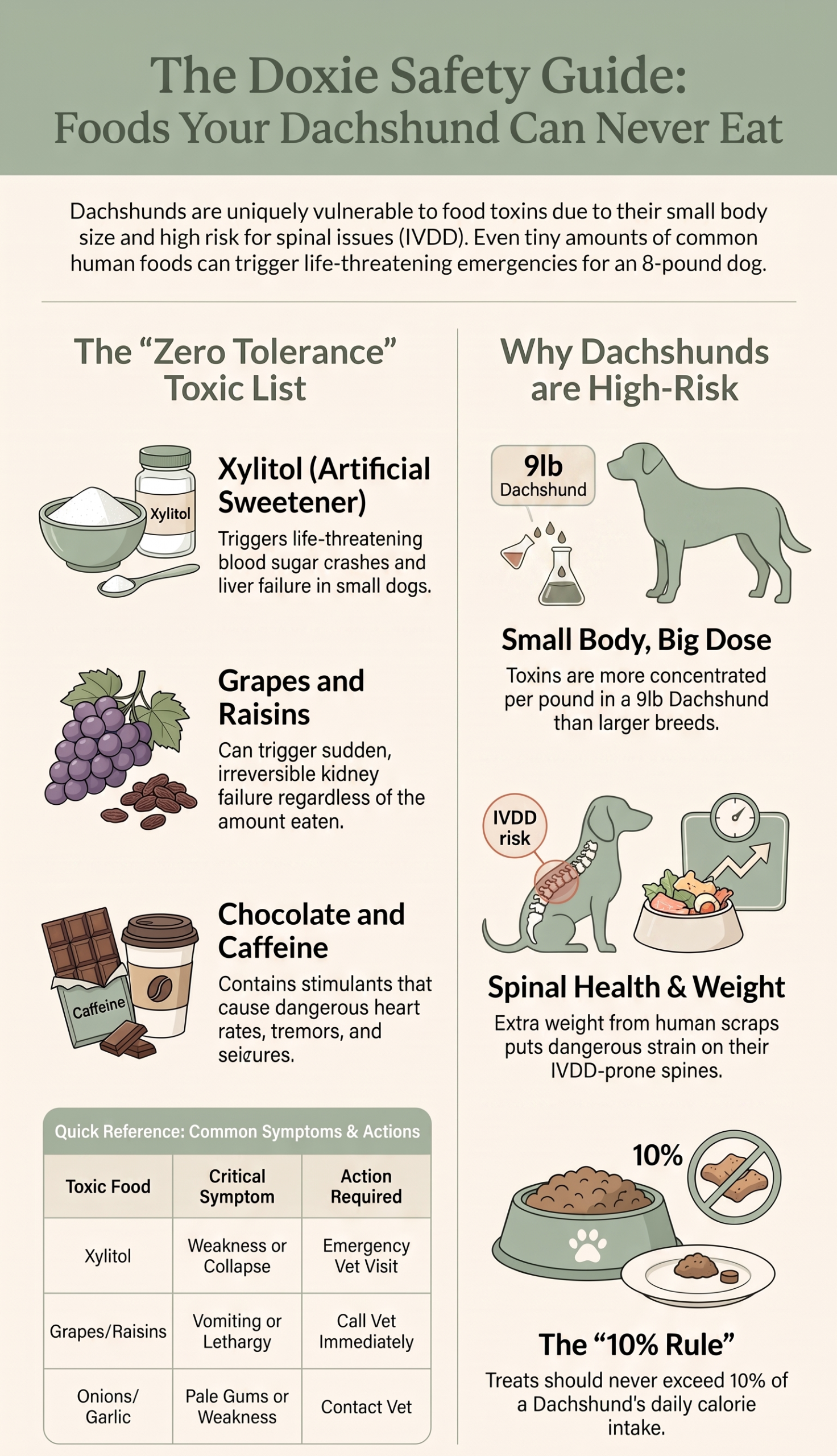
Dachshunds should never eat chocolate, grapes or raisins, xylitol, onions or garlic, alcohol, caffeine, macadamia nuts, raw yeast dough, wild mushrooms, cooked bones, or fruit pits. Because of their small size, even a small amount of these foods can cause serious poisoning or injury — a dose a Labrador would shrug off can be a genuine emergency for an 8-pound Doxie.
Dachshunds are also famously food-obsessed. Brave, stubborn, and convinced that anything within nose-shot belongs to them, they don’t wait for permission before a dropped grape disappears. That curiosity is part of what makes the breed so fun to live with — and exactly why owners need to know the full risk list cold.
This guide covers every major food risk, why Dachshunds specifically are more vulnerable, what symptoms to watch for, and what to do if the worst happens.
Quick Reference: Foods to Never Feed a Dachshund
| Food | Why It’s Dangerous |
|---|---|
| 🍫 Chocolate | Heart problems, tremors, seizures, potentially fatal |
| 🍇 Grapes & raisins | Can trigger sudden kidney failure |
| 🍬 Xylitol (sweetener) | Life-threatening blood sugar crash, liver failure |
| 🧅 Onions, garlic, leeks, chives | Damages red blood cells, causes anemia |
| 🍺 Alcohol | Toxic to the nervous system and organs |
| ☕ Caffeine | Dangerous heart rate and neurological symptoms |
| 🌰 Macadamia nuts | Weakness, tremors, fever |
| 🍞 Raw yeast dough | Expands in the stomach, produces alcohol |
| 🍄 Wild mushrooms | Some species are fatal |
| 🦴 Cooked bones | Splinter risk — choking, internal injury |
| 🍑 Fruit pits & seeds | Blockages; some contain cyanide compounds |
If your Dachshund eats any of the above, don’t wait to see if symptoms show up – call your vet or a pet poison hotline right away.
Why Dachshunds Are More Vulnerable Than Other Dogs
A Dachshund isn’t just “a small dog.” Their unique build changes the math on food safety in a few specific ways.
1. Small Body, Big Dose
A Labrador stealing half a sandwich walks away with a guilty look and nothing else. A 9-pound miniature Dachshund eating that same amount is getting a far higher dose of any toxin per pound of body weight. With small dogs, “a little bite” and “a dangerous amount” can be closer together than owners expect.
2. Their Backs Are Already at Risk
That long body and short-leg silhouette everyone loves also comes with a higher risk of Intervertebral Disc Disease (IVDD) – a spinal condition where damaged discs press on the spinal cord. Dachshunds are among the breeds most commonly affected.
This is why weight management matters so much for the breed: extra weight puts more strain on a Dachshund’s spine and joints than it would on a larger dog. Keeping your Doxie lean isn’t about appearance — it’s spinal health insurance.
3. They’re Professional Food Detectives
Dachshunds were bred to hunt badgers underground, which means they come pre-loaded with curiosity, persistence, and zero respect for closed cupboards. That drive is adorable when it’s aimed at a puzzle toy — and a liability when it’s aimed at your open handbag, the coffee table, or the bin.
The “Zero Tolerance” Foods
Chocolate
Chocolate contains theobromine and caffeine, both of which dogs metabolize far more slowly than humans, allowing the toxins to build up and affect the heart, nervous system, and muscles.
Risk scales with how concentrated the chocolate is:
| Type | Risk Level |
|---|---|
| White chocolate | Lower toxicity, but very high in fat |
| Milk chocolate | Dangerous in larger amounts |
| Dark chocolate | Highly toxic |
| Baking chocolate / cocoa powder | Extremely dangerous |
Watch for: vomiting, diarrhea, restlessness, heavy panting, rapid heartbeat, tremors, seizures. Symptoms can take several hours to appear — call your vet rather than waiting.
Xylitol — The Hidden Danger in “Sugar-Free” Products
Xylitol is harmless to humans and one of the most dangerous substances a dog can eat. It’s found in sugar-free gum, breath mints, toothpaste, sugar-free peanut butter, keto snacks, and some medications.
In dogs, it triggers a sudden insulin surge that crashes blood sugar — and in severe cases, causes liver failure.
Watch for: vomiting, weakness, wobbling, collapse, seizures, extreme lethargy. This is a true emergency. Always check the label before sharing peanut butter with your Dachshund.
Grapes & Raisins
Vets still don’t fully understand why, but grapes and raisins are linked to sudden kidney failure in some dogs – and there’s no known “safe” amount. Some dogs get seriously ill after just a few.
This includes raisin bread, trail mix, and baked goods with raisins hidden inside.
Watch for: vomiting, appetite loss, lethargy, abdominal discomfort, changes in urination.
Onions, Garlic, Leeks & Chives
These Allium-family foods damage red blood cells and can lead to hemolytic anemia — the body destroying blood cells faster than it can replace them.
The danger isn’t limited to the raw vegetable. Onion powder, garlic powder, gravy, soup, and seasoned leftovers can all be concentrated enough to cause harm — sometimes more so than the fresh version. Symptoms can also take days to appear, which makes this one especially sneaky.
Watch for: weakness, pale gums, rapid breathing, dark or reddish urine, appetite loss, collapse.
Macadamia Nuts
Even small amounts can cause illness. The exact toxin is still unknown, but affected dogs develop neurological symptoms within a few hours — weakness, wobbling, tremors, fever, and difficulty walking. Watch out for chocolate-covered macadamias and holiday snack mixes especially.
Alcohol
Spilled wine, an unattended cocktail, or fermented fruit can all be a problem. Because of their small body size, alcohol hits dogs’ brain, breathing, and blood sugar much harder than it hits a human.
Watch for: stumbling, confusion, vomiting, extreme sleepiness, slowed breathing, collapse.
Caffeine
Coffee grounds, tea bags, energy drinks, and even matcha powder are all off-limits. Caffeine affects a dog’s heart and nervous system directly.
Watch for: restlessness, rapid heartbeat, shaking, panting, vomiting, seizures.
Raw Yeast Dough
Rising dough keeps fermenting once it’s swallowed — in the warm environment of your Dachshund’s stomach, that means continued expansion (bloating, pressure on organs) plus the production of ethanol, which can cause alcohol poisoning on top of it.
Watch for: a swollen abdomen, discomfort, vomiting, weakness, difficulty walking.
Avocado
This one’s genuinely more nuanced. Ripe avocado flesh is less risky than the internet sometimes suggests, but the pit, skin, and leaves are a real hazard — the pit especially can cause a dangerous blockage in a small dog’s digestive tract. Avocado is also high in fat, which can trigger stomach upset or pancreatitis, so it’s not a great everyday treat regardless.
Wild Mushrooms
Store-bought mushrooms aren’t the main concern — wild mushrooms sniffed out on a walk are. Many species can’t be identified safely by sight, and some cause vomiting, neurological symptoms, liver failure, or death.
If your Dachshund eats one, remove any remaining pieces from their mouth, photograph the mushroom if you can, and call your vet.
Moldy Food, Compost & Spoiled Leftovers
Rubbish bins are an adventure park for a determined Doxie — which is a problem, because moldy food can contain mycotoxins that affect the nervous system.
Watch for: vomiting, agitation, shaking, tremors, seizures, loss of coordination. Keep bins and compost secured.
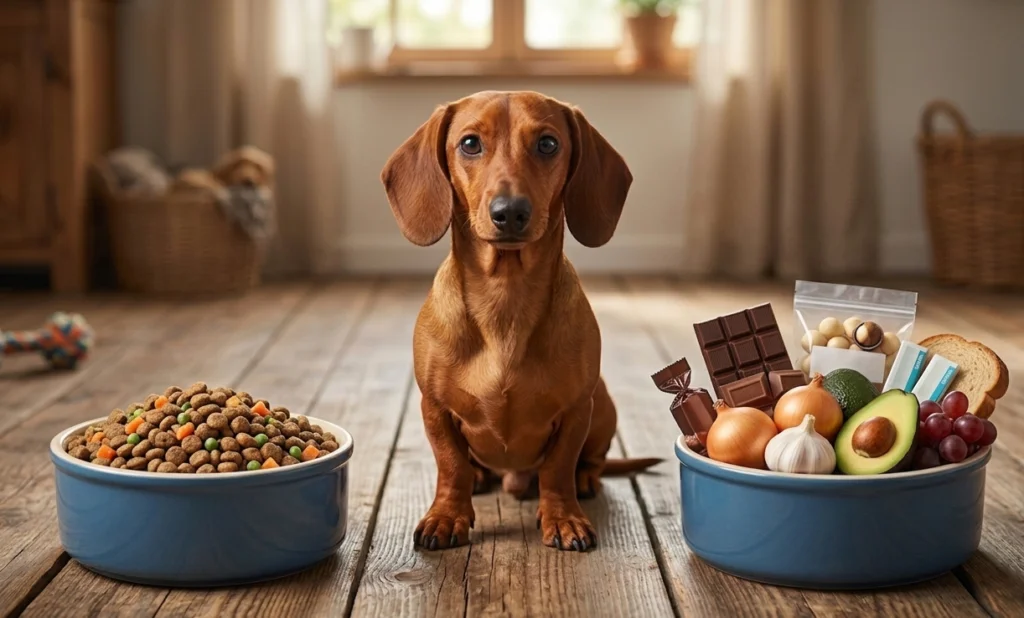
Physical Hazards That Aren’t About Poison
Not every dangerous food is toxic – some cause harm mechanically.
Cooked Bones
Cooking makes bones brittle, so they splinter rather than bend. Sharp fragments can lodge in the throat, damage the mouth, or puncture the stomach or intestines. Skip chicken, turkey, and steak bones entirely – reach for a purpose-made dog chew instead.
Fruit Pits & Seeds
Peach, plum, cherry, and apricot pits, along with apple seeds, present a double risk: they can cause a physical blockage, and several contain compounds that release cyanide when broken down. Rule of thumb – pit it, seed it, and cut fruit into small pieces before sharing.
Emergency Symptoms at a Glance
| Food | Possible Symptoms | Action |
|---|---|---|
| Chocolate | Vomiting, tremors, fast heartbeat, seizures | Call vet immediately |
| Grapes/Raisins | Vomiting, lethargy, kidney issues | Emergency advice needed |
| Xylitol | Weakness, collapse, seizures | Emergency |
| Onion/Garlic | Pale gums, weakness, dark urine | Contact vet |
| Alcohol | Stumbling, sleepiness, breathing issues | Emergency |
| Cooked bones | Choking, pain, vomiting | Emergency |
Many toxins are far easier to treat when caught early — don’t wait for your Dachshund to “look sick” before making the call.
What To Do If Your Dachshund Eats Something Toxic
1. Call for advice immediately — your vet, or:
- ASPCA Animal Poison Control Center (APCC): (888) 426-4435
- Pet Poison Helpline: (855) 764-7661
(Both may charge a consultation fee.)
2. Have this information ready: your dog’s weight, what they ate, roughly how much, when it happened, and any symptoms so far.
3. Don’t improvise a home remedy. No milk, oil, salt, or hydrogen peroxide unless a vet specifically tells you to — some “remedies” do more harm than good.
The Other Danger: Weight, Not Just Toxins
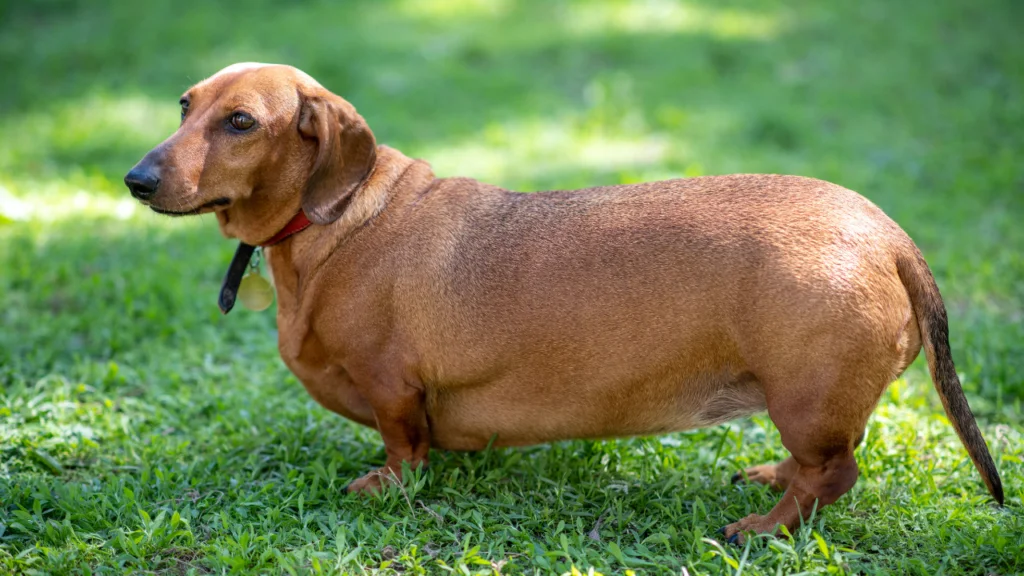
Chocolate and grapes get the headlines, but for Dachshunds, the more common long-term threat is simpler: too many calories.
Because of that long spine and short-leg frame, extra weight puts real, added strain on a Dachshund’s discs, joints, and hips — which is exactly the combination that raises IVDD risk. A healthy Doxie should have a visible waist from above, a slight belly tuck from the side, and ribs you can feel under a thin layer of fat. If you can’t find the ribs easily, it’s worth a weight conversation with your vet.
Foods that pack on weight without being “toxic”: bacon, sausage, chicken skin, butter, cream, fried food, cheese, crisps, cookies, and processed snacks.
Beyond the calories, fatty foods also raise the risk of pancreatitis – watch for vomiting, abdominal pain, appetite loss, or a hunched posture.
A useful rule: treats should make up no more than 10% of your dog’s daily calories. On a 10-pound Dachshund, that allowance disappears fast – a single cube of cheese can eat up a meaningful chunk of it. Breaking treats into smaller pieces, or using low-calorie training treats, stretches the reward without stretching the waistline.
Safe, Healthy Foods Your Dachshund Can Actually Enjoy
Vegetables
- 🥕 Carrots – low calorie, crunchy, great for training
- 🥒 Cucumber – high water content, very low calorie
- 🫛 Green beans – filling and low calorie; often used in vet-guided weight loss plans
- 🥦 Broccoli – fine in small amounts; too much can upset digestion
- 🍠 Cooked sweet potato – plain only, no butter, sugar, or seasoning
Fruits (all in moderation – natural sugar adds up)
- 🍓 Strawberries – wash first, remove the leafy top
- 🫐 Blueberries – small, naturally sweet, ideal training reward
- 🍌 Bananas – higher in sugar, so occasional only
- 🍉 Watermelon – remove seeds and rind first
- 🍎 Apples – remove seeds and core
Other good options
- Plain canned pumpkin (100% pumpkin, no spice or sugar) – good for digestion
- Plain peanut butter – check the label every time; some brands add xylitol
Easy Treat Swaps
| Instead of | Try |
|---|---|
| Cheese cubes | Small carrot pieces |
| Bacon scraps | Lean cooked chicken |
| Human biscuits | Dog-safe training treats |
| Dinner scraps | A few pieces of their normal kibble as a reward |
5 Rules for Safer Feeding
- Know the Big Four – chocolate, grapes/raisins, xylitol, onion/garlic. These cause the most household accidents by far.
- Read labels – xylitol hides in peanut butter, supplements, and “sugar-free” anything.
- Keep your Doxie lean – it protects mobility, comfort, and spine health.
- Brief your guests – “please don’t feed the dog without asking” prevents more accidents than you’d think.
- Control the environment – secure bins, cupboards, and counters. A Dachshund’s nose works faster than “leave it.”
FAQ
Can Dachshunds eat peanut butter?
Yes, as an occasional treat — but check the label every time. Never give peanut butter containing xylitol, which is extremely toxic to dogs.
Can Dachshunds eat bananas?
Yes, in moderation. Bananas are higher in natural sugar, so keep it to a few small pieces rather than a daily habit.
Can Dachshunds eat strawberries?
Yes. Wash them, remove the stem, and serve in small pieces — fruit should stay an occasional treat because of its natural sugar content.
Can Dachshunds eat carrots?
Yes — carrots are one of the best low-calorie training treats for the breed, crunchy and nutrient-rich.
Can Dachshunds eat cheese?
In small amounts, usually yes, but it shouldn’t be a regular treat. Cheese is calorie-dense and can contribute to weight gain and pancreatitis risk.
What should I do if my Dachshund eats something toxic?
Call your vet or a pet poison hotline right away — don’t wait for symptoms, since some toxins cause damage before any signs appear. Have your dog’s weight, what they ate, how much, and when on hand.
Final Thoughts
Your Dachshund trusts you with every bite that ends up in their bowl — or sneaks off your plate. Keeping the dangerous stuff out of reach, leaning on safe treats, and watching their weight are simple habits that add up to a lot more good years together.
They’ll still steal your socks, demand attention at the worst possible moment, and act personally offended five minutes after dinner. That’s the deal with the breed — and it’s worth protecting.
Sources
- ASPCA Animal Poison Control Center — People Foods to Avoid Feeding Your Pets
- American Kennel Club — People Foods Dogs Can and Can’t Eat
- American Kennel Club — Can Dogs Eat Bones?
- Household Food Items Toxic to Dogs and Cats, veterinary toxicology review — NCBI/PMC
This article is for educational purposes only and isn’t a substitute for professional veterinary advice, diagnosis, or treatment. If you believe your Dachshund has eaten something toxic, contact your veterinarian or a pet poison hotline immediately.

0 Comments