
The Rabbit Dachshund, also known as the Kaninchen Dachshund, is the smallest Dachshund variety recognized by the Fédération Cynologique Internationale (FCI).
Small in size but absolutely not short on personality, the Rabbit Dachshund is intelligent, courageous, curious and deeply attached to its family. And despite its tiny body, this is still a hunting dog with a powerful nose, strong prey drive and plenty of confidence.
If you’re wondering how big a Rabbit Dachshund gets, how much it weighs, what its temperament is like, or how it compares with a Miniature Dachshund, you’re in the right place.
Important for U.S. Dachshund owners: The American Kennel Club (AKC) recognizes Dachshunds in two size categories: Standard and Miniature. The FCI recognizes three: Standard, Miniature and Rabbit (Kaninchen). The term “Rabbit Dachshund” is therefore more commonly associated with the FCI classification than with the official AKC size system.
What Is a Rabbit Dachshund?
A Rabbit Dachshund, or Kaninchen Dachshund, is the smallest of the three Dachshund size varieties recognized by the FCI.
The German word Kaninchen means “rabbit.” The name reflects the historical purpose of these particularly small Dachshunds, which were developed to work with smaller prey.
In the United States, however, things can get a little confusing.
The AKC recognizes two Dachshund sizes — Standard and Miniature — rather than a separate Rabbit category.
That means you may encounter the term “Rabbit Dachshund” in the U.S., particularly among breeders, European-line Dachshund enthusiasts and owners, but it isn’t a separate AKC size classification.
What doesn’t change is the dog itself. A Rabbit Dachshund still has the classic Dachshund body, personality and hunting instincts -just in a particularly compact package.

History and Origin of the Rabbit Dachshund
Dachshunds originated in Germany and were developed as hunting dogs.
Their long bodies, short legs and powerful noses made them particularly well suited to following prey into burrows. The breed was originally associated with hunting badgers, but Dachshunds were also used to pursue other small animals.
As the need for dogs capable of working in smaller underground spaces increased, particularly small Dachshunds were developed.
This eventually led to the three size varieties recognized by the FCI:
- Standard Dachshund
- Miniature Dachshund
- Rabbit Dachshund (Kaninchen)
The Rabbit Dachshund is therefore not simply a “smaller version” created for companionship. Its small size has historical roots in the breed’s working purpose.
Rabbit Dachshund Size and Weight
One of the biggest misconceptions about Dachshund sizes is that they are determined simply by height or weight.
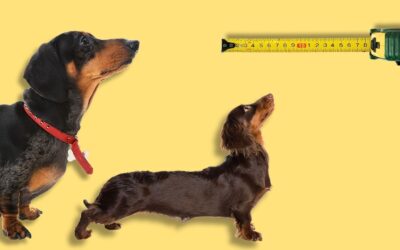
Under the FCI system, Dachshund size is determined primarily by chest circumference measured after the dog is 15 months old. For the Rabbit Dachshund, the FCI standard places the chest circumference in the smallest category.
This is important because you shouldn’t assume that a very small Dachshund puppy will automatically mature into a Rabbit Dachshund.
How much does a Rabbit Dachshund weigh?
There is no single adult weight that officially defines a Rabbit Dachshund.
You may see adult Rabbit Dachshunds weighing around 7–9 pounds, but individual dogs can be smaller or larger. More importantly, weight should never be considered in isolation.
A healthy body condition matters far more than hitting a particular number on the scale – especially in a breed whose long back makes maintaining a healthy weight particularly important.
How big does a Rabbit Dachshund get?
Under the FCI classification, Rabbit Dachshunds have a smaller chest circumference than Miniature Dachshunds.
For males, the FCI range is approximately 10.6–12.6 inches (27–32 cm) around the chest.
For females, it is approximately 9.8–11.8 inches (25–30 cm).
The measurement is taken after 15 months of age.
Rabbit Dachshund Coat Types
Rabbit Dachshunds can have any of the three coat types found in the Dachshund breed:
- Smooth-Coated Rabbit Dachshund – The smooth coat is short, sleek and relatively easy to maintain. Weekly brushing is generally enough to remove loose hair and keep the coat looking healthy.
- Long-haired Rabbit Dachshund – Long-haired Dachshunds have a softer, flowing coat with feathering around the ears, legs and tail. They need more frequent brushing, particularly around areas where tangles can form.
- Wirehaired Rabbit Dachshund – Wirehaired Dachshunds have a coarse outer coat, along with the distinctive beard and bushy eyebrows that give them their characteristic expression. Their coat requires regular maintenance and may benefit from hand-stripping or appropriate grooming to preserve its texture.

Temperament and Personalityof Rabbit Dachshund
If you’re picturing a tiny, quiet lap dog, there’s something you should know: Rabbit Dachshunds may be small, but their personalities certainly aren’t.
They are typically:
- Intelligent
- Courageous
- Alert
- Energetic
- Affectionate
- Loyal
- Curious
- Independent
Rabbit Dachshunds often form incredibly strong bonds with their people. They may follow you from room to room, investigate whatever you’re doing and insist on being involved in household life.
Their hunting background also means that many Rabbit Dachshunds have a strong instinct to:
- Follow interesting scents
- Dig
- Chase small animals
- Investigate unfamiliar noises
- Bark
- Search for hidden “prey”
That combination of affection and independence is one of the things that makes Dachshunds so lovable. It’s also why they can occasionally be a little… opinionated.
Rabbit Dachshund vs. Miniature Dachshund
This is one of the most common questions surrounding Rabbit Dachshunds. The main difference is size classification. Under the FCI system, Rabbit and Miniature Dachshunds are separate size varieties.
| Feature | Rabbit Dachshund | Miniature Dachshund |
|---|---|---|
| FCI classification | Smallest Dachshund variety | Middle Dachshund variety |
| Chest circumference | Smallest category | Larger than Rabbit category |
| Coat types | Smooth, longhaired, wirehaired | Smooth, longhaired, wirehaired |
| Temperament | Bold, affectionate, intelligent, independent | Bold, affectionate, intelligent, independent |
| Hunting instincts | Strong | Strong |
| AKC U.S. classification | Not a separate AKC size | Recognized as Miniature |
The important thing to remember is that size does not automatically determine personality. A Rabbit Dachshund isn’t necessarily calmer, easier to train or less energetic than a Miniature Dachshund. Genetics, early socialization, training and individual temperament all play a major role.

How to Train a Rabbit Dachshund
Rabbit Dachshunds are smart – but they can also be wonderfully stubborn. Training should start as soon as your puppy comes home.
Use positive reinforcement
Reward your Dachshund for doing the right thing with:
- Small treats
- Praise
- Toys
- Play
- Attention
Harsh corrections can damage trust and aren’t necessary for teaching a Dachshund good manners.
Keep training sessions short
A few focused minutes can be much more effective than a long training session. Short sessions throughout the day also give you plenty of opportunities to reinforce good behavior.
Socialize early
Positive exposure to different people, environments, sounds, surfaces and appropriately vaccinated dogs can help your puppy become a confident adult.
Give that nose a job
Don’t forget what Dachshunds were bred to do. Sniffing walks, scent games, food puzzles and simple nose-work activities can provide excellent mental stimulation.
Be consistent
Dachshunds quickly learn which rules are flexible. If barking gets attention one day but is discouraged the next, your dog has every reason to keep trying. Everyone in the household should follow the same basic rules.
Rabbit Dachshund Health
Rabbit Dachshunds share many of the same health considerations as other Dachshunds. Responsible ownership means understanding these risks without assuming that every Dachshund will develop them.
Intervertebral Disc Disease (IVDD)
Intervertebral Disc Disease (IVDD) is one of the most important health concerns for Dachshund owners. Dachshunds’ distinctive long-backed, short-legged structure is associated with increased susceptibility to spinal disc problems.
Possible signs of a spinal problem include:
- Back or neck pain
- Reluctance to move
- Difficulty standing
- Weakness
- Trouble walking
- Changes in gait
- Loss of coordination
- Paralysis in severe cases
If your Dachshund suddenly develops significant pain, weakness or difficulty walking, contact your veterinarian promptly.
You cannot completely eliminate the risk of IVDD, but keeping your Dachshund lean, physically conditioned and appropriately active is an important part of responsible care.
Obesity and Weight Management
A healthy weight is particularly important for Dachshunds. Those big eyes may make saying “no” to another treat difficult, but excess weight puts additional stress on the body and can contribute to health problems.
Measure food portions, keep treats under control and ask your veterinarian to assess your dog’s body condition regularly.
Dental Health
Dental care shouldn’t be an afterthought. Small dogs can develop dental disease, so introducing regular tooth brushing early is a good habit. Your veterinarian can also assess your dog’s teeth during routine wellness visits and recommend professional dental care when necessary.
Eye Health
Some inherited eye conditions occur in Dachshunds. If you’re buying a puppy, ask the breeder what health screening has been performed on the parents.
The Dachshund Club of America recommends eye examinations by a board-certified veterinary ophthalmologist as part of its health screening recommendations for breeding dogs.
Other Health Considerations
Dachshunds can also experience a range of other health problems, including skin, ear, eye and age-related conditions. The goal isn’t to worry about every possible diagnosis. Instead, focus on preventative care, responsible breeding, good nutrition, healthy body weight, regular exercise and routine veterinary examinations.

How to Keep Your Rabbit Dachshund Healthy
Some of the most effective things you can do are simple:
- Keep your Dachshund at a healthy body weight.
- Feed measured portions rather than free-feeding.
- Provide regular, moderate exercise.
- Give your dog opportunities to sniff and explore.
- Provide daily mental stimulation.
- Avoid unnecessary high-impact activity.
- Brush your dog’s teeth regularly.
- Check ears and eyes regularly.
- Keep nails trimmed.
- Schedule regular veterinary wellness examinations.
The Dachshund Club of America recommends regular veterinary care, a quality diet and moderate exercise to help maintain muscle tone and overall health.
How Long Does a Rabbit Dachshund Live?
Dachshunds are generally long-lived dogs. The Dachshund Club of America gives the breed a life expectancy of approximately 12–16 years. Some individual Dachshunds live beyond that range.
Genetics, body condition, nutrition, preventative healthcare and lifestyle all influence a dog’s health and longevity.
Rabbit Dachshund Grooming
Your Rabbit Dachshund’s grooming routine depends on the coat type.
Smooth-haired Rabbit Dachshund
- Brush approximately once a week.
- Bathe when necessary.
- Check the ears regularly.
- Trim nails as needed.
- Brush teeth regularly.
Longhaired Rabbit Dachshund
Longhaired Dachshunds generally need more frequent brushing.
Pay particular attention to:
- Behind the ears
- The chest
- The belly
- The legs
- The tail
Wirehaired Rabbit Dachshund
Wirehaired Dachshunds need regular brushing and coat maintenance. Depending on the coat, hand-stripping or appropriate trimming may be recommended to maintain the characteristic wire texture.
Don’t forget the ears
Floppy ears can trap moisture and debris. Check your Dachshund’s ears regularly. If you notice redness, discharge, a strong odor or persistent scratching, talk to your veterinarian rather than simply treating the ears yourself.
How Much Does a Rabbit Dachshund Cost?
There is no single standard price for a Rabbit Dachshund in the United States. Puppy prices can vary considerably depending on the breeder, location, pedigree, health testing, bloodlines and demand.
Instead of choosing a puppy based primarily on price, look for a breeder who prioritizes health and temperament.
Ask about:
- Health testing of the parents
- Eye examinations
- Patella evaluations
- Cardiac examinations
- Genetic testing where appropriate
- Puppy socialization
- Veterinary care
- Vaccinations and parasite prevention
- The breeder’s approach to matching puppies with homes
The Dachshund Club of America recommends health screening for breeding dogs, including patella, cardiac and ophthalmologist evaluations.
A responsible breeder should be happy to discuss health testing and should care about where their puppies are going.
Is a Rabbit Dachshund Good for Apartment Living?
Yes. A Rabbit Dachshund can be an excellent apartment dog because of its small size. But small doesn’t mean sedentary.
Your Dachshund still needs:
- Daily walks
- Sniffing opportunities
- Play
- Training
- Mental stimulation
- Interaction with its family
A bored Dachshund may decide that barking at hallway noises, digging into the carpet or stealing socks is an excellent alternative. Apartment living can work beautifully when a Rabbit Dachshund has enough physical and mental activity.
Is a Rabbit Dachshund Good With Children?
They can be. Early socialization and respectful handling are important. Because Dachshunds are small and have a distinctive long-backed structure, children should be taught how to interact safely with them.
Children should never be encouraged to:
- Pick up a Dachshund without adult supervision
- Climb on the dog
- Pull its ears or tail
- Disturb the dog while eating or sleeping
- Chase the dog when it wants space
Young children should always be supervised around dogs. With appropriate socialization and respectful handling, Dachshunds and children can form wonderful bonds.
Can a Rabbit Dachshund Be Left Alone?
A Rabbit Dachshund can learn to spend time alone, but this should be taught gradually. Dachshunds often form strong attachments to their families, so puppies should learn from an early age that being alone for short periods is safe.
Start with brief absences and gradually increase the time.
If your dog shows significant distress when alone – such as persistent barking, destructive behavior, escape attempts or extreme anxiety – speak with your veterinarian or a qualified positive-reinforcement behavior professional.
Frequently Asked Questions
How much does a Rabbit Dachshund weigh?
Rabbit Dachshunds are very small dogs and may weigh around 7–9 pounds, although individual dogs vary. Weight alone does not determine whether a Dachshund falls into the Rabbit category under the FCI system.
How big does a Rabbit Dachshund get?
Under the FCI classification, Rabbit Dachshunds have the smallest permitted chest circumference of the three Dachshund size varieties. The measurement is taken after 15 months of age.
Is a Rabbit Dachshund the same as a Miniature Dachshund?
No. Under the FCI system, Rabbit and Miniature Dachshunds are separate size varieties. The AKC, however, recognizes only Standard and Miniature Dachshunds in the United States.
Are Rabbit Dachshunds recognized by the AKC?
Not as a separate third size. The AKC recognizes Dachshunds as Standard and Miniature. Rabbit, or Kaninchen, is a separate size classification under the FCI system.
Are Rabbit Dachshunds good family dogs?
They can be excellent family companions when properly socialized and trained. They are affectionate and loyal but can also be independent, vocal and energetic.
Do Rabbit Dachshunds bark a lot?
They can be quite vocal. Dachshunds are alert hunting dogs and often react to unfamiliar sounds, people and activity.
Are Rabbit Dachshunds easy to train?
They are intelligent but independent. Short, positive and consistent training sessions generally work better than harsh corrections or repetitive drills.
Can Rabbit Dachshunds live in apartments?
Yes. Their small size makes them well suited to apartment living, provided they receive appropriate exercise, sniffing opportunities, mental stimulation and family interaction.
How long do Rabbit Dachshunds live?
The Dachshund Club of America gives the breed a life expectancy of approximately 12–16 years, although individual dogs may live longer.
Are Rabbit Dachshunds prone to back problems?
Dachshunds are predisposed to intervertebral disc disease (IVDD). Maintaining a healthy weight and good physical condition is particularly important for the breed.
Final Thoughts
The Rabbit Dachshund may be one of the smallest Dachshund varieties, but nobody seems to have told the dog.
This tiny hound combines a compact body with the classic Dachshund personality: courageous, clever, affectionate, curious and occasionally hilariously stubborn. If you’re looking for a small companion who wants to be involved in absolutely everything you do, a Rabbit Dachshund can be a wonderful match.
Just remember: you’re not bringing home a decorative lap dog. You’re bringing home a tiny hunting dog with a very big opinion.
Give your Rabbit Dachshund appropriate exercise, mental stimulation, positive training, good nutrition and careful weight management, and you’ll be giving that big personality the best chance to thrive for many years.


0 Comments