

Life with a Dachshund – Guide for Owners
Dachshunds are intelligent, sensitive, and wonderfully stubborn dogs. This guide will help you understand their needs, build a healthy daily routine, and create a home where your Dachshund feels safe, happy, and truly understood.
What You’ll Learn in This Guide
Caring for a Dachshund - what you need to know from day one
Dachshunds are a breed with a strong personality and very specific needs. Here are a few important things to understand from the very beginning:
A Dachshund needs:
- clear rules and consistency — chaos and mixed signals can cause stress,
- a predictable routine — structure helps them feel safe,
- short but regular physical activity,
- scent-based enrichment — nose work and snuffle mats are real mental exercise for this breed,
- close connection with their owner — Dachshunds form deep emotional bonds.
The most important parts of daily care include: creating a safe home environment, regular walks (2–3 per day), grooming and hygiene, an age-appropriate diet, and consistent training from puppyhood.
Dachshund puppy essentials
How to prepare your home for a dachshund
Safety first
A Dachshund has a long spine and short legs – this makes them especially prone to injuries. Before bringing your dog home:
- secure stairs with safety gates or restrict access entirely,
- remove toxic plants (including peace lilies, dieffenbachia, and daylilies),
- hide cables and wires – Dachshunds are known for chewing,
- create a quiet resting area away from busy walkways and noise.
Everyday comfort
- a bed placed in a calm, consistent location,
- non-slip mats on slippery floors,
- bowls positioned so your dog does not have to strain their neck at an awkward angle.
👉 How to prepare your home for a Dachshund – step by step guide
Dachshund daily routine
Dachshunds love predictability. A consistent daily rhythm reduces stress, minimizes behavioural issues, and builds trust between dog and owner.
Example daily plan:
| Time | Activity |
|---|---|
| Morning | Walk (20 – 30 min) + short obedience training |
| Late morning | Meal + rest |
| Midday | Scent play or snuffle mat (10 – 15 min) |
| Afternoon | Walk (20 – 30 min) |
| Evening | Wind-down, time with owner, optional second meal |
Walking a dachshund - rules and safety
A walk for a Dachshund is not just exercise – it is primarily scent exploration. Here are key rules to follow from the very first outing:
- always use a harness, never a collar – a sudden pull can damage the cervical spine,
- avoid jumping from heights – kerbs, benches, and steps increase the risk of spinal injury,
- use a long line (5 – 10 m) to give your dog freedom to explore at their own pace,
- do not rush – 20 minutes of free sniffing is more valuable for a Dachshund than 45 minutes of fast walking,
- monitor temperature – Dachshunds overheat and get cold easily; avoid walks in extreme heat or frost without appropriate clothing.
Traveling with a dachshund
By car
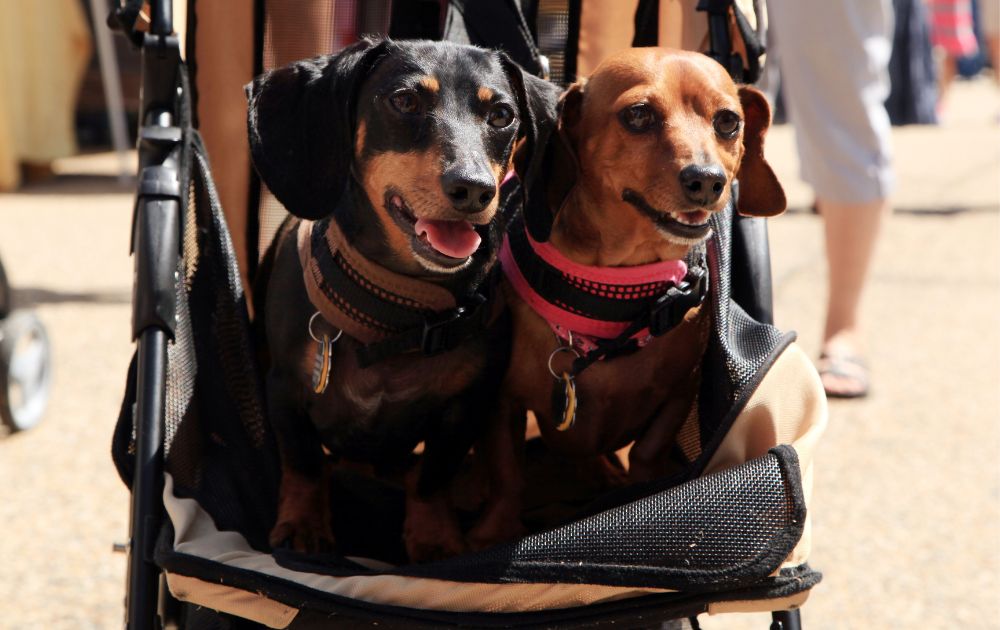
A Dachshund should always travel in a carrier or on a dedicated safety harness – never loose in the car. Plan breaks every 2 – 3 hours and make sure fresh water is available throughout the journey.
By train and public transport
A carrier is essential. Place a worn T-shirt or your dog’s favourite toy inside – familiar scent has a calming effect. For longer trips, keep treats within easy reach.
Holidays and trips
Before booking accommodation, always check the property’s pet policy. Bring your dog’s bed, favourite toys, and make sure their flea and tick protection is up to date.
👉 How to travel with a dachshund – practical guide
Dachshund and children - building a safe relationship
Dachshunds can live happily with children, but it requires clear boundaries on both sides. These are the key rules to introduce from the start:
- children should not pick up the dog – a Dachshund is vulnerable to spinal injuries if handled incorrectly,
- no pulling ears, tail, or legs,
- the dog has the right to leave – their resting space must always be respected,
- teach children “dog language” – a turned head or squinting eyes can signal that the dog needs space.
Dachshund and other pets - how to introduce them
Common everyday challenges with a dachshund
Excess energy
Short (5 – 10 min) training sessions several times a day, scent games, and snuffle mat work effectively release tension – without the need for intense physical exercise.
Destructive behaviour at home
The most common cause is lack of stimulation or separation anxiety. Before correcting the behaviour, first check whether your dog has enough activities and whether they are able to stay alone comfortably.
Barking at guests
Training “go to your place” combined with gradual desensitisation to the sight of strangers. A Dachshund usually barks out of fear or excitement – punishment only makes the problem worse.
Fear of loud noises (thunder, fireworks)
A safe hiding space (carrier with the door open, covered with a blanket), scent-based games as distraction, and consistent desensitisation training deliver the best long-term results.
More about life with a dachshund:

How to draw a Dachshund
Love dachshunds and feeling creative? You’re in the right place.If you’ve ever wanted to draw your own dachshund—or just try your hand at capturing their unique charm—this guide is for you. We’ll walk you through the basics of drawing and coloring a dachshund, step by...

Dachshund Christmas safety: 10 tips every Doxie owner should know
Dachshunds need a few things other dogs don't at Christmas: decorations and toxic plants kept properly out of reach, treats watched closely since extra weight puts real strain on their long spine, and no jumping on and off furniture, since that's one of the most...
Dachshund playdates: socializing your wiener dog
Join our newsletter
Adres
Dachshunds Planet
Disclaimer: This site contains affiliate links, which means we may earn a commission on purchases made through them.