
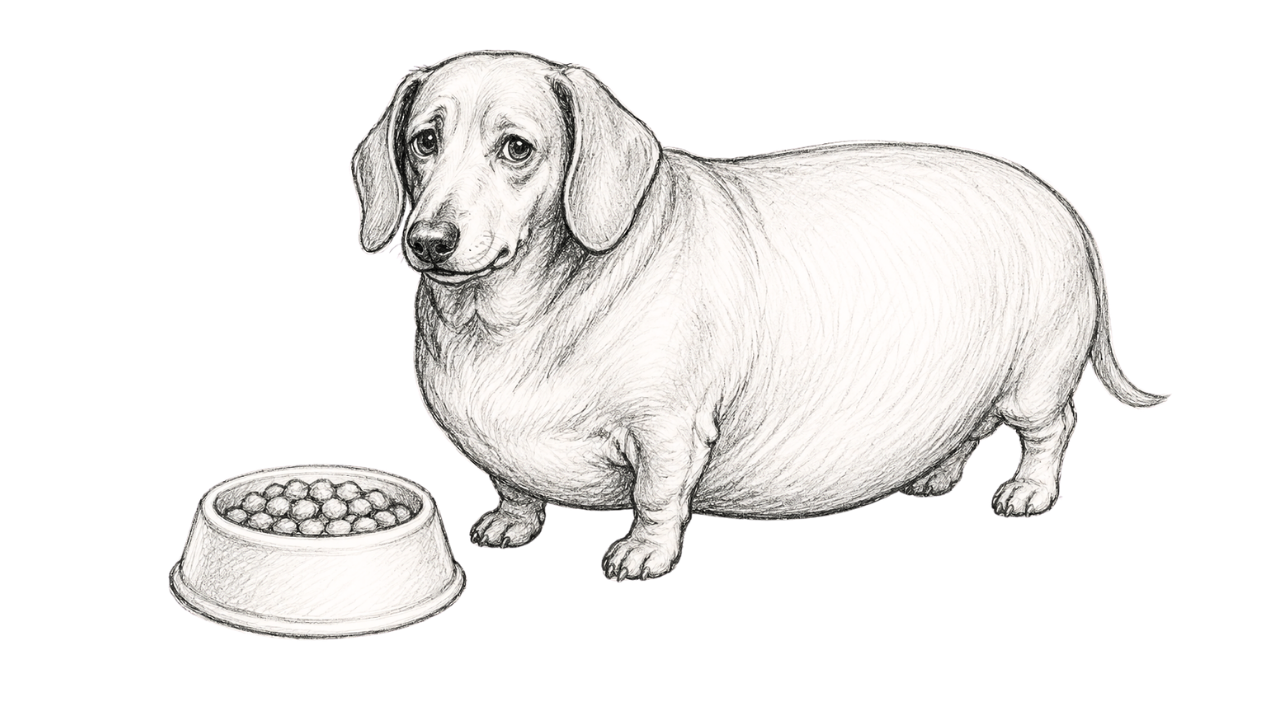
Obesity in a dachshund
Overweight is one of the most serious health risks for a Dachshund. It puts extra strain on the spine, increases the risk of intervertebral disc disease, joint problems, diabetes, and heart disease, and can shorten a dog’s life by several years. In this guide, you will learn how to assess your Dachshund’s weight, how to reduce it safely, and how to prevent weight gain from returning.
Why do dachshunds gain weight so easily?
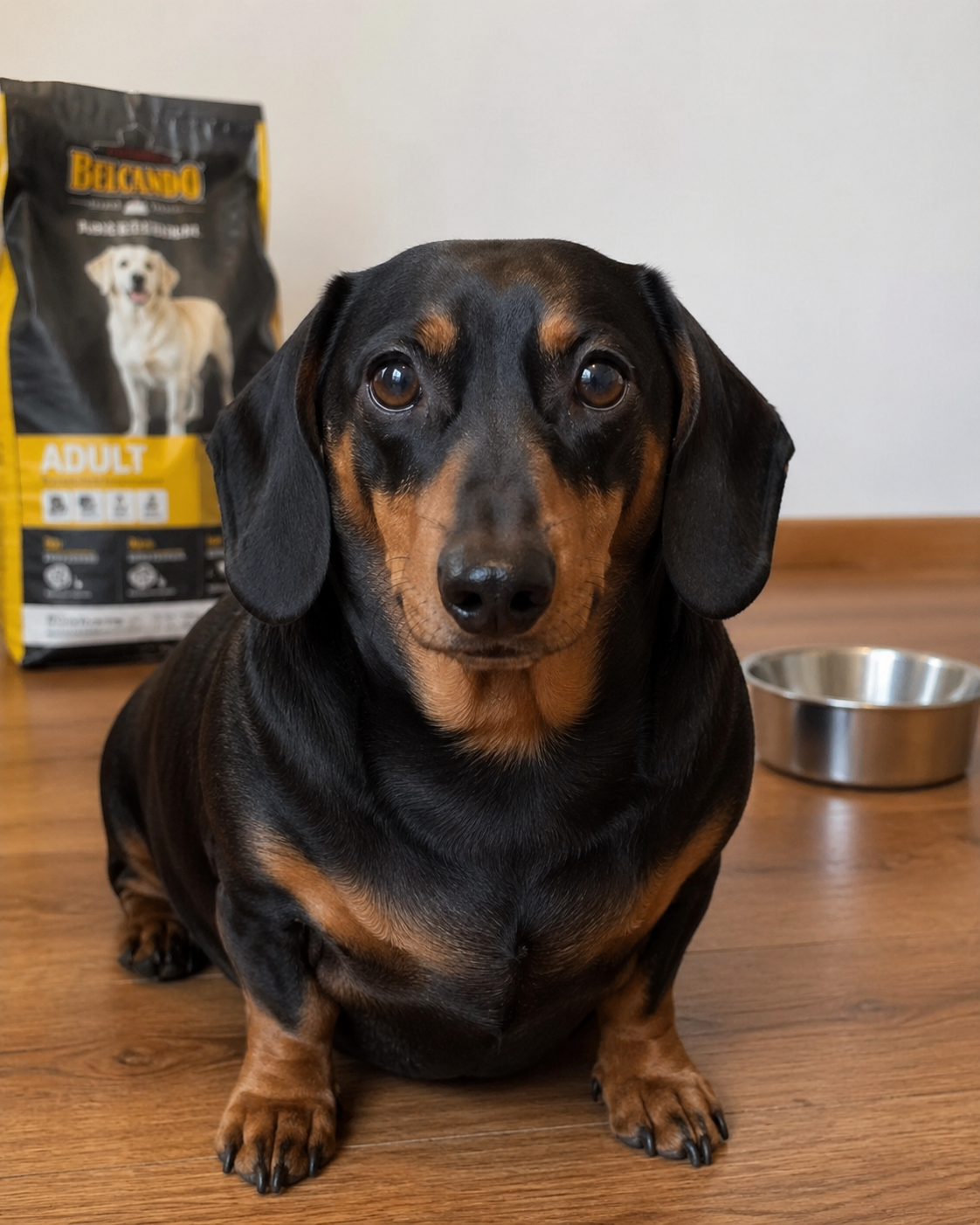
How to tell if your dachshund is overweight
1. Body Condition Score (BCS)
The simplest way to assess your dog’s body condition. For Dachshunds, an ideal score is BCS 4–5/9.
Healthy weight signs:
- ribs are easily felt with light pressure
- visible waist when viewed from above
- slightly tucked abdomen from the side
Overweight or obesity signs:
- ribs are difficult to feel
- no visible waist
- belly appears rounded or sagging
- dog tires quickly, pants more, or avoids stairs
2. Approximate weight ranges
- miniature Dachshund: 4–5.5 kg
- standard Dachshund: 7–12 kg
But remember: weight alone is only a guideline – body shape matters more than numbers.

Why is overweight so dangerous for a dachshund?
High risk of IVDD (intervertebral disc disease)
Every extra kilogram increases pressure on the spine and intervertebral discs. In overweight Dachshunds, the risk of IVDD can be up to twice as high.
Joint problems
A Dachshund’s knees and elbows are not designed to carry excess body weight, which leads to faster wear and chronic strain.
Metabolic diseases
- diabetes
- high blood pressure
- heart problems
- fatty liver disease
How to safely help a dachshund lose weight
1. Set the correct food portion
The most common mistake is feeding according to the chart for the dog’s current weight. If your Dachshund weighs 10 kg but should weigh 7 kg, you calculate portions for 7 kg – not 10.
2. Choose the right food
Best options include:
- light or weight management diets
- high-meat foods with lower calorie density
- veterinary weight-loss diets for significant obesity
3. Limit treats
Treats should make up a maximum of 10% of daily calories. Healthy alternatives:
- cooked carrot
- small pieces of apple
- plain dried meat treats with no additives
4. No table scraps
Human food is often too high in calories and can be unsafe for dogs.
5. Increase activity
Dachshunds do not need marathons – they need consistency.
Ideal routine:
- 2–3 walks per day (20–30 minutes each)
- scent games
- short training sessions
- interactive toys and puzzle feeders
6. Lose weight slowly
Safe rate: 1–2% of body weight per week. Faster weight loss can lead to liver problems and other health complications.
How to prevent your dachshund from gaining weight again
The most common mistakes owners make
- measure food portions with a kitchen scale – not “by eye”
- set clear household rules – nobody should feed the dog outside meals
- keep consistent feeding times
- weigh your dog regularly (every 2 weeks)
- ensure daily activity – even on rainy days
- “he looks fine, he just has short legs” – a classic misconception
- “he always looks hungry” – Dachshunds always act hungry
- “it’s just one treat” – five treats a day equals an extra meal
- “he doesn’t like walks” – this is often a sign of overweight, not personality
FAQ: Obesity in dachshunds
Can obesity cause IVDD?
Yes. Overweight is one of the most important risk factors for intervertebral disc disease (IVDD).
Does neutering cause weight gain?
Not directly. However, it lowers metabolism, so food portions usually need to be reduced by around 20%.
Can I help my dachshund lose weight on my own?
For mild overweight, yes. In cases of obesity or additional health conditions, it is best done under veterinary supervision.
Is exercise enough to make my dachshund lose weight?
No. Nutrition is the key factor. Exercise supports weight loss, but it cannot replace a proper diet.
More about dachshund health

Can dachshunds climb stairs? Spine facts and IVDD risk
Dachshunds should not climb stairs regularly - especially up. Repeated stair use puts direct pressure on the spine and significantly increases the risk of IVDD (intervertebral disc disease), which affects up to 25% of the breed. Puppies under 12 months and seniors...
Dachshund not using back legs – what to do first if paralysis happens
Important: This article is for informational purposes only and does not replace veterinary advice. If your dog shows any signs of illness or injury, contact a veterinarian immediately. If your Dachshund suddenly stops using their back legs, drags them behind, or...

Common dachshund health problems: the complete owner’s guide
Because of their unique body structure and genetics, dachshunds are prone to a specific set of health conditions. The most common dachshund diseases include spinal disc disease (IVDD), dental problems, diabetes, hypothyroidism, eye conditions (such as PRA), and heart...
Want to learn more about dachshund health?
Join our newsletter
Adres
Dachshunds Planet
Disclaimer: This site contains affiliate links, which means we may earn a commission on purchases made through them.