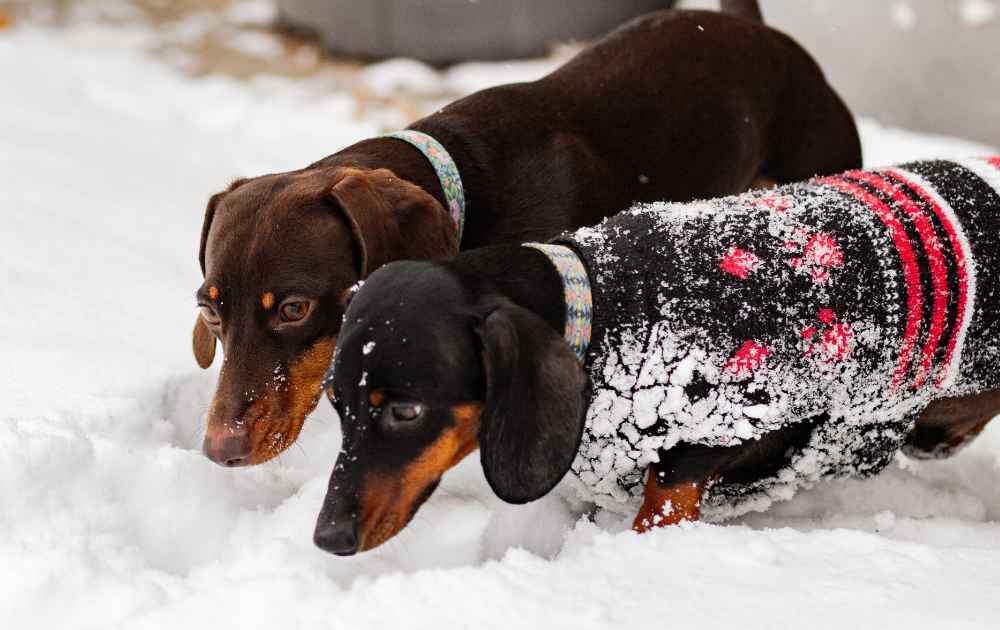
Winter can be tough on Dachshunds. Their low-to-the-ground bodies, short legs, and often-short coats can make cold weather, snow, ice, salt, and freezing temperatures more challenging than they are for some larger dogs. Knowing how to protect your Dachshund’s paws, keep them warm, adjust walks, and spot signs that they’re too cold can make winter much safer and more comfortable.
So, does your Dachshund need a winter coat? Can they walk in the snow? How cold is too cold, and what should you do about salt, ice melt, or those annoying little snowballs that get stuck between their toes?
This guide covers practical Dachshund winter care, from coats and paw protection to grooming, nutrition, indoor activities, winter hazards, and the signs that it’s time to head back inside.
Because winter doesn’t mean your Dachshund has to miss out on walks and adventures. You just need to make a few smart adjustments when the weather turns cold.

Quick Dachshund winter care checklist
If you only remember a few things from this guide, make them these:
- Keep outdoor time shorter when temperatures drop, especially during freezing or windy weather.
- Use a well-fitting coat or sweater if your Dachshund gets cold.
- Protect their paws from ice, snow, salt, and ice-melt products.
- Wipe and dry paws after every winter walk.
- Never allow your Dachshund onto frozen ponds or lakes.
- Keep antifreeze completely out of reach.
- Never leave your Dachshund unattended outside in extreme cold.
- Give them plenty of indoor enrichment when outdoor exercise isn’t practical.
- Watch for shivering, weakness, lethargy, confusion, or other signs that your dog is getting too cold.
Small dogs can be particularly vulnerable to cold weather, and veterinary guidance recommends limiting exposure when temperatures become extreme.
How cold is too cold for a Dachshund?
There isn’t one temperature that is automatically unsafe for every Dachshund. A dog’s tolerance depends on factors such as age, coat type, body condition, health, wind, moisture, and how long they are exposed to the cold.
For Dachshunds, however, cold temperatures deserve extra attention because their bodies are close to the ground and many have relatively short coats.
Instead of relying on a magic temperature number, watch your individual dog.
Signs your Dachshund may be too cold include:
- Shivering
- Lifting or repeatedly licking their paws
- Whining or trying to turn around
- Hunching or curling up
- Moving more slowly than usual
- Suddenly refusing to walk
- Weakness or unusual tiredness
- Confusion or lack of coordination
If your Dachshund starts showing these signs, bring them inside and warm them gradually. If symptoms are significant, persistent, or you suspect hypothermia or frostbite, contact your veterinarian promptly.
And remember: a Dachshund enthusiastically running around in the snow isn’t necessarily a Dachshund who should stay outside indefinitely!
Do Dachshunds need a coat in winter?
Some Dachshunds benefit from wearing a coat or sweater in cold weather, particularly short-haired Dachshunds, puppies, seniors, and dogs that become visibly uncomfortable outside.
A coat isn’t automatically necessary for every Dachshund every time the temperature drops. Think of it as an extra layer of protection rather than a requirement.
A good winter coat should:
- Cover the chest and back
- Fit comfortably around the neck and chest
- Allow your Dachshund to walk, run, sit, and potty normally
- Not restrict movement
- Keep them warm without making them overheat
- Ideally provide some protection from wind or moisture
Dachshunds are also famous for having slightly inconvenient body proportions when you’re trying to find dog clothing that actually fits. A coat that’s perfect around the chest may be hilariously short – or comically long – around the back.
Measure your Dachshund rather than relying solely on weight or breed labels.
Veterinary winter-safety guidance recommends coats or sweaters for dogs that need additional warmth, particularly smaller or short-coated dogs.


How to get your Dachshund used to a winter coat
Don’t wait until the first snowstorm to introduce clothing. Put the coat on indoors for a few minutes and reward your Dachshund with praise or a treat. Gradually increase the amount of time they wear it.
If they freeze, panic, repeatedly try to remove it, or seem genuinely distressed, take it off and try again more gradually.
Should Dachshunds wear boots in winter?
Dachshund boots can be useful for protecting paws from snow, ice, salt, and other sidewalk chemicals—but only if your dog is comfortable wearing them.
Booties aren’t essential for every Dachshund, but they’re worth considering if you regularly walk on salted sidewalks or icy surfaces.
Road salt and ice-melt products can irritate paw pads, and dogs may ingest residue when they lick their feet. Veterinary organizations recommend cleaning your dog’s paws after winter walks, and booties can provide an additional layer of protection.

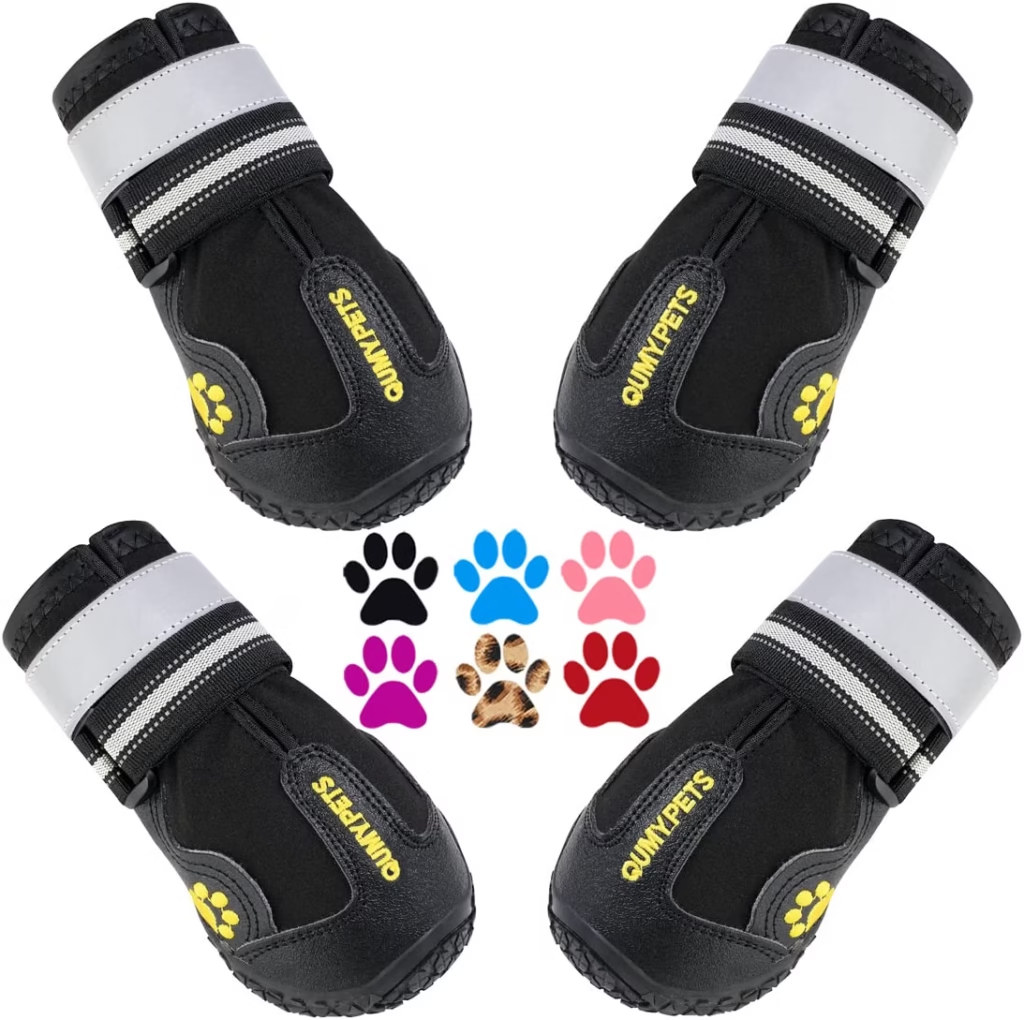
If your Dachshund wears boots:
- Choose the correct size.
- Make sure they aren’t too tight.
- Introduce them indoors before using them outside.
- Check paws after walks.
- Remove them if your dog is distressed or struggling to walk normally.
And yes, there may be some hilarious first attempts. The classic Dachshund reaction is approximately: “You have put tiny prisons on my feet. I shall now walk like a malfunctioning robot.” Give them time.
How to protect your Dachshund’s paws in winter
Winter paw care is one of the most important parts of Dachshund winter care.
Snow and ice can collect between the toes, while salt and ice-melt chemicals can irritate the paw pads. Cold, dry conditions can also contribute to cracked or uncomfortable skin.
Before a walk
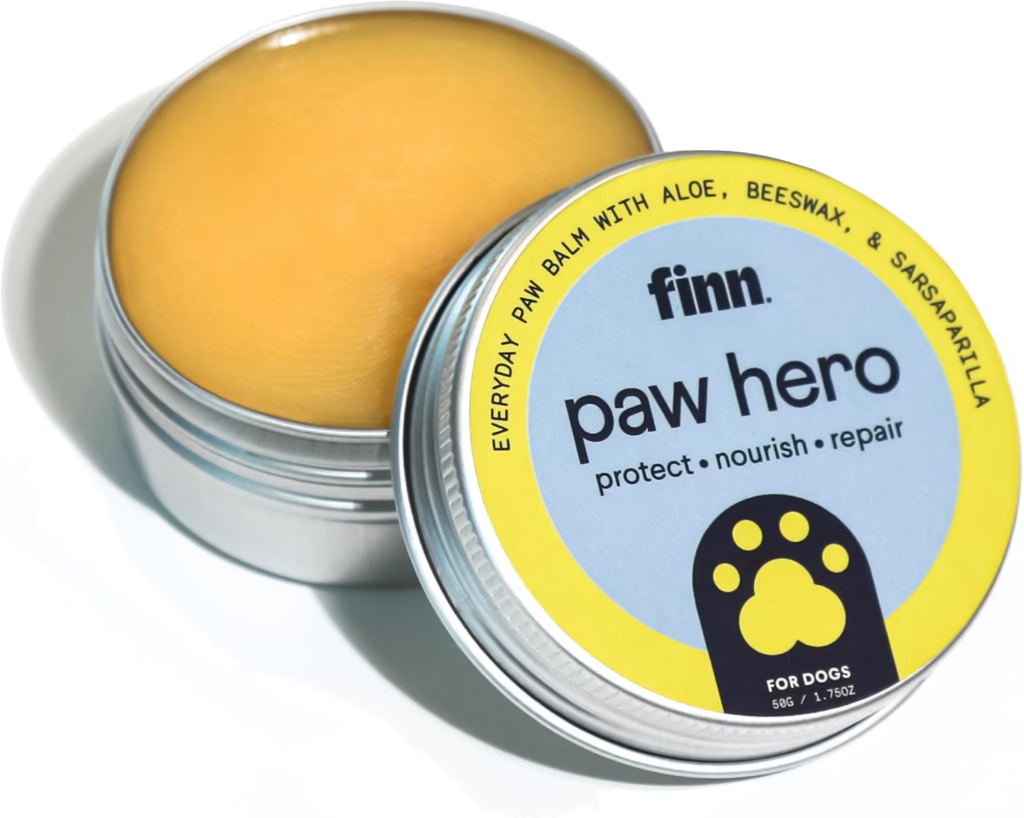
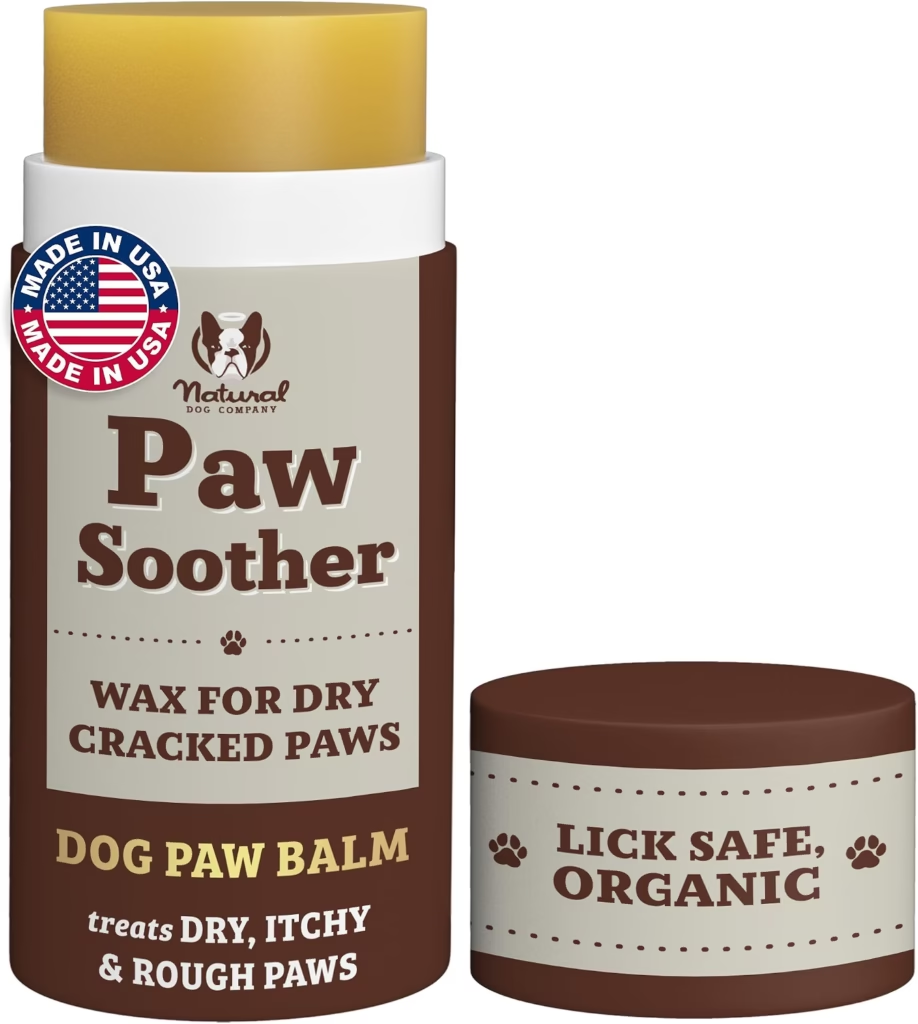
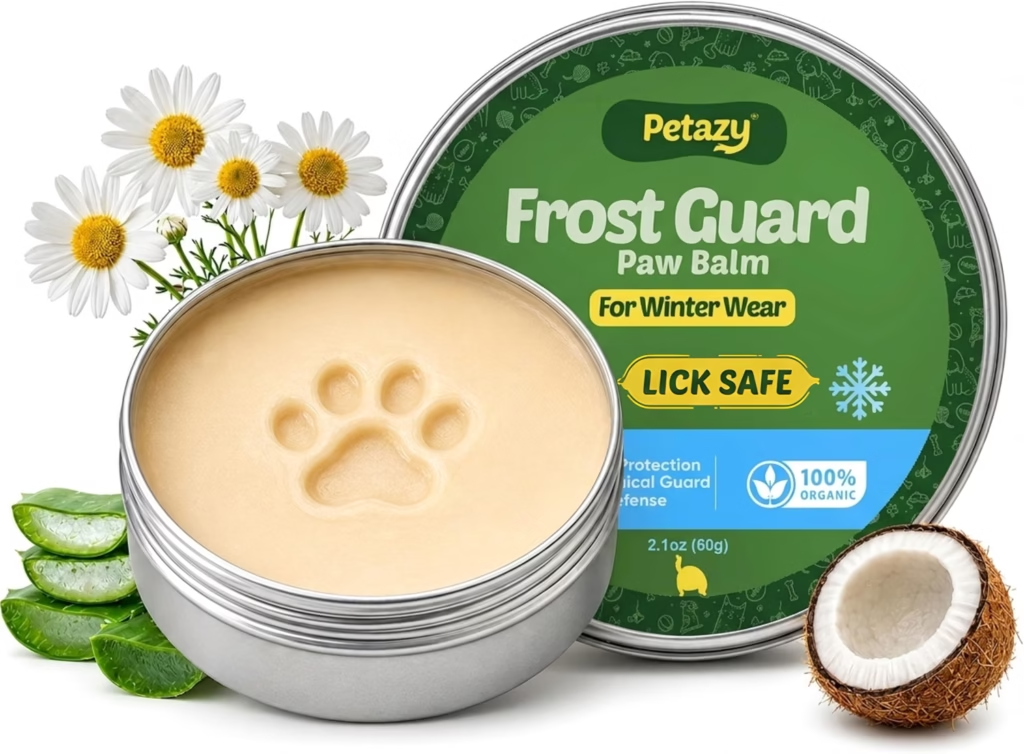
You can use a dog-safe paw protectant or balm if your veterinarian recommends it. Booties are another option.

After every walk
Make this your winter routine: Walk → wipe → inspect → dry.
Pay particular attention to:
- Between the toes
- Paw pads
- Around the nails
- Lower legs and belly
- Any areas where snow has clumped onto the fur
Use a warm, damp cloth to remove salt, ice, and debris, then dry the paws thoroughly.
What about snowballs between the toes?
Long-haired Dachshunds can collect surprisingly impressive amounts of snow in their foot hair.
Keeping the hair around the feet neatly trimmed can make winter walks much more comfortable and reduce the amount of ice and snow that sticks to the paws. Avoid shaving the coat down to the skin simply because it’s winter; the coat provides some natural insulation.
Can Dachshunds walk in the snow?
Yes. A healthy Dachshund can enjoy snow, provided the conditions are appropriate and you limit exposure according to the weather and your dog’s tolerance.
Snow itself isn’t automatically dangerous. The bigger concerns are freezing temperatures, wind chill, wet fur, icy surfaces, hidden hazards, salt and chemicals, and prolonged exposure.
Keep winter walks shorter when the weather is particularly cold, and watch your Dachshund rather than forcing them to complete their usual route. If your dog starts shivering, lifting their paws, slowing down, or trying to head home, listen to them.
Sometimes “I want to go home” is actually excellent communication.
Winter hazards every Dachshund owner should know
Snowy walks aren’t just about keeping your dog warm. Winter introduces several hazards that can be easy to overlook.
Ice and frozen ponds
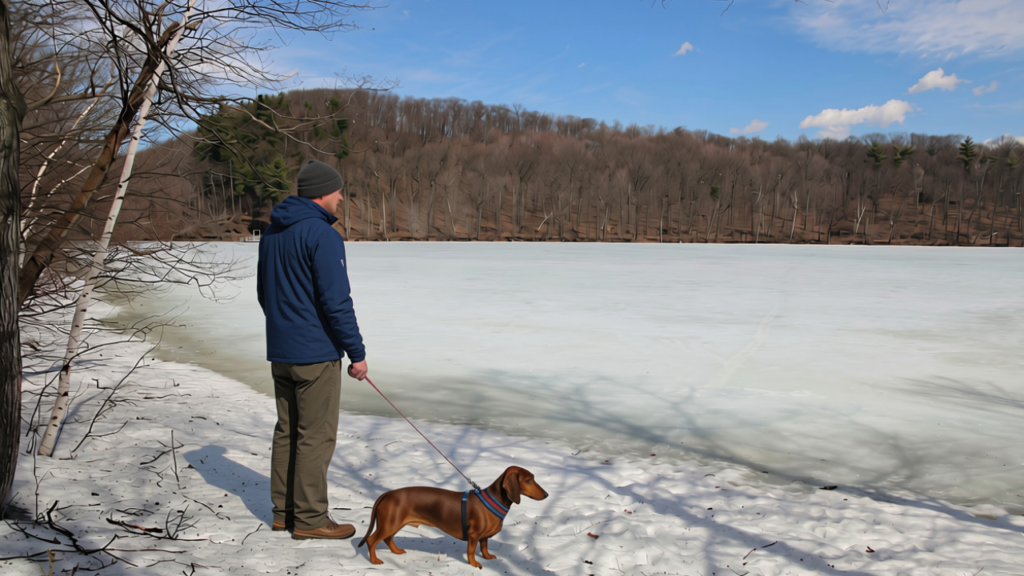
Never let your Dachshund walk on a frozen pond, lake, or other body of water. Ice can look solid while being dangerously thin. Keep your Dachshund on a leash around frozen water and avoid areas where they could accidentally run onto the ice.
Antifreeze
This one deserves serious attention. Antifreeze containing ethylene glycol is highly toxic to dogs and can cause severe poisoning and potentially fatal kidney damage. Even small amounts can be dangerous.
Keep antifreeze securely stored and clean up spills immediately. Pay particular attention to garages, driveways, parking areas, and anywhere a vehicle might leak coolant.
If you think your Dachshund has swallowed antifreeze, treat it as an emergency and contact a veterinarian or pet poison service immediately.
In the US, the ASPCA Animal Poison Control Center can be reached at (888) 426-4435.
Ice melt and road salt
Don’t assume that a product labeled “pet-friendly” means your dog should lick it. Ice-melt products can still cause problems if they are ingested or irritate the paws. Keep your Dachshund from licking contaminated snow or sidewalks and clean their paws after walks.
Hidden objects under snow
Snow can cover holes, sharp objects, broken glass, sticks, and other hazards. Keep your Dachshund close and choose familiar walking routes when visibility is poor.
Black ice
Black ice is dangerous for both you and your Dachshund. A slip can cause strains, sprains, or other injuries – and a little dog with short legs doesn’t exactly have the best clearance over an icy patch.

How long should a Dachshund stay outside in winter?
There isn’t a universal safe number of minutes.
Shorter, more frequent outings are generally safer than long periods outside when temperatures are very low. Puppies, seniors, small dogs, dogs with short coats, and dogs with medical conditions may need particularly careful management.
Think about the whole weather picture:
- Temperature
- Wind
- Wetness
- Snow or ice
- Sun exposure
- Your dog’s coat
- Your dog’s age and health
- How your dog is behaving
A sunny 35°F afternoon and a windy 20°F evening are very different experiences.
And there’s no prize for completing your normal three-mile walk during a snowstorm.
Winter grooming for Dachshunds
Your Dachshund’s coat is part of their natural protection from the elements, so winter isn’t the time for unnecessary over-bathing or aggressive grooming.
Brush regularly
Regular brushing removes loose hair and helps prevent mats, particularly in long-haired and wire-haired Dachshunds. It also gives you a chance to check the skin for irritation, dryness, or other changes.
Don’t over-bathe
Frequent bathing can contribute to dry, flaky skin by removing natural oils.
If your Dachshund comes home covered in mud or slush, of course, clean them up. But during cold weather, avoid unnecessary baths and use a dog shampoo appropriate for their skin.
ASPCA recommends minimizing bathing during cold spells and using a veterinarian-recommended moisturizing shampoo or rinse if a bath is necessary.
Dry your Dachshund properly
Don’t send your Dachshund straight from a snowy walk to their bed while they’re still damp. Towel-dry their coat, belly, legs, and paws after coming inside. Wet fur combined with cold temperatures can increase the risk of becoming chilled.

Indoor activities for Dachshunds when it’s too cold outside
A bad weather day doesn’t have to become a boring day. Dachshunds are clever little hunting dogs; indoor games and mental stimulation can be a great way to use some of their energy when outdoor exercise is limited.
Try:
- Puzzle toys – Food puzzles and interactive toys encourage your Dachshund to sniff, investigate, and work for their reward.
- Hide and seek – Hide somewhere in the house and call your Dachshund. Or hide their favorite toy. Their nose will probably find you before you finish counting.
- Indoor scent games – Hide a few pieces of their regular food around a safe room and encourage them to sniff them out.
- Short training sessions – Practice:
- Sit
- Down
- Stay
- Recall
- Leave it
- Place
- Touch
- New tricks
Five or ten minutes of focused training can provide surprisingly good mental exercise.
- Indoor fetch – If you have enough space and a safe surface, a gentle indoor game can help burn off some energy. Just remember that Dachshunds are prone to back problems, so avoid games that involve repeated jumping off furniture, twisting, or launching themselves down stairs.
For particularly energetic Dachshunds, combine several short activities throughout the day rather than trying to recreate a two-hour outdoor adventure in your living room.
Winter nutrition: does your Dachshund need more food?
Not necessarily. It’s tempting to assume every dog needs extra calories during winter, but a house dog spending most of the day in a warm home may not need additional food at all.
Instead, adjust food intake based on activity, body condition, age, health, and your veterinarian’s advice. If your Dachshund is getting fewer walks but the same number of treats, winter weight gain can sneak up surprisingly quickly.
And with Dachshunds, maintaining a healthy body weight is especially important because excess weight puts additional strain on their long backs.
Don’t forget water
Dogs still need access to fresh water in winter. Dry indoor heating can make the environment less humid, and your Dachshund may be less interested in drinking simply because they don’t seem as thirsty. Keep fresh water available throughout the day.
How to keep a Dachshund warm inside the house
Most healthy Dachshunds should be perfectly comfortable indoors during winter, but they still appreciate a warm, draft-free place to sleep.
Give your Dachshund:
- A comfortable bed
- A warm blanket
- A spot away from drafts
- Fresh water
- A quiet place to rest
A bed that’s raised slightly off a cold floor can be especially cozy.
What about heated beds and heating pads?
Pet-specific heated beds or pads can provide extra warmth, but follow the manufacturer’s safety instructions carefully. Your Dachshund should always be able to move away from the heat source if they become too warm. Avoid using makeshift heating devices or leaving a heating pad unattended with your dog.
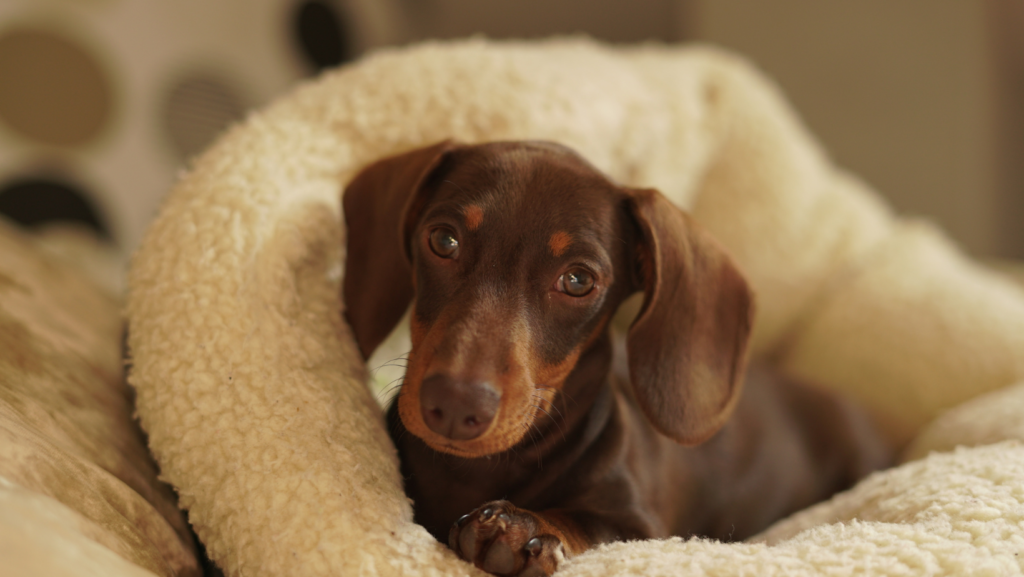
And if your Dachshund has somehow managed to burrow completely underneath six blankets, don’t panic. That’s basically their winter interior-design preference.
Can Dachshunds get frostbite or hypothermia?
Yes. Dachshunds can develop frostbite and hypothermia if they are exposed to sufficiently cold conditions for long enough.
Frostbite most commonly affects exposed areas such as the paws, ears, tail, and nose. Signs can include pain, swelling, skin discoloration, or skin that feels unusually cold.
Hypothermia can cause:
- Shivering
- Weakness
- Lethargy
- Confusion
- Pale or cool skin
- Slow breathing
- Reduced responsiveness
If you suspect your Dachshund has hypothermia or frostbite:
- Bring them inside immediately.
- Keep them warm gradually.
- Wrap them in warm, dry blankets.
- Do not rub frostbitten areas.
- Do not apply direct, intense heat such as a heating pad or hair dryer.
- Contact your veterinarian promptly.
Severe symptoms or suspected frostbite should be treated as a veterinary concern rather than something to simply monitor at home.
Should you change your Dachshund’s winter routine?
Probably – but not dramatically. Instead of thinking: “It’s winter, so my Dachshund can’t go outside.”
Think: “How can I make our normal routine safer for today’s weather?”
That might mean:
- A shorter walk
- A warmer part of the day
- A coat
- Paw protection
- A towel waiting by the door
- More indoor scent games
- A quick bathroom break instead of a long walk during extreme weather
The goal isn’t to eliminate outdoor time. It’s to adapt it to the conditions and your individual Dachshund.
Dachshund winter checklist
Before heading outside, ask yourself:
☐ Is my Dachshund warm enough for today’s weather?
☐ Do they need a coat?
☐ Are their paws protected?
☐ Is the walking surface safe?
☐ Have I checked for ice and salt?
☐ Is there any risk of frozen water?
☐ Is my Dachshund showing signs of being cold?
☐ Do I have a towel ready for muddy or snowy paws?
☐ Is their ID tag securely attached?
☐ Will today’s weather be better suited to a short walk and indoor enrichment?
If you can answer those questions, you’re already ahead of most winter surprises.
Frequently asked questions about Dachshunds in winter
Do Dachshunds get cold easily?
They can. Dachshunds are small dogs with bodies close to the ground, and many have short coats. Puppies, seniors, short-haired Dachshunds, and dogs with health conditions may be particularly sensitive to cold.
Do Dachshunds need sweaters in winter?
Some do, particularly in cold or windy weather. A properly fitted sweater or coat can provide additional warmth, but not every Dachshund needs one in every winter condition.
Can Dachshunds walk in snow?
Yes, healthy Dachshunds can enjoy snow when conditions are appropriate. Keep walks shorter in extreme cold, protect their paws, and remove snow, ice, and salt from their feet afterward.
Should Dachshunds wear boots in the snow?
Boots can protect Dachshund paws from snow, ice, salt, and ice-melt chemicals. They’re optional, but useful if your dog tolerates them.
How do I protect my Dachshund’s paws from salt?
Wipe your dog’s paws with a warm, damp cloth after walks and check between the toes. A veterinarian-approved paw protectant or properly fitted booties can provide additional protection.
Can Dachshunds get frostbite?
Yes. Frostbite can affect a Dachshund’s paws, ears, tail, and nose during sufficiently cold exposure. Bring your dog inside and contact your veterinarian if you suspect frostbite.
What temperature is too cold for a Dachshund?
There isn’t one temperature that is safe or unsafe for every Dachshund. Wind, moisture, coat type, age, health, and exposure time all matter. Watch your dog closely and shorten outdoor time as conditions become more severe.
What should I do if my Dachshund is shivering outside?
Bring them indoors and warm them gradually. Shivering can be an early sign that your dog is getting too cold. If they remain weak, lethargic, confused, or otherwise unwell, contact your veterinarian.
Is antifreeze dangerous to Dachshunds?
Yes. Ethylene glycol antifreeze is extremely toxic to dogs and can be fatal. Keep it securely stored, clean up spills immediately, and contact a veterinarian or animal poison service immediately if ingestion is suspected.

The bottom line: keeping your Dachshund safe this winter
Winter doesn’t have to mean your Dachshund spends the entire season wrapped in a blanket like a tiny burrito.
They can still enjoy walks, sniffing adventures, snow days, and all the important Dachshund business that happens outside.
The key is knowing when to adapt.
Keep outdoor time appropriate for the weather, protect their paws, use a coat when needed, avoid ice and winter chemicals, keep antifreeze safely out of reach, and give them plenty of indoor enrichment when the weather isn’t cooperating.
Most importantly, learn your own Dachshund’s signals.
If they’re shivering, lifting their paws, slowing down, or desperately trying to drag you back toward the front door, they’re probably trying to tell you something.
Veterinary sources and further reading
- American Animal Hospital Association (AAHA) – cold weather safety for dogs and cats.
- AAHA – safe winter walks and paw protection.
- AAHA – antifreeze toxicity in pets.
- ASPCA – cold weather and winter pet safety.
- American Kennel Club – frostbite in dogs.
This article is for general educational purposes and is not a substitute for veterinary advice. Your Dachshund’s needs may differ based on age, health, coat type, and local weather conditions. If you’re concerned about your dog’s reaction to cold weather or suspect frostbite, hypothermia, or toxin exposure, contact your veterinarian.


0 Comments