By Pepe J. Hernandez, Ph.D., CPDT-KA, Founder of PJH Dog Training
Beyond the Winter Walk – Mental Enrichment for Dachshunds on Cold Days
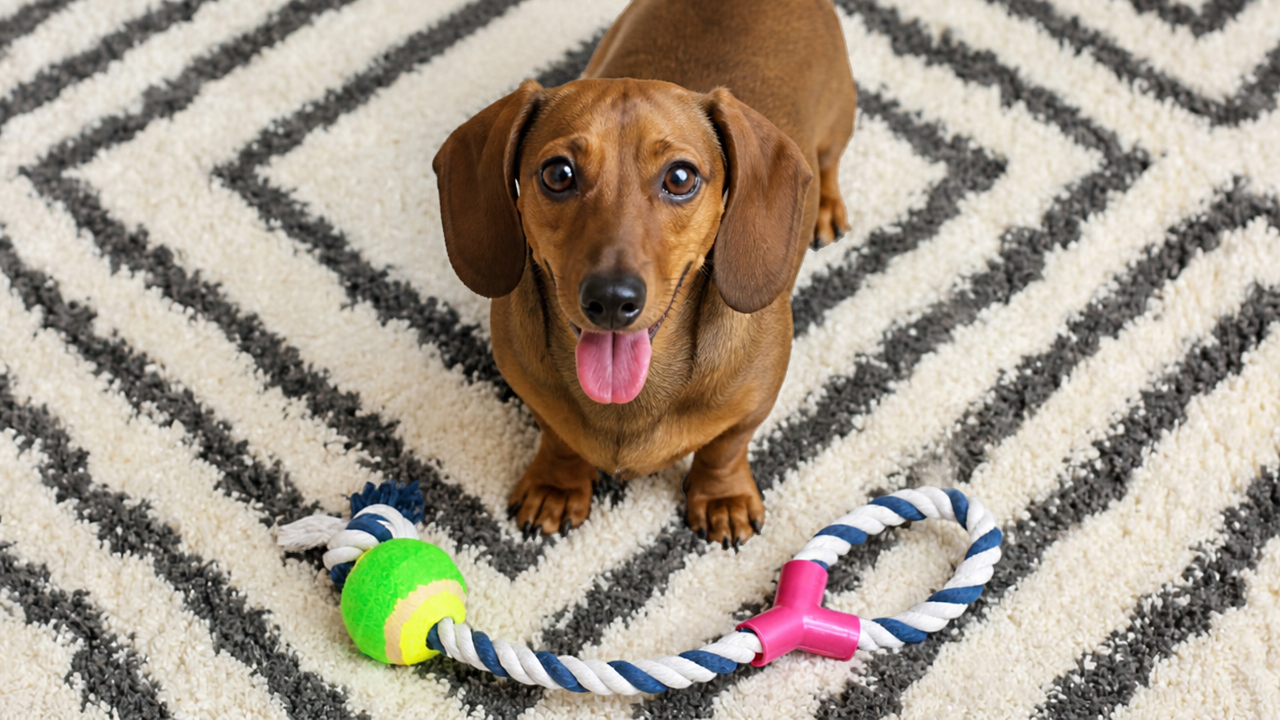
When the temperature drops, many Dachshund owners face the same problem. The walk gets shorter, the dog gets restless, and by mid-afternoon a small, determined hound is staring at you as if you owe them an explanation.
Your dog may have a point. A walk provides more than exercise. It offers smells to investigate, places to explore, and choices about where to linger. When winter cuts those outings short, some of that interest disappears from the day too.
Indoor enrichment helps fill the gap. A simple food search, a loosely folded blanket, or a few minutes of training can give your Dachshund something enjoyable to do after you come inside. The 12 activities below offer different ways to search, forage, play, and learn, with options you can adapt to your dog’s interests and abilities.
What winter changes for your Dachshund
Cold, wet weather can make outdoor time less comfortable, particularly for small or smooth-coated dogs.
Short legs also bring a Dachshund’s belly closer to snow and slush. Adjust outings to your dog’s comfort, health, and the conditions rather than following a fixed winter walking schedule. A properly fitted coat may help, but it does not make every dog ready for an expedition. [1]
Once you are back inside, think about what your dog enjoyed outdoors. Dachshunds were developed for hunting, including work underground, and many still enjoy investigating scents and digging into things.
Others would rather learn a trick or work on a food toy beside you. Breed history gives you ideas; your own dog tells you which ones are worth keeping.
There is some research behind the interest in scent games. In a small study of 20 pet dogs, those who practiced nosework over two weeks subsequently approached an ambiguous bowl location faster than dogs who practiced heelwork. Researchers interpreted this as a more optimistic response to uncertainty. The finding is promising, but it does not establish that every scent game improves mood or treats a behavior problem. [2]
For everyday purposes, the useful takeaway is straightforward. Give your dog opportunities to investigate and succeed at activities they enjoy. Continue to provide suitable physical activity and toilet breaks as conditions allow. Searching for dinner adds interest to the day, but it does not meet all the needs that a walk does.
Set up for success
Before choosing a game, pick a quiet space with secure footing. Keep searches and rewards at an accessible height, usually floor level, and avoid setups that encourage jumping, scrambling, or squeezing into tight spaces. Dachshunds are predisposed to intervertebral disc disease, so a dog with back pain, mobility difficulties, or activity restrictions needs an individualized veterinary plan. The games here are suggestions to adapt, not to rehabilitate. [3]
Hint: Use part of your dog’s usual meal whenever possible. Extra treats should account for no more than 10% of daily calories, according to WSAVA guidance. A puzzle feeder does not have diplomatic immunity from the calorie budget. [4]
Choose materials to match your dog’s habits. A towel game is unsuitable for a dog who swallows fabric, and a cardboard search is a poor choice for a cardboard eater. Supervise games, put materials away afterward, and give dogs separate spaces when food or prized toys are involved.
Finally, make the first attempt almost ridiculously easy. Let your dog opt out, help when needed, and use rewards rather than corrections, consistent with AVSAB’s training guidance. [5] The goal is an enjoyable activity, not an entrance exam.
Start with a simple search
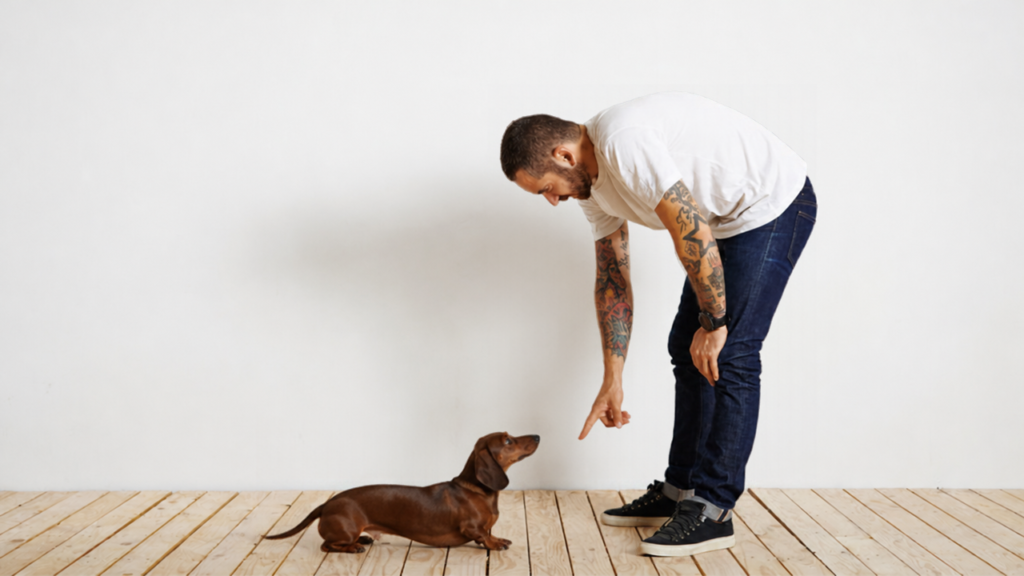
Scent games need very little equipment, which makes them an easy place to begin. Start with food your dog can find quickly. Once they understand the game, change one thing at a time, such as the distance between pieces or how well they are hidden.
1. The find it scatter
Place a few pieces of food on a clear, non-slip surface while your dog watches. Say “find it” just before letting them investigate. Repeat until the phrase predicts an easy little search.
Next, spread the pieces farther apart or tuck them into the shallow pile of a suitable rug. Keep the search area small at first and let your dog work at their own pace. You do not need to keep repeating the cue; once the search is underway, the nose has the assignment.
2. The cup search
Start with one sturdy plastic cup tipped slightly so your dog can reach a treat beneath its edge. As they become interested, place the cup flat over the food and lift it when they sniff or gently nudge it. You are teaching them how to ask you to reveal the reward.
Add a second cup, then a third. Later, hide the food while your dog is briefly out of view and invite them back to search. There is no need for rapid shuffling or sleight of hand. This is a shared game, not a street hustle.
3. The box search
Set two or three shallow, open cardboard boxes on a non-slip surface and place food visibly inside them.
Once your dog readily checks the boxes, put food in only one and let them discover which one pays.
Keep every reward within comfortable reach. Increase the search by spacing boxes farther apart, rather than making your dog climb inside or push through packing material. Remove tape, staples, and handles, and choose another game if your dog chews off or eats cardboard.
4. Hide and seek with you
Have another person stay with your dog while you step just out of sight, or use a familiar stay if your dog is comfortable with it. Call once from an easy hiding place and reward your dog when they find you.
Gradually try different spots on the same floor, keeping the route clear and avoiding stairs or furniture climbing. If your dog looks confused, speak again or step into view. Finding you should be the satisfying part, and the game also gives you a playful way to practice coming when called.
Give digging and rummaging a place
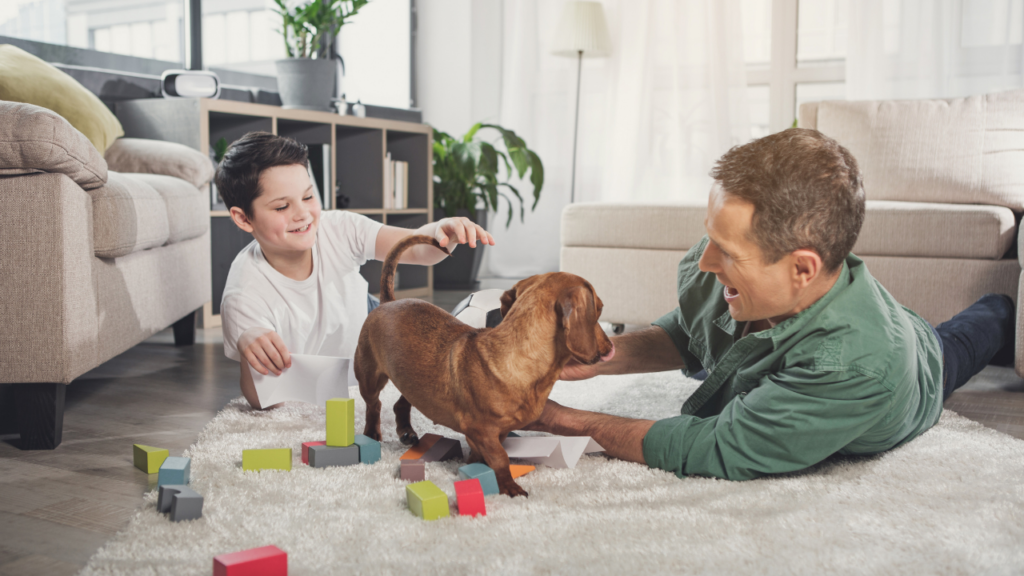
If your Dachshund enjoys pushing a nose through bedding or excavating the sofa, a search they can paw through may be especially appealing. Offer these activities before furniture digging starts when possible. An approved outlet can be useful, but it will not automatically resolve digging caused by discomfort, anxiety, or other unmet needs.
5. The blanket burrow hunt
Lay a lightweight blanket on the floor, place a few pieces of food near one edge, and fold that edge loosely over them. Leave some food visible so your dog can discover how nosing the fabric reveals more.
If they enjoy it, add another loose fold. Keep the blanket open enough to move freely, and avoid wrapping or tucking it around your dog. The challenge is finding food under fabric, not escaping from it.
6. The rummage box
Use a broad, low-sided container and add a few sturdy dog toys that are too large to swallow. Place food in easy-to-reach gaps so your dog can nose or gently paw the toys aside.
Begin with only a few objects. If your dog likes the activity, vary their arrangement while keeping the food accessible. Avoid loose fabric strips, socks, or small fillers that could be swallowed. Dogs who enjoy pushing things around may find this more satisfying than a puzzle that requires delicate manipulation.
7. The towel roll
Sprinkle a few pieces of food along a towel and roll it loosely, leaving the first pieces exposed. Let your dog discover that nudging the roll opens the next section.
Start with a partial roll and resist the temptation to add knots. Difficulty is useful only while your dog is enjoying the process. If they begin tearing at the towel, calmly end the activity when you can retrieve it safely and choose a different setup next time. The towel is packaging, not the second course.
Make part of a meal more interesting
You do not need to invent a new game every afternoon. Changing how you offer part of breakfast or dinner can add a manageable bit of variety. Introduce food puzzles with small portions first, and serve the rest normally if your dog loses interest or cannot reach it. Food should remain available without having to defeat an engineering project.
8. The muffin tin puzzle
Put a few pieces of food in the cups of a stable muffin tin. Let your dog eat them, then cover one cup with a sturdy dog toy that is too large to swallow and easy to move.
As your dog learns to push the cover aside, cover a few more cups. Leave some open so the game continues to offer easy successes. Place the tin on a non-slip mat to prevent it from skidding or rattling across the floor.
9. The snuffle mat meal
Scatter a small portion of dry food on top of a snuffle mat before hiding pieces more deeply among the fabric. If your dog enjoys searching, gradually use more of the meal this way.
A mat may extend mealtime for a dog who usually eats quickly, but watch how yours uses it. If they would rather shake it, shred it, or eat the strips, switch to a simple scatter on a suitable surface. Wash the mat regularly and put it away when the food is gone.
10. The stuffed food toy
Fill an appropriately sized hollow dog toy loosely with part of your dog’s usual food. Start with a filling that comes out easily. You can try chilling or lightly freezing it later if your dog continues to enjoy it, but freezing is optional, not a promotion they must earn.
Follow the manufacturer’s sizing guidance, supervise use until you know how your dog handles the toy, and remove it if damaged. If you use a little peanut butter, check the ingredients for xylitol, sometimes labeled birch sugar or wood sugar. It is toxic to dogs; suspected ingestion requires immediate veterinary advice. [6]
Add a little learning together
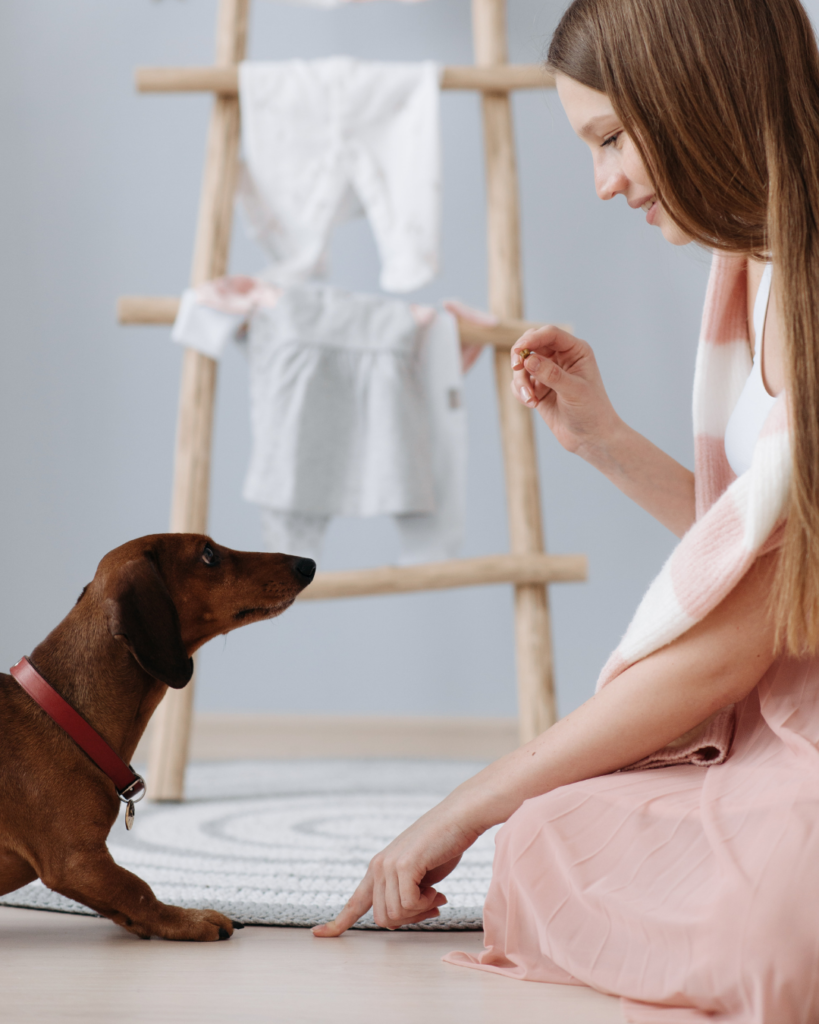
Food searches allow independent exploration. Short training games add something different: a chance to interact with you and discover which actions earn a reward. Choose a simple behavior, reward small successes, and finish while your dog is still comfortable and interested.
11. Simple tricks and cooperative skills
A nose target is a useful starting point. Present your palm close to your dog’s nose. When they investigate and touch it, say “yes” and deliver a treat with your other hand. After several successful repetitions, begin saying “touch” just before presenting your palm. Keep your hand at a comfortable height so your dog can reach it without stretching or jumping.
Other options include a brief chin rest on your hand or lying comfortably on a mat. Work on one skill at a time. For this indoor routine, choose easy movements instead of hind-leg balancing, repeated jumping, or fast spins. A trick can be useful and enjoyable without being an audition for the circus.
12. The toy name game
Choose a familiar toy your dog enjoys and does not guard. Say its name just before offering it, and reward interest or a nose touch with a treat or brief play. Keep the same name and repeat over several short sessions.
Later, place it beside a different toy and ask for the named one, changing their positions between attempts.
If your dog seems confused, return to one toy. Some dogs learn object names readily; others rely more on location or your gestures. Either way, shared play is worthwhile without a vocabulary score.
Fit the games into the day you already have
Treat these activities as a menu, not a daily checklist. Start with one or two and notice which your dog chooses to repeat. A few minutes of comfortable, successful play can be enough for a first session. There is no established daily enrichment dose for Dachshunds, and more activity is not always better.
For example, after the morning outing, offer part of breakfast in an easy snuffle mat. Later, try a brief box search or towel roll. In the evening, practice a few nose touches, then give your dog time to rest. Continue outdoor breaks and suitable movement around that routine, adjusting to the weather and your dog’s needs.
You can rotate activities over the week without constantly increasing their difficulty. Familiar games can remain enjoyable. Your dog is allowed to have a favorite without being assigned the advanced version.
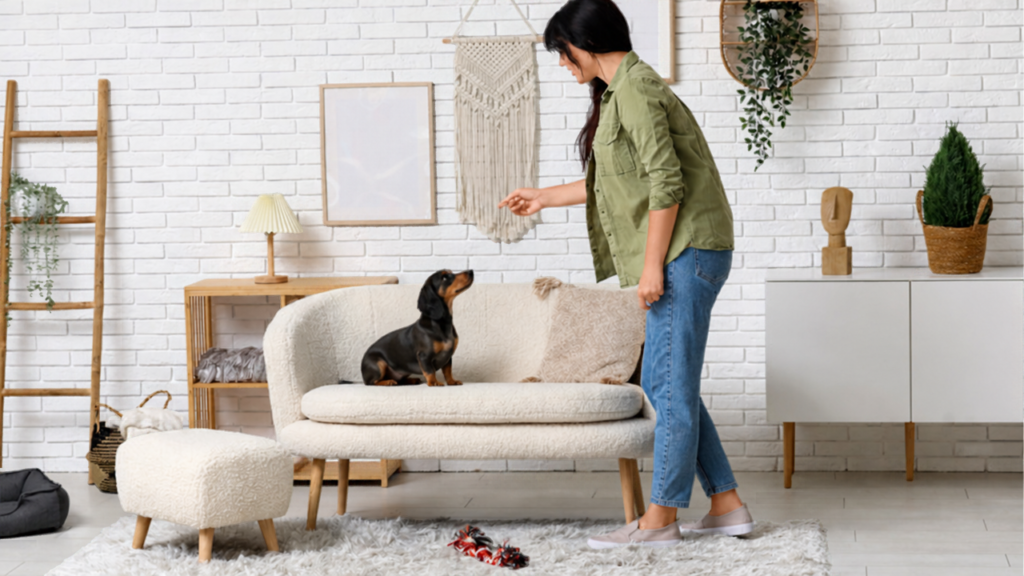
Adapt to the dog in front of you
For puppies, emphasize easy discoveries and brief sessions. A visible food scatter or uncovered muffin tin is plenty to begin with. Watch closely for chewing and swallowing of game materials, and leave ample time for sleep.
For seniors, keep searches close, rewards accessible, and footing secure. A dog who no longer enjoys moving between rooms may still enjoy finding food in a small area. Changes in interest or comfort are a reason to adjust the activity, rather than assuming an older dog simply needs more encouragement.
For a dog recovering from IVDD or another injury, follow the treating veterinarian’s restrictions. Even an apparently gentle game can encourage movement that is inappropriate during recovery. Ask which specific activities and positions are permitted before introducing food toys, searches, or training. [3]
Let enjoyment guide the next session
A useful game is one your dog willingly joins and can engage with comfortably. Look for relaxed exploration, achievable successes, and continued interest. Settling afterward may be welcome, but exhaustion is not the measure of success.
If your dog repeatedly barks at you, paws frantically, abandons the activity, or attacks the equipment, make it easier or offer something else. Those responses can reflect frustration, but they can also signal discomfort or a poor match between the dog and the game.
Stiffening or growling over food or toys calls for space, not reaching in to prove ownership. Keep people and other pets away and seek a tailored plan from a qualified, reward-based behavior professional. Enrichment can be part of that plan, but it does not replace one.
Similarly, new back pain or reluctance to move needs veterinary attention. Weakness, dragging limbs, inability to walk, or loss of bladder control warrants urgent assessment. [3]
Cold weather may shorten the walk, but there are still plenty of ways to make the rest of the day interesting.
Start with an easy search, give your Dachshund room to figure it out, and follow their preferences from there. Sometimes a few pieces of breakfast and an open box are all you need to make an ordinary afternoon more satisfying.
About the author
Pepe J. Hernandez, Ph.D., CPDT-KA, is a behavioral neuroscientist, certified professional dog trainer, and founder of PJH Dog Training in New York City. His work combines learning science with force-free, reward- based training, with a focus on reactivity, puppy development, confidence-building, agility, and scent work.
Learn more at https://www.pjhdogtraining.com/
References
Research and professional guidance support the claims cited above. The games are practical suggestions, not individually tested treatment protocols.
- [1] American Veterinary Medical Association. Cold weather animal safety. https://www.avma.org/resources-tools/pet- owners/petcare/cold-weather-animal-safety
- [2] Duranton, C., & Horowitz, A. (2019). Let me sniff! Nosework induces positive judgment bias in pet dogs. Applied Animal Behaviour Science, 211, 61–66. Study of 20 pet dogs. https://doi.org/10.1016/j.applanim.2018.12.009
- [3] American College of Veterinary Surgeons. Intervertebral Disc Disease. https://www.acvs.org/small-animal/intervertebral-disc-disease/
- [4] World Small Animal Veterinary Association. Feeding treats to your dog. https://wsava.org/wp-content/uploads/2025/11/WSAVA_GuidetoTreats_Dogs_251107.pdf
- [5] American Veterinary Society of Animal Behavior. Humane Dog Training Position Statement (2021; reaffirmed in 2025). https://avsab.org/resources/position-statements/
- [6] U.S. Food and Drug Administration. Paws Off! Xylitol is Toxic to Dogs. https://www.fda.gov/media/150544/download

0 Comments