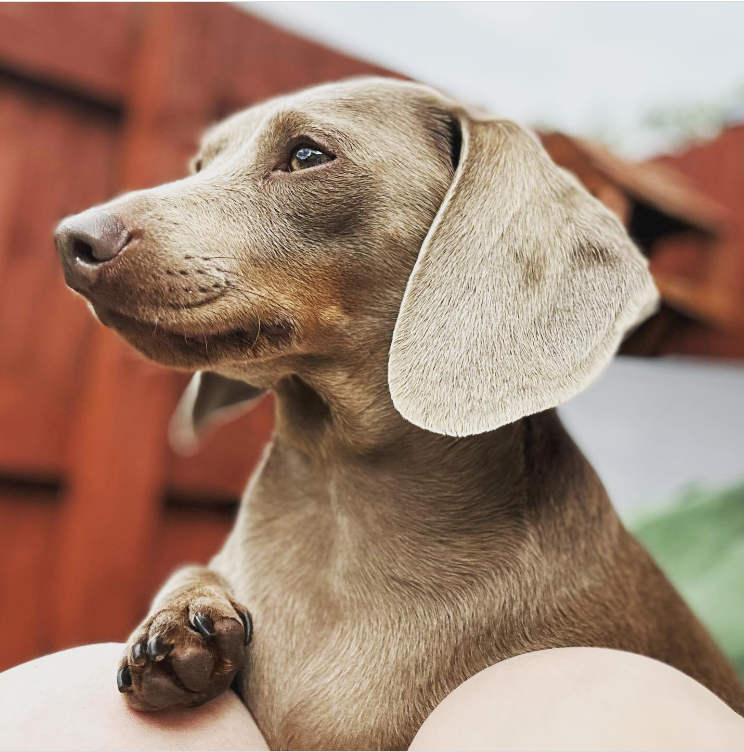
A blue Dachshund is a Dachshund with a diluted black coat that appears steel gray or bluish-gray due to a recessive dilution gene. While these dogs are rare and visually striking, they may be more prone to certain skin and coat conditions, including Color Dilution Alopecia (CDA).
Despite their unusual color, they share the same personality, lifespan, and care requirements as other Dachshunds. However, understanding the genetics and potential health concerns behind this coat color is important before choosing a blue Dachshund puppy.
This guide covers everything you need to know about blue, gray, and silver Dachshunds, including genetics, health, temperament, rarity, and breed standard recognition.
Quick Facts About Blue Dachshunds
| Trait | Information |
|---|---|
| Color | Diluted black |
| Genetics | Recessive dilution gene (d/d) |
| Rarity | Uncommon |
| AKC Status | Recognized but non-standard |
| Common Markings | Tan or cream points |
| Health Concern | Increased risk of Color Dilution Alopecia |
| Coat Types | Smooth, Long-haired, Wire-haired |
| Temperament | Same as other Dachshunds |
What is a blue dachshund?
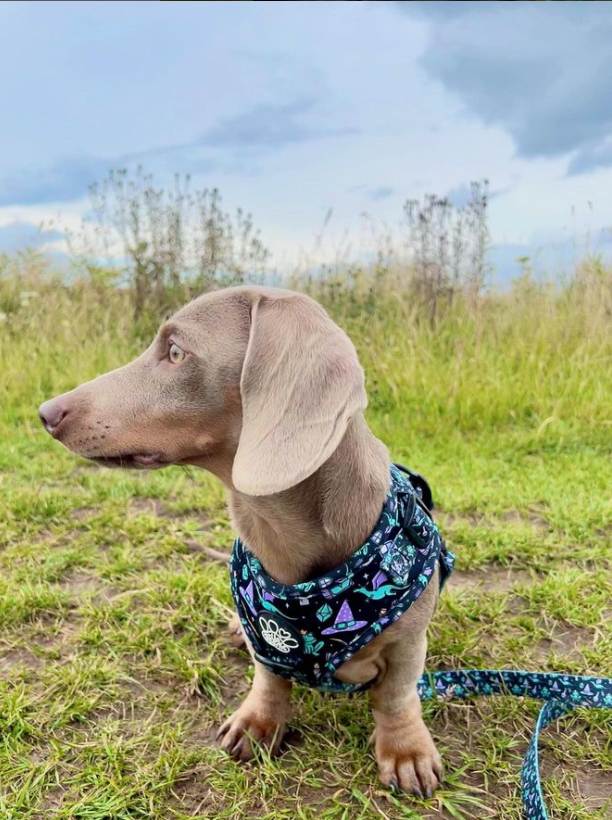
A blue dachshund has a coat that appears slate gray, steel gray, or bluish-gray – not actually blue. The color is the result of a genetic mutation that dilutes the black pigment in the coat, spreading it unevenly through the hair shaft so that the overall impression shifts from black to gray.
Alongside the coat, blue dachshunds typically have:
- A gray or charcoal nose
- Gray paw pads
- Amber, hazel, or pale gray eyes
- Tan or cream point markings on the eyebrows, chest, legs, and under the tail
Blue coloring can appear across all three coat varieties – smooth, long-haired, and wire-haired – though smooth and long-haired blue dachshunds are by far the most commonly seen. The most frequent color combinations are blue and tan, blue and cream, blue dapple, and blue brindle.
What causes the blue coat? The genetics explained
The role of the dilution gene (D Locus)
The blue and gray coloring in dachshunds comes from something called the dilution gene, found at what scientists call the D locus. This gene controls how much pigment shows up in a dog’s coat. When a dachshund has a certain mutation in the MLPH gene (melanophilin), it causes the black or chocolate color in their fur to appear lighter—turning it into that steel-blue or silvery-gray shade.
This color change happens when the dog inherits two copies of the “dilute” gene—one from each parent. Here’s how it works:
| Genotype | Result |
|---|---|
| D/D | Full black pigmentation |
| D/d | Carrier – no dilution visible |
| d/d | Dilute coat (blue) |
This is why two standard-colored dachshunds can produce blue puppies: both parents can carry the recessive allele without showing any dilution themselves. If both parents are D/d carriers, statistically one in four puppies will inherit d/d and express the blue coat.
Sources:

Blue vs. gray vs. silver vs. Isabella: what’s the difference?
The terminology around dilute dachshunds is genuinely confusing, and the terms are often used interchangeably in casual conversation. Here’s what they actually mean:
- Blue dachshund – A dachshund with the d/d genotype diluting black base pigment into gray. This is the correct genetic term for these dogs.
- Gray dachshund – An informal term owners and sellers often use to describe blue dachshunds. Not a separate color or genotype.
- Silver dapple dachshund – A dachshund with the merle (dapple) gene creating lighter patches on a darker base coat. Silver dapples are produced by the merle pattern, not the dilution gene, and are genetically distinct from blue dachshunds.
- Isabella dachshund – A diluted chocolate coat that appears fawn, lilac, or taupe. Like blue, Isabella is a d/d dilute – but the base pigment being diluted is brown (eumelanin B-locus) rather than black. Both are dilute colors; they’re produced by diluting different base pigments.
Are blue dachshunds rare?
Yes – genuinely. Because both parents must carry the recessive ‘d’ allele and a puppy must inherit it from both, blue puppies are an uncommon outcome even in litters where both parents are carriers.
Standard dachshund colors – red, black and tan, chocolate and tan – are far more common in the breed population.
That rarity does push prices up. Blue dachshund puppies frequently sell for more than standard-colored pups from the same litter, sometimes significantly more. This has created a market where some breeders prioritize dilute color combinations as a selling point rather than as a byproduct of health-focused breeding. That’s a problem, and it’s worth understanding why before you buy.
Health: Color Dilution Alopecia
What is CDA?
Color Dilution Alopecia is a genetic skin condition associated with dilute coat colors in multiple dog breeds, including dachshunds. It occurs because the same MLPH mutation that dilutes the coat also causes melanosomes to clump abnormally inside the hair follicle. Those clumps make individual hairs structurally fragile – they break more easily, and the follicles themselves can become inflamed or infected.
The condition has been linked to a single nucleotide polymorphism (SNP c.-22G>A) at the splice donor of exon 1 in the MLPH gene, and symptoms typically appear between 4 months and 3 years of age.
Who gets it?
Not every blue dachshund develops CDA. Genetic tests for MLPH variants can identify the coat dilution status but cannot predict whether a dilute-colored dog will actually develop CDA. Some blue dachshunds go their entire lives without any noticeable coat or skin problems. Others show early symptoms by their first birthday.
The risk is meaningfully higher than in standard-colored dachshunds – but it is not a certainty.
Symptoms to watch for
- Progressive thinning of the coat, particularly over the back and sides
- Patchy hair loss or bald spots
- Dry, dull coat texture
- Flaky or itchy skin
- Recurring skin infections (folliculitis)
- Increased sun sensitivity on exposed skin
Symptoms tend to develop gradually. Many owners notice the coat looking thin or patchy before any other signs appear.
Management
There is no cure for CDA. Management focuses on keeping the skin healthy and reducing the frequency and severity of flares:
- Regular skin checks at home and annual vet examinations
- Gentle, moisturizing shampoos formulated for sensitive or dry skin
- Prompt treatment of bacterial skin infections before they worsen
- Sun protection for dogs with significant hair loss on exposed areas
- Omega-3 supplementation to support coat and skin condition (discuss dosing with your vet)
A blue dachshund with CDA can live a comfortable, full life with appropriate care – but the potential for ongoing veterinary management is a real cost consideration that shouldn’t be glossed over.
Does coat color affect temperament?
No. Coat color and personality are genetically unrelated.
Blue dachshunds have the same temperament traits as the rest of the breed: loyal and deeply attached to their people, independent-minded, alert, sometimes stubbornly determined, playful, and occasionally convinced they’re a much larger dog. A blue dachshund raised well will be shaped by socialization, training, and environment – not the d/d on its genotype.
IVDD and back health
One health risk blue dachshunds share with every dachshund deserves a separate mention: Intervertebral Disc Disease (IVDD).
Dachshunds are a chondrodystrophic breed, meaning their cartilage develops differently from non-dwarf breeds. This affects the spinal discs, making them more prone to early degeneration and herniation. IVDD is the leading serious health concern in the breed and has nothing to do with coat color.
Managing IVDD risk in any dachshund – blue or otherwise – means using ramps instead of stairs and furniture jumps, keeping weight in a healthy range, and knowing the warning signs of disc problems: reluctance to jump, a hunched back, yelping when touched, weakness or wobbling in the back legs, or loss of bladder control. Any of these warrant an urgent vet visit.
AKC recognition
The American Kennel Club recognizes blue as an allowable dachshund color, and a blue dachshund can be registered without issue. However, blue is classified as a non-standard color under the breed standard and carries penalties in conformation competition. For anyone buying a family companion rather than a show dog, this is largely irrelevant – but it’s worth knowing that “AKC registered” doesn’t mean “show quality” for a blue dachshund.
How to find a responsible breeder
The surge in demand for rare-colored dachshunds has attracted breeders who prioritize marketable coat colors over structural soundness, temperament, and health screening. A blue coat is not itself a red flag – but a breeder whose entire pitch is the color is.
A responsible breeder of blue dachshunds should:
- Conduct genetic health testing on breeding dogs, including testing for MLPH dilution status
- Screen for IVDD risk and back conformation
- Discuss CDA honestly, including the possibility that a puppy could develop it
- Provide health records and vaccination history
- Allow you to meet at least one parent in person
- Ask you questions about your home and lifestyle – not just take payment
Walk away if a breeder:
- Advertises “rare blue” or “exotic color” puppies as a main selling point
- Charges steep color premiums but cannot provide health testing documentation
- Always has multiple litters available
- Cannot or will not discuss CDA
- Breeds multiple dilute color combinations simultaneously to maximize rare-color output
Price is not a proxy for quality. A higher price for a blue puppy tells you the breeder knows there’s demand. It says nothing about whether the puppy was bred responsibly.
Is a blue dachshund right for you?
A blue dachshund can be a wonderful companion. The coat color itself doesn’t change what a dachshund is – spirited, devoted, tenacious, often a little absurd in the best way.
What it does change is the health monitoring picture. Blue dachshunds carry a higher risk of CDA, which means paying closer attention to the skin and coat throughout their life and potentially managing a chronic condition. That’s not a reason to rule them out – but it is a reason to go in clear-eyed, buy from a breeder who takes it seriously, and have a vet who understands dilute coat breeds in your corner.

The bottom line
Blue dachshunds are genuinely striking dogs, and the appeal is easy to understand. But the color comes with a real health consideration that too many listings and breeders gloss over in favor of pushing the rarity angle.
The short version: the same gene that produces that slate-gray coat can cause the hair follicles to malfunction, leading to progressive thinning and chronic skin problems. Not in every dog – but in enough that it should factor into your decision.
None of that makes a blue dachshund a bad choice. It makes an uninformed purchase of one a bad choice. Buy from a breeder who tests, who talks openly about CDA, and who can show you healthy, well-structured parents. Go in knowing what to watch for. Have a vet who knows dilute coat breeds.
Do those things, and what you’ll have is a dachshund – loyal, opinionated, absurdly brave for their size, and completely convinced the sofa belongs to them. The coat color is just the beginning of the story.
Frequently asked questions
Are blue dachshunds purebred?
Yes. Blue is a naturally occurring color in the breed, caused by a recessive dilution gene. A blue dachshund can be fully purebred and AKC-registered.
Why are blue dachshunds controversial?
Two reasons. First, the MLPH dilution gene increases the risk of Color Dilution Alopecia, which some breed enthusiasts argue makes intentionally breeding for dilute colors ethically questionable. Second, demand for rare colors has attracted breeders who prioritize marketability over health and temperament.
Do all blue dachshunds get CDA?
No – but the risk is higher than in standard-colored dachshunds. Some blue dachshunds never develop CDA. Others show symptoms within their first year. Genetic testing can confirm dilution status but cannot predict whether CDA will develop.
What is the difference between blue and Isabella dachshunds?
Both are dilute colors produced by the d/d genotype. The difference is the base pigment being diluted. Blue is diluted black; Isabella is diluted chocolate. Both can be affected by CDA.
How long do blue dachshunds live?
A healthy blue dachshund typically lives 12 to 16 years – the same as other dachshunds. Coat color doesn’t shorten lifespan, though CDA-related skin issues require management throughout a dog’s life.
Are blue dachshunds more expensive?
Usually yes, due to their rarity. Whether that premium is justified depends entirely on the quality of the breeding program behind the puppy – not the coat color alone.
What coat types do blue dachshunds come in?
Blue can occur in smooth, long-haired, and wire-haired varieties. Smooth and long-haired blue dachshunds are most commonly available.


0 Comments