
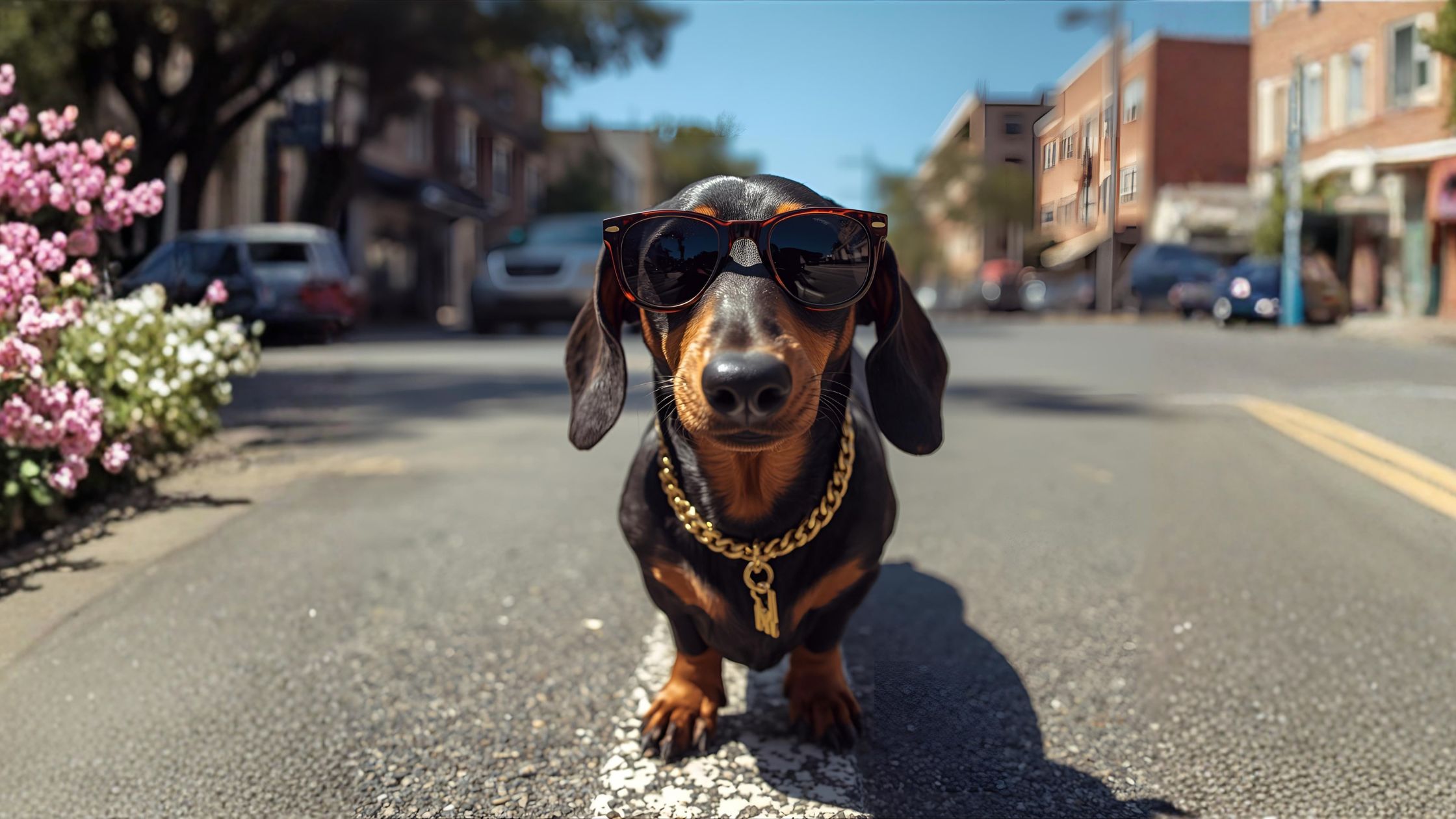
Spend some time around dachshund owners, and you’ll hear the word ‘Doxie’ for sure. It’s the go-to term for owners, breeders, and social media hashtags alike. But have you ever wondered how a fierce German badger hunter ended up with a nickname that sounds more like a brand of cookies?
The journey from the rugged forests of Bavaria to the “Doxie” on your sofa is a fascinating mix of linguistics, history, and a little bit of rebranding. Let’s trace the journey.
The roots: what does “Dachshund” really mean?
The word dachshund comes straight from German:
- Dachs = badger
- Hund = dog
So, quite literally, dachshund means badger dog.
In their homeland, these dogs weren’t just pets; they were elite athletes bred to tunnel into burrows and face off against cranky, 30-pound badgers. While we call them “dogs,” the suffix Hund reminds us that they are true scent hounds, possessing a nose that rivals a Bloodhound’s.
The pronunciation problem that started it all
Here’s where things get interesting.
The German pronunciation of dachshund includes a guttural “ch” sound — something that doesn’t really exist in English. For non-German speakers, this made the word tricky, awkward, and often intimidating to say out loud.
As dachshunds became popular in English-speaking countries, people naturally adapted the pronunciation:
- The soft German “ch” often turned into a hard “k” sound
- “Dachshund” became something closer to “docks-hund”
This small pronunciation shift opened the door to something much bigger.
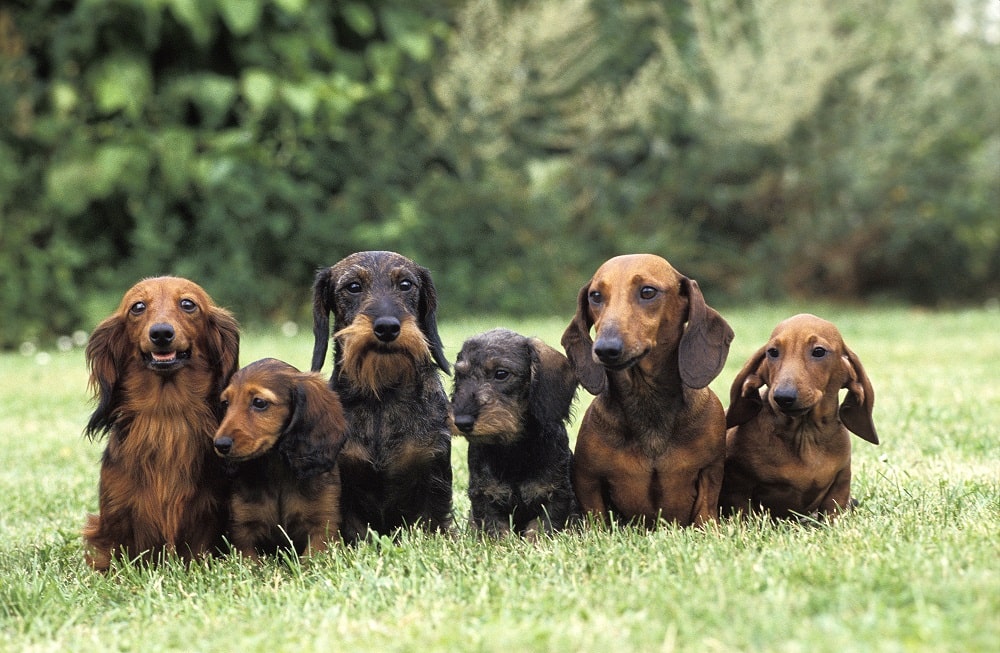
From Dachshund to Doxie: the linguistic leap
While there’s no official moment where someone declared, “From now on, we say Doxie,” linguists and dog historians generally agree on how the nickname evolved.
- German: Dachshund (Soft ‘ch’)
- English Evolution: “Docks-hund” (The ‘ch’ became a hard ‘k’ sound)
- The Shortcut: “Docks” or “Dox”
- The Affectionate Twist: In English, we love to add “-ie” or “-y” to the end of words to make them endearing (think birdie or sweetie).
Thus, Doxie was born. It was a phonetic shortcut that turned a mouthful of a word into something snappy and cute.
A history of rebranding
The nickname “Doxie” didn’t just happen because of lazy tongues; history played a role, too. During World War I and World War II, anti-German sentiment was high in the US and UK. Sadly, because the Dachshund was a symbol of Germany, the breed faced a lot of prejudice.
To protect the dogs, the American Kennel Club (AKC) briefly tried to rename them “Liberty Pups.” While that name didn’t stick, the post-war era saw a rise in playful nicknames like “Doxie” and “Wiener Dog.” These names helped “soften” the breed’s image, moving them away from their wartime associations and highlighting their quirky, lovable personalities.
Doxie vs. Doxy: a word of caution
If you’re typing out your dog’s nickname, watch your spelling! While they sound identical, there is a big difference between a Doxie and a Doxy.
In archaic English slang, a “doxy” referred to a woman of “loose morals” or a mistress. While the term is mostly forgotten today, sticking to the “Doxie” spelling keeps your dog’s reputation (and your Google search history) much cleaner!
Is it an “official” name?
If you’re looking at show results from the AKC or the Kennel Club, you won’t see the word “Doxie” anywhere. It remains a strictly colloquial nickname.
In Europe, you might hear the term Teckel or Dackel. In Germany, these aren’t just nicknames—”Teckel” usually refers to dogs bred specifically for hunting under the rules of official hunting clubs.
One dog, many aliases
The Doxie is likely the most nicknamed breed on the planet. Their unique silhouette has inspired a whole dictionary of terms:
- Sausage Dog: Popular in the UK.
- Wiener Dog / Weenie: Popular in the US (fun fact: the “hot dog” was actually named after the dog, not the other way around!).
- Low Rider: A nod to their ground-hugging clearance.
Conclusion: a name as unique as they are
Whether you call them a Dachshund, a Teckel, a Sausage, or a Doxie, it doesn’t change the fact that these dogs are big personalities in small packages. “Doxie” has become more than just a nickname; it’s a term of endearment that connects a global community of owners who know that life is just better when it’s lived close to the ground.
FAQ – Frequently Asked Questions
Is “Doxie” a different breed than a Dachshund?
No. “Doxie” is simply an affectionate nickname for the Dachshund. Whether someone calls them a Doxie, a Wiener Dog, or a Sausage Dog, they are referring to the same brave, long-bodied breed from Germany.
Is it spelt “Doxie” or “Doxy”?
While you might see both online, “Doxie” is the preferred spelling among breed enthusiasts. As mentioned in the article, “doxy” has an older, less polite meaning in the English language, so sticking with the “ie” ending is the best way to keep your pup’s nickname cute and classy!
What do Germans call Dachshunds?
In their home country of Germany, they are most commonly called a Dackel. If they are specifically from a hunting lineage, they are often referred to as a Teckel.
Why are they called “Wiener Dogs” or “Hot Dogs”?
This nickname comes from their physical resemblance to a frankfurter. Interestingly, history shows that the “hot dog” sausage was actually named after the dog! Because the sausages were long and thin, they were originally called “Dachshund sausages.”
Is “Doxie” an official AKC name?
No. The American Kennel Club (AKC) and other major registries like the Kennel Club (UK) only recognize the formal name Dachshund. “Doxie” is an informal term used by owners and fans.
Is it okay to call a Dachshund a “Weenie”?
Most owners find “Weenie” or “Wiener Dog” to be fun and endearing. However, some professional breeders prefer the formal “Dachshund” or the nickname “Doxie” as it feels a bit more respectful to the breed’s history as a fierce hunter.


0 Comments